Understanding the Basics of Deep Learning
1. What is Deep Learning?
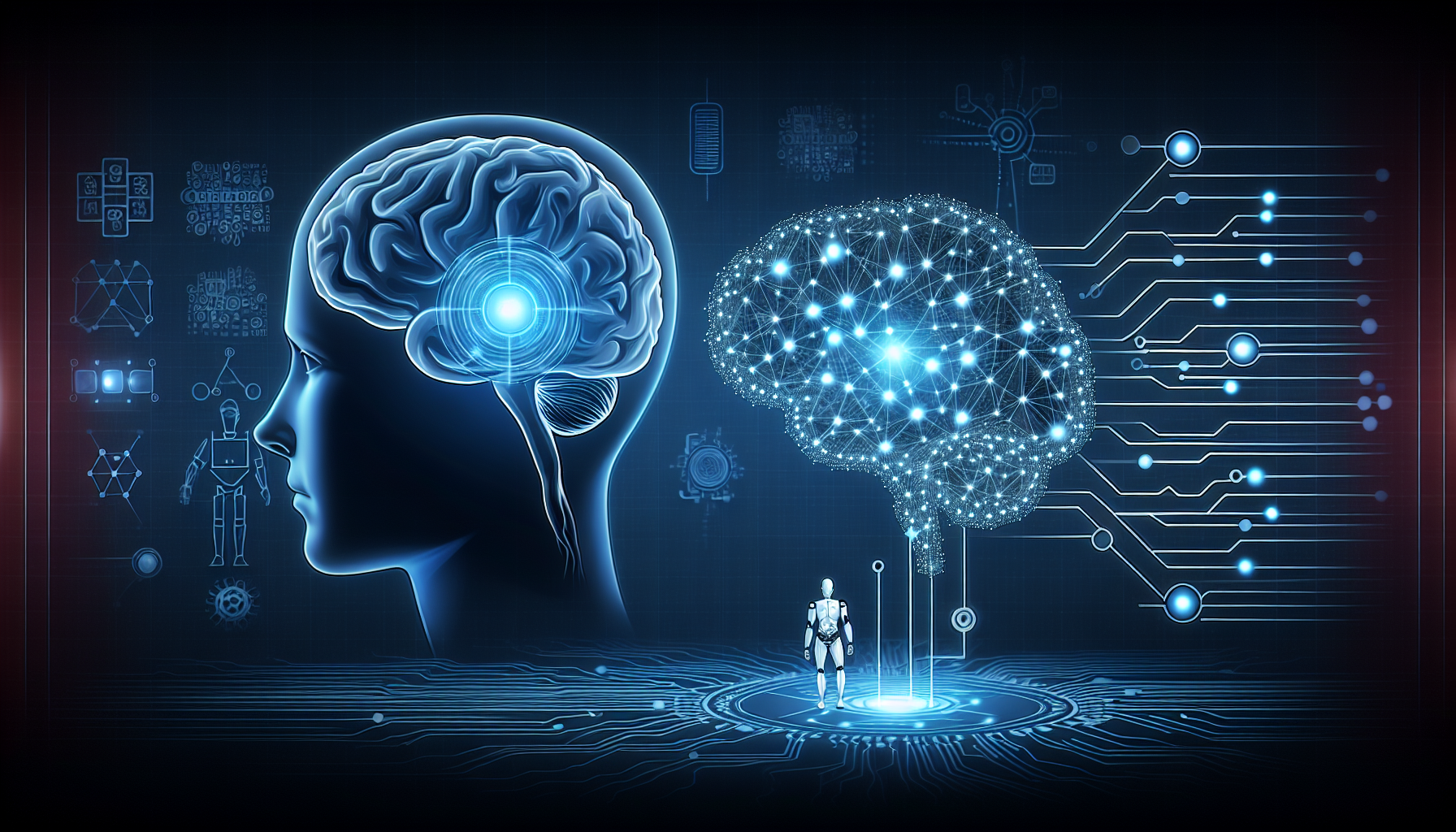
Deep learning is a subset of machine learning that emulates the human brain’s architecture by using artificial neural networks. It involves training algorithms to recognize patterns and make decisions based on vast amounts of data. Unlike traditional machine learning methods that rely on manually crafted features, deep learning automatically extracts features from raw data, allowing it to achieve breakthroughs in fields like image recognition, natural language processing, and game playing.
2. The Architecture of Deep Learning
2.1 Neural Networks
At the core of deep learning is the neural network, which is composed of layers of nodes (neurons). Each neuron receives inputs, processes them using activation functions, and passes the output to the next layer. Neural networks can be classified into several architectures, including:
- Feedforward Neural Networks: The simplest type where data moves in one direction—from input to output.
- Convolutional Neural Networks (CNNs): Primarily used for image processing. CNNs have convolutional layers that detect features such as edges and textures.
- Recurrent Neural Networks (RNNs): Designed for sequential data, RNNs are particularly effective in tasks like speech recognition or language modeling. They have loops that allow information persistence.
2.2 Layers of Neural Networks
- Input Layer: The first layer that receives input data.
- Hidden Layers: Intermediate layers where actual processing occurs through weighted connections.
- Output Layer: The final layer producing the output, typically formatted to match the type of task (classification, regression).
3. Key Concepts in Deep Learning
3.1 Activation Functions
Activation functions introduce non-linearity into the network, allowing it to learn complex patterns. Common activation functions include:
- Sigmoid: Outputs values between 0 and 1, useful for binary classification.
- Tanh: Outputs values between -1 and 1, generally preferred over the sigmoid function due to its zero-centered output.
- ReLU (Rectified Linear Unit): The most popular activation function, outputs the input directly if positive, otherwise outputs zero.
3.2 Loss Functions
Loss functions measure how well the neural network’s predictions match the actual outputs. Common loss functions include:
- Mean Squared Error (MSE): Used for regression tasks.
- Binary Cross-Entropy: Used for binary classification tasks.
- Categorical Cross-Entropy: Used for multi-class classification tasks.
3.3 Optimization Algorithms
Optimization algorithms are essential for adjusting the weights in the neural network. Popular algorithms include:
advertisement

- Stochastic Gradient Descent (SGD): Updates weights iteratively based on a single example at a time.
- Adam Optimizer: Combines the benefits of RMSProp and SGD, making it effective and popular due to its adaptive learning rate.
4. The Process of Training a Deep Learning Model
4.1 Data Preparation
Data is the foundation of deep learning. Proper data preparation involves:
- Data Collection: Gathering a comprehensive dataset relevant to the task.
- Data Preprocessing: Normalizing or standardizing data to improve training efficiency, handling missing values, and converting categorical features into numerical values.
4.2 Splitting the Dataset
Typically, the dataset is split into three subsets:
- Training Set: Used to train the model.
- Validation Set: Used to tune model hyperparameters.
- Test Set: Used to evaluate the model’s performance on unseen data.
4.3 Training the Model
During training, the network learns to minimize the loss function by iteratively updating the weights through backpropagation. Backpropagation involves calculating the gradient of the loss function concerning each weight and updating the weights accordingly.
4.4 Evaluating the Model
Once trained, the model is evaluated using the test dataset. Key performance metrics include accuracy, precision, recall, and F1 score, depending on the task’s nature.
5. Practical Applications of Deep Learning
5.1 Image Recognition
Deep learning has revolutionized image recognition tasks with architectures like CNNs, enabling applications in facial recognition, autonomous vehicles, and medical imaging.
5.2 Natural Language Processing (NLP)
RNNs and transformer models facilitate tasks such as sentiment analysis, machine translation, and chatbots, allowing machines to understand and generate human language effectively.
5.3 Speech Recognition
Deep learning models are employed in speech-to-text applications and virtual assistants, transforming spoken language into text with high accuracy.
5.4 Game Playing
Deep learning has seen significant success in game playing, marked by achievements like DeepMind’s AlphaGo defeating the world champion in Go, utilizing a combination of reinforcement learning and deep learning strategies.
6. Challenges in Deep Learning
6.1 Data Requirements
Deep learning models often require vast amounts of labeled data to perform well, which can be a limitation in scenarios where data is scarce or difficult to label.
6.2 Computational Resources
Training deep learning models is computationally intensive, requiring specialized hardware such as GPUs or TPUs, which can be costly.
6.3 Interpretability
Deep learning models are often referred to as “black boxes” because understanding their decision-making process is challenging. Techniques like Local Interpretable Model-agnostic Explanations (LIME) are emerging to tackle this issue.
7. Future Trends in Deep Learning
The field of deep learning is rapidly evolving. Some anticipated trends include:
7.1 Transfer Learning
Transfer learning involves fine-tuning pre-trained models on new tasks with limited data, drastically reducing the training time and data requirement while maintaining performance.
7.2 Generative Adversarial Networks (GANs)
GANs have gained attention for generating realistic data, such as images and videos, by employing two networks—a generator and a discriminator—in a competitive framework.
7.3 Reinforcement Learning
Reinforcement learning, where agents learn to take actions based on rewards, is gaining traction, especially in robotics, gaming, and autonomous systems.
7.4 Federated Learning
Federated learning focuses on decentralized data processing, allowing models to be trained across many devices with data privacy and security, which is especially pertinent in the era of growing data privacy concerns.
8. Getting Started with Deep Learning
8.1 Learning Resources
To delve deeper into deep learning, consider taking online courses from platforms such as Coursera, edX, or Udacity. Books like “Deep Learning” by Ian Goodfellow and “Hands-On Machine Learning with Scikit-Learn, Keras, and TensorFlow” by Aurélien Géron provide insightful information and practical exercises.
8.2 Libraries and Frameworks
Familiarize yourself with popular deep learning libraries and frameworks, including:
- TensorFlow: An end-to-end open-source platform for machine learning.
- PyTorch: A flexible deep learning framework known for its dynamic computational graph and natural integration with Python.
8.3 Community Engagement
Engage with the deep learning community through forums, conferences, and meet-ups. Participating in online platforms like GitHub and Kaggle can enhance your skills through practical projects and competitions.
9. Conclusion
Deep learning is an exciting area of AI that holds immense potential in various sectors. By understanding the fundamental concepts, architectures, and practical applications, newcomers can embark on a journey to leverage deep learning for innovative solutions. The field will continue to evolve, encouraging enthusiasts and professionals alike to contribute to its dynamic landscape.
advertisement