The Future of Work: How Artificial Intelligence is Reshaping Jobs
1. Understanding Artificial Intelligence in the Workplace
Artificial Intelligence (AI) is revolutionizing various sectors by automating processes, enhancing productivity, and enabling smarter decision-making. This technological evolution encompasses machine learning, natural language processing, computer vision, and robotics, leading to significant changes in job roles, employee expectations, and workplace dynamics. AI is no longer a futuristic concept; it is already embedded in numerous industries, from manufacturing to finance, healthcare, and beyond.
2. The Role of AI in Job Automation
AI’s primary impact on jobs is through automation. Routine, repetitive tasks are increasingly being handled by machines, freeing employees to focus on more complex and strategic responsibilities. According to a study by McKinsey, around 60% of all occupations have at least 30% of activities that could be automated. This means substantial shifts in the labor landscape, where lower-skilled positions might diminish while demand for jobs requiring high-level skills rises.
2.1 Sectors Affected by Automation
Several sectors are experiencing a transformation due to AI:
-
Manufacturing: Robotics and AI algorithms optimize production lines, enhance quality control, and predict maintenance needs, resulting in efficient operations.
-
Retail: Automated inventory management systems and personalized marketing powered by AI enhance customer experience and streamline retail processes.
-
Finance: Algorithms can analyze vast quantities of data for risk assessment, fraud detection, and investment strategies, reshaping job roles in financial analysis and advisory services.
3. The Emergence of New Job Roles
As AI takes over predictable tasks, it simultaneously creates new job opportunities that require creativity, emotional intelligence, and complex problem-solving skills. These roles are not merely replacements but enhancements of what was previously available.
3.1 Examples of New Roles
-
AI Ethics Analyst: As AI systems influence decision-making, companies require professionals to ensure ethical guidelines are adhered to, providing an oversight mechanism.
-
Data Scientist: The surge in data collection necessitates skilled individuals who can interpret, analyze, and derive insights from vast datasets.
-
AI Trainer: Machines need to be trained to understand human behavior and contexts, opening roles for individuals who can curate data and help fine-tune AI systems.
4. Upskilling and Reskilling the Workforce
With the rise of AI, the skills required in the job market are evolving. Employers are increasingly focusing on upskilling and reskilling their workforce to bridge the skills gap.
advertisement

4.1 The Importance of Lifelong Learning
Continuous learning has become essential. Organizations are investing in training programs to foster both hard skills, like data analysis and programming, and soft skills, such as communication and teamwork. As workers adapt, it is increasingly evident that the future workforce must embrace a growth mindset.
4.2 Online Learning Platforms
Online platforms have surged, offering accessible courses on AI, machine learning, data analytics, and more. Websites like Coursera, Udemy, and Khan Academy provide a wealth of resources that allow employees to stay relevant in their careers.
5. Enhancing Collaboration with AI
AI enhances collaboration within workplaces, driving efficiency and innovation. By automating mundane tasks, employees can focus more on collaboration, creativity, and strategic processes.
5.1 AI-Powered Collaboration Tools
Tools like Slack, Zoom, and Microsoft Teams integrate AI features to improve communication among teams. AI can automatically transcribe meetings, suggest agenda items, and even analyze team interactions for enhanced performance insights.
5.2 Virtual Assistants
AI-driven virtual assistants like Amazon’s Alexa and Google Assistant optimize scheduling and task management, allowing employees to prioritize and coordinate efforts more effectively.
6. The Impact on Employee Experience
AI contributes to creating enriched employee experiences by personalizing the work environment. An improved work culture can lead to enhanced productivity and overall job satisfaction.
6.1 Personalization in HR
Human Resource departments are increasingly adopting AI tools to analyze employee feedback, recruitment processes, and performance metrics. These insights allow for personalized career pathways, supporting retention and engagement efforts.
6.2 Employee Well-being
AI applications can monitor employee well-being by analyzing patterns related to workload and stress, enabling timely interventions that promote a healthier work environment.
7. Challenges and Considerations
While AI presents various advantages, it also introduces challenges that organizations must navigate carefully.
7.1 Job Displacement Concerns
With concerns about job displacement from automation and AI, it is crucial for industries to implement transition strategies. Clear communication about AI’s role and the prioritization of human contributions is essential to alleviating fears.
7.2 Ethical Considerations
As AI technology progresses, ethical implications concerning privacy, bias, and decision-making need careful attention. Organizations must ensure that AI systems operate transparently and fairly.
7.3 Cybersecurity Issues
The integration of AI in workplace systems raises cybersecurity concerns. Organizations need to safeguard sensitive data while ensuring that AI does not inadvertently introduce vulnerabilities.
8. Global Trends in AI Adoption
The adoption of AI varies across countries and industries, influenced by economic factors, technological advancements, and workforce readiness.
8.1 Developed vs. Developing Nations
While developed nations lead in AI adoption, many developing regions are investing in these technologies to drive economic growth through improved efficiencies in agriculture, manufacturing, and service sectors.
8.2 Sector-Specific Trends
Different industries are at various stages of AI integration. Healthcare is rapidly adopting AI for diagnostics and treatment recommendations, while education focuses on personalized learning experiences.
9. The Future Work Environment
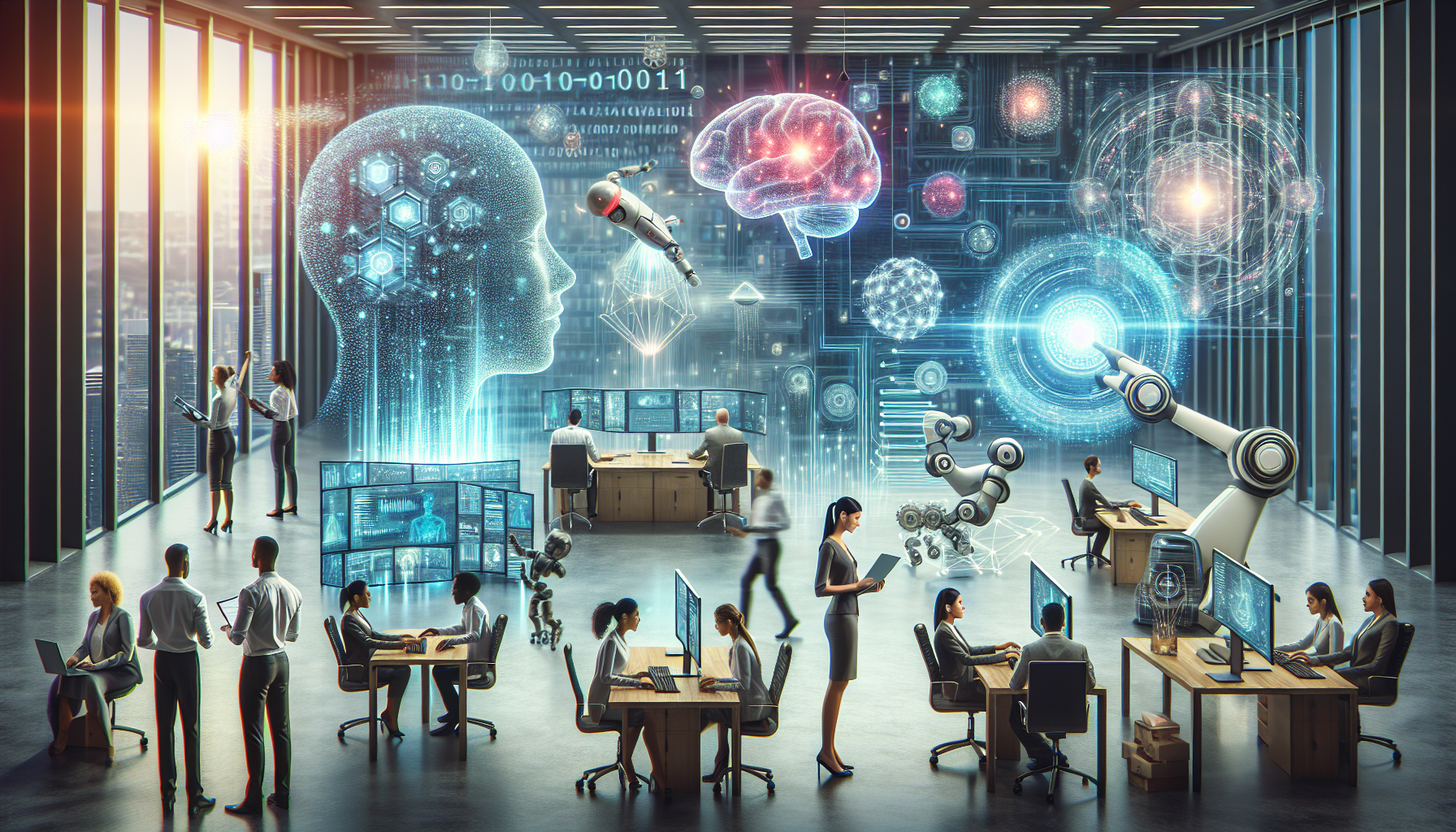
The future workplace will likely blend human capabilities with AI efficiencies. Remote work, powered by AI tools, will enable cross-border collaborations, creating more diverse and inclusive environments.
9.1 Hybrid Work Models
Organizations are increasingly adopting hybrid models that incorporate both remote and in-office work. Leveraging AI tools can enhance this flexibility, providing support regardless of physical location.
9.2 Inclusivity and Diversity
AI can assist in reducing bias in hiring processes, promoting diversity and inclusion within companies. Ethical AI practices will lead to a more representative workforce, benefiting organizations in creativity and innovation.
10. Conclusion
Organizations embracing the shift towards AI must proactively adapt their strategies, focusing on continuous learning, ethical practice, and fostering a culture that values human insight alongside technological advancement. This evolution will redefine job roles, drive organizational success, and ultimately create a more dynamic workforce aligned with the technologies of tomorrow.
advertisement