The Future of Technology: Innovations to Expect in 2025
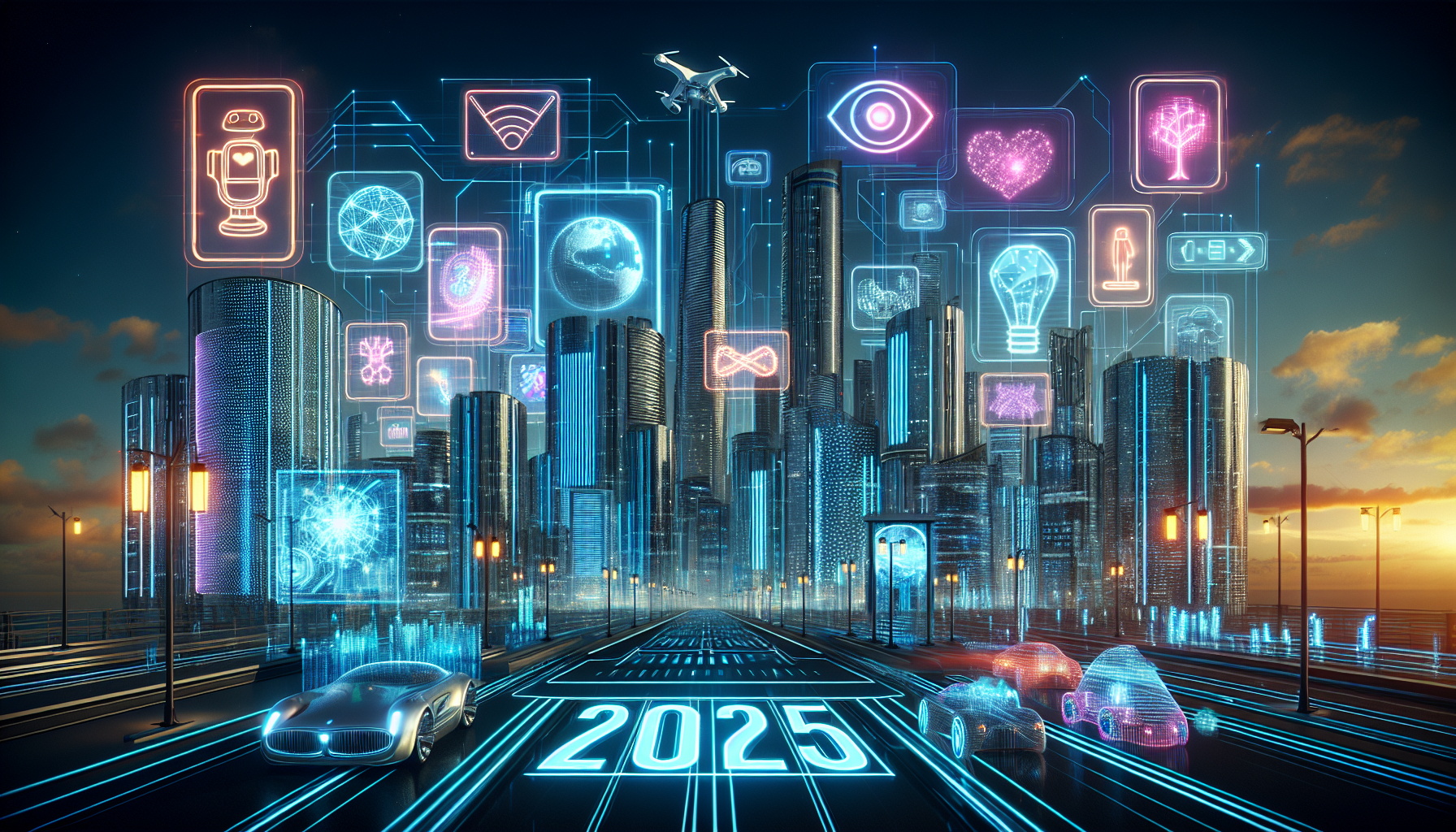
As we rapidly approach 2025, numerous technological innovations are set to reshape our world. The convergence of artificial intelligence (AI), the Internet of Things (IoT), 5G technology, and biotechnology is leading to breakthroughs that will revolutionize industries, enhance daily life, and redefine human interaction with machines. Below are some key technological trends and innovations to expect by 2025.
1. Artificial Intelligence and Machine Learning
The field of AI is expected to undergo significant advancements. By 2025, AI will not only enhance existing technologies but will also create new paradigms in how we approach problem-solving.
1.1 Natural Language Processing (NLP)
With algorithms becoming increasingly sophisticated, NLP will achieve near-human understanding of language. This will lead to more intuitive voice assistants and chatbots that can engage in complex conversations, making them invaluable for customer service and personal assistance.
1.2 AI in Healthcare
AI is set to transform healthcare diagnostics and treatment. Machine learning algorithms will analyze medical data to predict disease outbreaks, tailor treatment plans, and even assists in complex surgeries. Expect AI-driven diagnostic tools that outperform human specialists in identifying conditions through imaging and genetic data analysis.
2. The Internet of Things (IoT)
IoT technology will continue to expand, connecting billions of devices and generating mountains of data. By 2025, smart homes and cities will be the norm, integrating seamlessly with our daily lives.
advertisement

2.1 Smart Home Technology
Smart homes will become autonomous ecosystems that learn and adapt to the behaviors and preferences of their inhabitants. Devices will communicate with each other to optimize energy usage, enhance security, and provide convenience. For instance, refrigerators will track food inventory and suggest recipes, while heating systems adjust temperatures based on the occupants’ location.
2.2 Smart Cities
Cities will leverage IoT to enhance infrastructure and improve urban living. Expect to see smart traffic lights that adjust based on real-time traffic conditions, reducing congestion, and smart waste management systems that optimize collection routes. Enhanced public safety will arise from interconnected surveillance and emergency response systems.
3. 5G and Connectivity
With the rollout of 5G anticipated to be widespread by 2025, this high-speed, low-latency network will enable unprecedented connectivity across devices, enhancing almost every aspect of technology.
3.1 Enhanced Streaming and Gaming
5G will revolutionize streaming services and gaming by providing ultra-high-definition video and seamless online gaming experiences. Expect cloud gaming platforms to gain significant traction, allowing players to enjoy high-quality games without the need for expensive hardware.
3.2 Telemedicine and Remote Work
The increased bandwidth of 5G will facilitate real-time telemedicine consultations and remote working tools. Healthcare professionals can provide care from afar, while businesses can streamline operations through more efficient communication tools and collaborative platforms, enhancing productivity.
4. Augmented Reality (AR) and Virtual Reality (VR)
AR and VR are poised to evolve significantly, offering immersive experiences that will transform entertainment, education, and even occupational training.
4.1 AR in Retail
Retailers will adopt AR technology to enhance the shopping experience. Imagine trying on clothes virtually or visualizing how furniture will look in your home before making a purchase. Such applications will reduce the number of returns and improve customer satisfaction.
4.2 VR for Training and Education
In 2025, VR will be a cornerstone of educational methods and workplace training. Simulations will replicate real-world scenarios for hands-on learning, particularly in fields like medicine, aviation, and engineering. Such immersive experiences will lead to better retention of knowledge and proficiency in skills.
5. Quantum Computing
Though still in nascent stages, quantum computing is expected to make groundbreaking strides by 2025. Its ability to process vast amounts of data exponentially faster than classical computers will lead to innovations in various fields.
5.1 Drug Discovery
Pharmaceutical research will benefit significantly from quantum computing, allowing researchers to simulate molecular interactions and discover new drugs in a fraction of the time. This leap could lead to unprecedented breakthroughs in medicine and healthcare.
5.2 Cryptography and Security
Quantum computing will challenge existing encryption methods but will also lead to the creation of quantum-safe encryption technologies, ensuring that data remains secure as cyber threats evolve. This will have far-reaching implications for financial institutions and data privacy concerns.
6. Biotechnology and Genetic Engineering
The intersection of technology and biology will yield incredible advancements in health and agriculture by 2025.
6.1 CRISPR and Gene Editing
CRISPR technology will become more refined, allowing for precise editing of genes to eliminate genetic disorders and enhance crop resilience. Expect regulatory frameworks to evolve alongside these technologies, ensuring ethical considerations are addressed.
6.2 Synthetic Biology
Synthetic biology will enable the design of organisms for specific applications, such as biofuels, biodegradable plastics, and enhanced food production methods. This could revolutionize industries while addressing sustainability concerns, responding to the global demand for eco-friendly solutions.
7. Cybersecurity
As technology evolves, so do the threats to privacy and data security. Cybersecurity measures will adapt to tackle emerging risks.
7.1 AI in Cybersecurity
AI will play a pivotal role in cybersecurity by providing advanced threat detection and response capabilities. Machine learning algorithms will analyze vast amounts of data to identify potential breaches and vulnerabilities in real-time, significantly enhancing security protocols.
7.2 Biometric Security
By 2025, biometric authentication methods such as facial recognition, fingerprint scanning, and even iris recognition will be commonplace in personal devices and secure locations, providing a robust layer of security that is difficult to bypass.
8. Autonomous Systems
The future will see the rise of autonomous systems across various domains, from transportation to agriculture.
8.1 Autonomous Vehicles
Self-driving vehicles will become more reliable through improvements in AI and sensor technologies. Expect to see widespread adoption in public transportation and logistics, reducing traffic congestion and accidents, and making urban mobility more efficient.
8.2 Drones in Delivery
In 2025, drones will be a staple in the logistics and delivery industry. These unmanned aerial vehicles will be capable of transporting goods swiftly across urban landscapes, reaching remote locations with ease, thereby optimizing supply chains and reducing costs.
9. Renewable Energy Technologies
The global push for sustainability will lead to innovations in renewable energy technologies, enabling cleaner and more efficient energy production and consumption.
9.1 Solar and Wind Energy
Advancements in photovoltaic materials and wind turbine technologies will improve efficiency and reduce costs, making renewable energy sources more accessible to consumers and businesses alike. By 2025, expect solar panels to become more commonplace on residential rooftops and significant investments in large-scale wind farms.
9.2 Energy Storage Solutions
Better and more affordable energy storage solutions will become critical in balancing the supply and demand of renewable energy. Technologies such as solid-state batteries and hydrogen fuel cells will address limitations currently faced by lithium-ion batteries.
10. Edge Computing
The shift from centralized data processing to edge computing will gain momentum by 2025, driven by the increasing volume of data generated by IoT devices.
10.1 Real-Time Data Processing
Edge computing enables data to be processed closer to where it is generated rather than at a distant data center. This reduces latency, allowing applications that require real-time processing, such as autonomous vehicles and smart manufacturing, to operate more efficiently.
10.2 Improved Security and Privacy
Data processed at the edge can help preserve privacy as less sensitive information needs to be transmitted over the internet. This decentralized approach reduces the risks associated with centralized data repositories, making systems more secure.
11. Gaming and Entertainment
The gaming industry will see transformative developments that will change how we interact with media.
11.1 Immersive Gaming Environments
The combination of VR, AR, and AI will create immersive gaming environments where players can interact with lifelike characters and dynamic storylines that adapt based on player choices, enhancing engagement and replayability.
11.2 Social Gaming Experiences
Social gaming platforms will integrate more features that allow friends and communities to engage in shared experiences, promoting camaraderie and collaboration. Expect new platforms that merge social media and gaming to become popular destinations for entertainment.
12. Space Exploration Technologies
By 2025, the technological advancements in aerospace will set the stage for sustained human presence in space.
12.1 Commercial Space Travel
Companies focused on space tourism will likely begin taking civilians on suborbital and orbital flights, making space travel more accessible than ever before. This private sector involvement will drive competitive pricing and innovation in spacecraft design.
12.2 Lunar and Mars Missions
Anticipate the development of technologies for sustaining human life on lunar and Martian habitats. This will include advancements in life support systems, habitation modules, and in-situ resource utilization, paving the way for long-term exploration and potential colonization of other planets.
13. Personalized Marketing and Consumer Experiences
Data-driven technologies will profoundly impact marketing strategies and consumer experiences.
13.1 Targeted Advertising
Expect increasingly sophisticated algorithms that utilize consumer behavior data to create hyper-targeted advertising. This personalization will improve conversion rates while enhancing consumer satisfaction from being shown relevant products and services.
13.2 Interactive and Immersive Brand Experiences
Brands will leverage AR and VR technologies to create interactive experiences that engage consumers on deeper levels. From virtual storefronts to immersive product demonstrations, the ability to “try before you buy” will become essential for driving sales.
By 2025, the fusion of various technology sectors will create a landscape filled with possibilities that can enhance human existence, streamline processes, and address pressing global challenges. The aforementioned trends encapsulate the potential innovations that promise to redefine not only industries but the fundamental way we interact with technology in our day-to-day lives.
advertisement