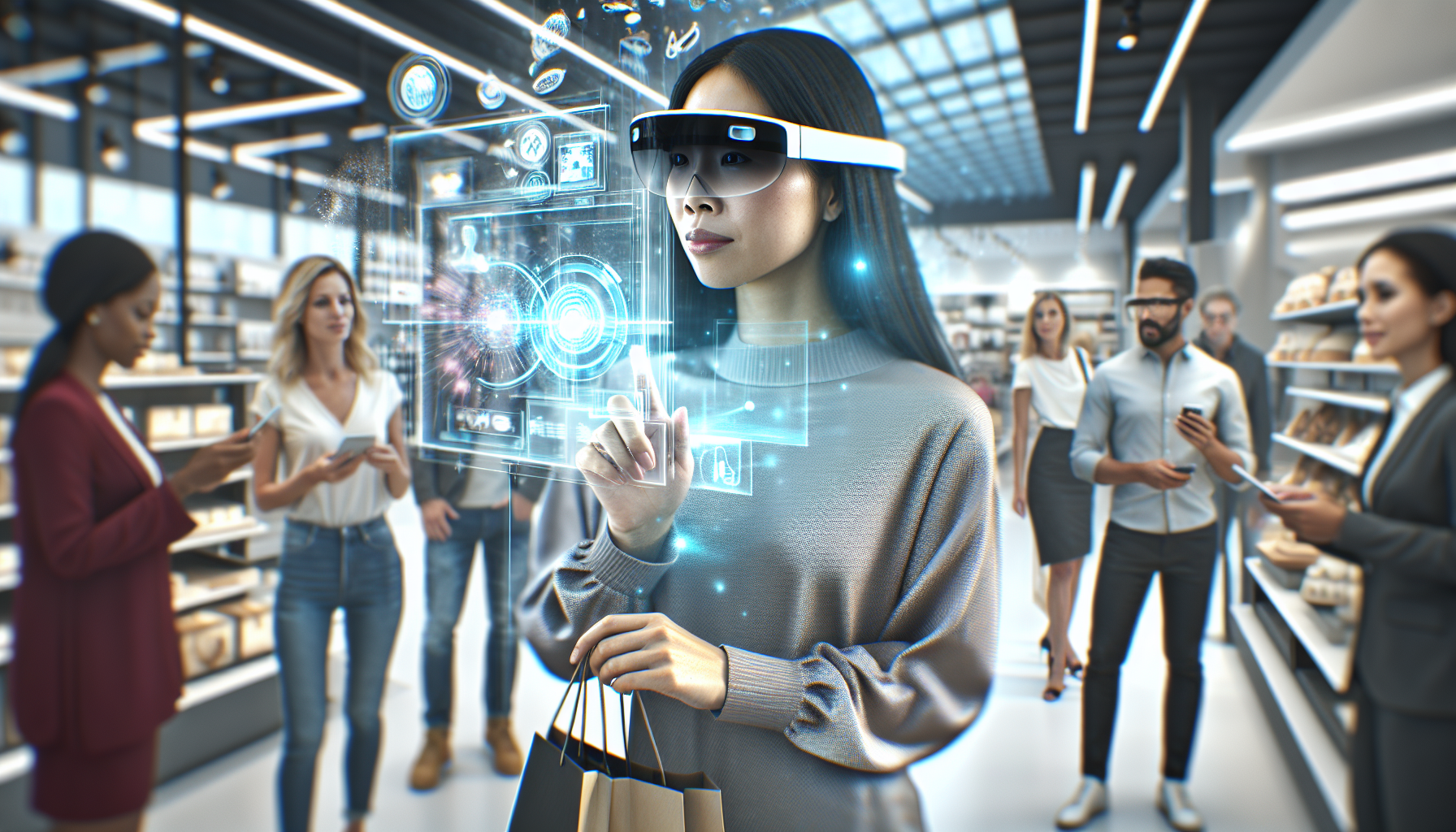
The Future of Shopping: How Augmented Reality is Changing Retail
The Rise of Augmented Reality (AR) in Retail
Augmented reality (AR) has emerged as a transformative technology in various sectors, particularly retail. By blending digital elements with the physical world, AR reshapes how consumers engage with brands and products. The retail sector, in particular, is witnessing a significant shift as retailers leverage AR to enhance shopping experiences. Major companies like IKEA, Sephora, and Nike have already adopted AR, revolutionizing customer interaction and reshaping the retail landscape.
Understanding Augmented Reality
AR is a technology that superimposes digital content—such as 3D models, images, and videos—onto the real world through devices like smartphones, tablets, or AR glasses. Unlike virtual reality (VR), which immerses users completely in a digital environment, AR enriches the existing environment, providing additional information and visualizations without isolating the user from reality.
Enhancing Customer Experience
One of the most significant impacts of AR on retail is the enhancement of customer experience. By providing interactive and immersive experiences, AR makes shopping more engaging and informative. For example, AR applications enable customers to visualize how a piece of furniture will look in their homes before purchasing it. Companies like IKEA have implemented the “IKEA Place” app, allowing users to scan their living spaces and virtually place furniture items in the environment. This eliminates uncertainty and helps customers make informed decisions while fostering a sense of connection to the product.
Virtual Try-Ons: A Game Changer for Fashion Retail
The fashion industry has been significantly influenced by AR, particularly through virtual try-on technologies. Companies like Warby Parker and Sephora have developed AR applications that allow customers to virtually try on eyewear or makeup. This innovation not only streamlines the shopping experience but also reduces return rates, as customers feel more confident in their choices.
AR try-on experiences account for a more personalized shopping journey. By capturing a customer’s facial features and skin tones, AR applications can suggest products that complement their unique characteristics, enhancing the likelihood of a purchase. As online shopping continues to grow, brands that invest in AR virtual try-on features are likely to capture a larger share of the market.
advertisement

Bridging Online and Offline Retail
AR serves as a compelling bridge between online and offline shopping. With the rise of e-commerce, retailers need innovative solutions to create seamless experiences for customers switching between platforms. AR can enhance physical stores by providing additional information and interactive experiences. For instance, a customer who enters a store can point their smartphone at a product, triggering a pop-up with details, reviews, and alternative options.
Retailers can also use AR to implement geolocation features, guiding customers to specific products within the store. This not only enhances the in-store experience but also reduces time spent searching for items, which can lead to more significant sales.
Personalized Marketing and Customer Engagement
AR provides retailers with powerful tools for personalized marketing through tailored experiences. For instance, brands can create AR campaigns that encourage user interaction, such as scanning products to unlock exclusive content, discounts, or loyalty points. This not only increases customer engagement but also incentivizes shoppers to participate in AR offerings, leading to brand loyalty and repeat purchases.
Moreover, AR can be utilized in social media marketing. Platforms like Instagram and Snapchat allow brands to create AR filters and experiences that users can engage with and share. This form of marketing not only broadens reach but also creates shareable moments that can go viral, effectively promoting products without traditional advertising expense.
Data-Driven Insights
As consumers engage with AR applications, retailers gain valuable data insights into their preferences and behaviors. Analyzing this data allows brands to understand customer interests and optimize their offerings accordingly. With AR, companies can track how users interact with virtual products, identifying which items draw more attention and which features are most appealing. This real-time feedback loop helps retailers fine-tune their strategies to meet evolving customer needs.
Challenges and Limitations of Augmented Reality
While the potential of AR in retail is vast, challenges remain. One prominent issue is the need for significant investment in technology and infrastructure, which can be a barrier for small to medium-sized retailers. Developing high-quality AR content requires skilled personnel and advanced technological resources, potentially leading to disparities between big brands and smaller businesses.
Additionally, the user experience is paramount when integrating AR. If the application is not user-friendly or does not perform well, customers may feel frustrated, leading to negative perceptions of the brand. Ensuring device compatibility and robustness of AR experiences can be challenging as well. Retailers must also address privacy concerns, as AR applications often require access to camera and location data.
Future Trends: What Lies Ahead for AR in Retail
As AR technology continues to evolve, several trends are likely to shape its future in retail. One major trend is the advancement of AR devices, with potential new applications for smart glasses and headsets capable of transforming the shopping experience. Future iterations of AR may incorporate features like eye tracking and gesture recognition, allowing for even more seamless interactions.
Another anticipated trend is the increased use of artificial intelligence (AI) alongside AR. By harnessing AI-driven analytics, retail AR applications can provide even more personalized experiences by learning and adapting to individual customer behaviors over time. This combination of AR and AI can redefine the standard of shopping experiences, creating tailored journeys that resonate deeply with customers.
Case Studies: Successful AR Implementations
Several brands exemplify the effective use of AR in retail.
-
IKEA: The IKEA Place app allows customers to visualize how furniture fits in their homes. AR technology provides an interactive shopping experience that helps users make confident purchasing decisions.
-
Sephora: With the Sephora Virtual Artist app, customers can try on makeup products virtually. This feature not only builds customer confidence but also reduces product waste from returns.
-
Nike: Nike’s AR app enables users to scan their feet, providing a precise fit for shoes and suggesting the best available size. This innovative approach not only enhances the shopping experience but also reduces guesswork in online shoe purchases.
-
L’Oreal: The L’Oreal Makeup Genius app lets users test cosmetics in real-time using their cameras. By transforming their selfies into virtual try-ons, customers can explore various beauty products interactively and confidently select items that suit them best.
Conclusion
The transformative impact of augmented reality on retail is undeniable. As technological advancements continue, AR is set to redefine customer experiences, enhance engagement, and bridge the gap between online and offline shopping. Retailers who embrace AR technology will be in a strong position to better serve their customers and thrive in an increasingly digital marketplace. As shopping evolves, the role of AR will only become more prominent, driving the future of retail toward a more immersive, personalized, and engaging landscape.
advertisement