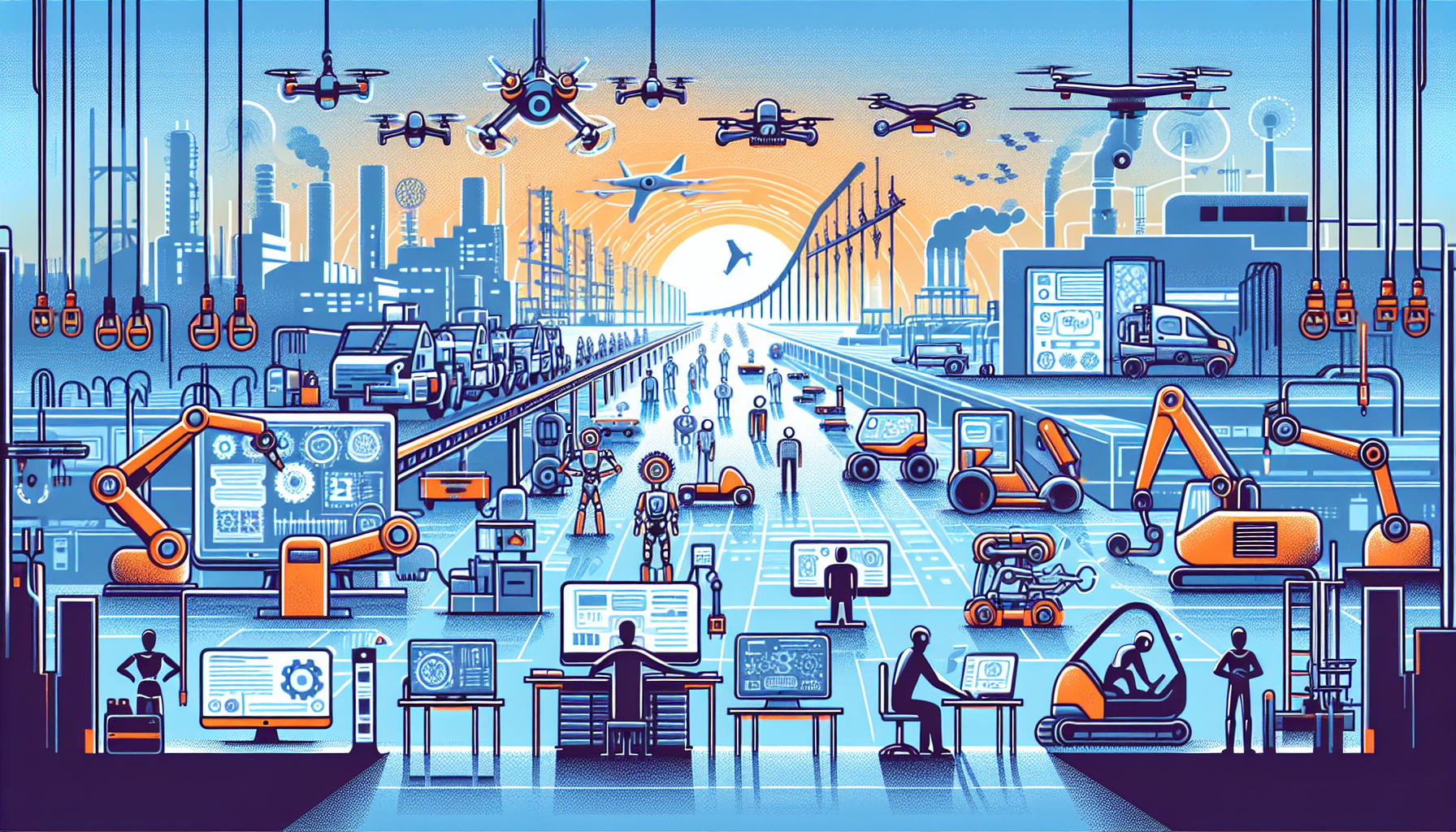
The Future of Automation: Trends Shaping Industries
1. Rise of Artificial Intelligence (AI) in Automation
Artificial Intelligence (AI) is at the forefront of automation revolution, enabling machines to perform tasks that traditionally required human intelligence. Machine learning algorithms are being increasingly adopted to enhance decision-making processes in various sectors, including healthcare, finance, and manufacturing. Tools such as natural language processing (NLP) facilitate the automation of customer service through chatbots and virtual assistants. By leveraging vast amounts of data, AI can identify patterns, predict outcomes, and optimize operations, leading to significant improvements in efficiency.
2. Robotics and the Internet of Things (IoT)
The integration of robotics and IoT is transforming automation landscapes. Smart sensors in machinery allow for real-time data collection and analysis, enabling predictive maintenance that minimizes downtime. In manufacturing, collaborative robots (cobots) are increasingly employed alongside human workers, performing repetitive tasks while enhancing overall productivity. The IoT facilitates seamless communication between machines and systems, allowing for a more streamlined workflow. This interconnectedness bolsters supply chain efficiency by enhancing tracking and management of inventory levels.
3. Automation in the Service Industry
advertisement

The service sector is experiencing a significant shift due to automation technology. Restaurants are employing kiosks for order placement and payment systems to streamline customer experience. In the hospitality industry, automated check-in systems are becoming commonplace, reducing wait times and freeing staff to focus on customer interactions. Beyond hospitality, sectors like retail are integrating automated inventory systems to improve shelving processes and restocking efficiency.
4. Ethical Implications of Automated Decision-Making
As automation becomes more prevalent, ethical concerns regarding automated decision-making surface. The potential for bias in AI algorithms can lead to discriminatory practices, particularly in sectors like recruitment and loan approval. Ensuring transparency and accountability in AI-driven processes is crucial to mitigate these risks. Developing ethical guidelines for automation—including fairness, explainability, and privacy—will be essential in fostering trust among consumers and industries alike.
5. The Workforce Transformation
The deployment of automation is reshaping the workforce. The loss of routine jobs may pose challenges, but new roles are emerging that emphasize creativity, problem-solving, and emotional intelligence—skills that machines cannot replicate. Companies are investing in upskilling their employees to adapt to new technologies, reflecting a shift toward continuous learning. As collaboration between humans and machines becomes the norm, reskilling initiatives are crucial to sustain workforce relevance.
6. Automation in Logistics and Supply Chain Management
The logistics industry is increasingly harnessing automation to improve operational efficiency. Autonomous vehicles are being tested for goods transportation, while drones are revolutionizing last-mile delivery. Warehouse automation technologies, including robotic pick-and-pack systems, streamline fulfillment processes and reduce labor costs. Furthermore, automated inventory management systems enhance accuracy and mitigate overstock or stockout scenarios, driving overall effectiveness in supply chains.
7. Smart Manufacturing and Industry 4.0
Industry 4.0 marks the fourth industrial revolution characterized by smart manufacturing and interconnected production systems. Technologies such as 3D printing, augmented reality (AR), and artificial intelligence are set to redefine traditional manufacturing operations. With greater customization and flexibility, companies can produce goods tailored to consumer demands while minimizing waste. This trend aligns with the sustainable development goals, as smart manufacturing reduces the carbon footprint and promotes responsible consumption.
8. Financial Automation and FinTech Innovations
The financial sector is undergoing transformation through automation, driven by FinTech innovations. Robotic process automation (RPA) is being utilized to streamline back-office processes, such as data entry and compliance management. Furthermore, AI in financial services enables real-time risk assessment and fraud detection, enhancing security measures in transactions. Customers also benefit from automated personal finance management tools that provide insights into spending habits and investment opportunities.
9. HealthTech and Automation
Automation is gaining traction in the healthcare industry, optimizing patient care and operational workflows. Telehealth platforms have surged, facilitating remote patient monitoring and consultation through automated systems. Electronic health records (EHR) automation streamlines data management, improving accuracy and accessibility. Furthermore, robotic surgical systems are enhancing precision and minimizing patient recovery times, illustrating the profound impact of automation on health outcomes.
10. Agriculture and Automated Solutions
The agriculture sector is benefiting from automation in various ways, improving efficiency and yield. Agricultural drones are being deployed for crop monitoring and assessment, while autonomous tractors enhance planting and harvesting operations. Sensor technology aids in precision agriculture by allowing farmers to analyze soil health and resource utilization in real-time. This trend not only boosts productivity but also contributes to sustainable practices by minimizing resource waste.
11. Environmental Sustainability through Automation
As industries prioritize environmental sustainability, automation plays a pivotal role in promoting eco-friendly practices. Smart grid technologies in energy management enhance efficiency by optimizing electricity distribution and consumption. Automated waste management systems improve recycling rates by sorting materials more effectively than manual processes. Furthermore, AI-driven energy management systems are set to optimize energy consumption within commercial buildings, reducing overall carbon footprints.
12. The Role of Cloud Computing in Automation
Cloud computing serves as a backbone for automation technologies, supporting scalability and flexibility. Organizations can deploy automated processes without the heavy investment in on-premises infrastructure. Cloud-based solutions facilitate data sharing and collaboration across departments, enabling more informed decision-making. Moreover, software-as-a-service (SaaS) models allow businesses to adopt automation tools at a fraction of traditional costs, promoting wider access to cutting-edge technologies.
13. Cybersecurity and Automation Trends
As automation increases, so do potential threats to cybersecurity. Automated systems can be vulnerable to attacks if not adequately secured. Organizations are increasingly investing in cybersecurity measures, adopting AI-driven security protocols to detect and respond to threats in real-time. Automated incident response systems are emerging, allowing for faster containment of breaches while minimizing damage. Ensuring robust cybersecurity in automated environments is crucial for maintaining trust and operational integrity.
14. Customization and Personalization in Marketing Automation
Marketing automation is evolving, focusing on personalization to enhance customer engagement. AI-driven tools analyze consumer behavior and preferences, allowing businesses to deliver tailored content and product recommendations. This heightened personalization fosters loyalty and improves conversion rates. Moreover, automated social media management tools streamline content scheduling and interaction, enabling brands to maintain active communication with their audience.
15. Supply Chain Resilience through Automation
Recent global events have highlighted the need for supply chain resilience. Automation facilitates flexibility and adaptability—crucial for overcoming disruptions. Automated risk assessment tools and scenario modeling help businesses prepare for unforeseen challenges, enabling quick adjustments to maintain operations. Furthermore, inventory forecasting powered by AI can improve responsiveness, ensuring that supply meets fluctuating demand.
16. Education and Training Automation
Education is also witnessing automation trends, transforming how knowledge is imparted. Learning management systems (LMS) with automated grading and personalized learning paths enhance the educational experience for both students and educators. Additionally, AI-driven tutoring systems provide tailored support, catering to individual learning speeds and styles. This evolution in education will better prepare the workforce to adapt to automation technologies.
17. Collaborations Between Public and Private Sectors
Collaboration between public and private sectors is essential in fostering innovation in automation. Public institutions can provide frameworks that encourage research and development, while private companies can amplify solutions through commercialization. Government support through subsidies or tax incentives can accelerate automation adoption across industries, enhancing national productivity and economic growth.
18. Standardization and Regulation in Automation
With rapid advancements in automation technologies, the need for standardization and regulation becomes paramount. Establishing frameworks ensures that automation implementations adhere to safety and ethical protocols. Regulatory bodies must develop guidelines that balance innovation with public safety, addressing concerns like data privacy, algorithmic transparency, and liability in the event of failures.
19. The Role of Data in Automation
Data remains the cornerstone of effective automation. Organizations harnessing data analytics can identify inefficiencies and streamline operations, driving better outcomes. Advanced analytics tools enable real-time insights, enhancing decision-making at all organizational levels. Ensuring the integrity and security of data is crucial, as it underpins the success of automation initiatives.
20. Future Trends and Emerging Technologies
The future of automation is intertwined with emerging technologies such as quantum computing, which promises to revolutionize data processing capabilities. This progression will lead to more complex models and faster decision-making processes. Additionally, advancements in augmented and virtual reality are set to enhance training and operational efficiency in various fields.
The trajectory of automation will continue to shape industries, unlocking new possibilities for productivity, efficiency, and innovation. By embracing these trends, organizations can position themselves at the forefront of the global economy, navigating the challenges and opportunities that lie ahead.
advertisement