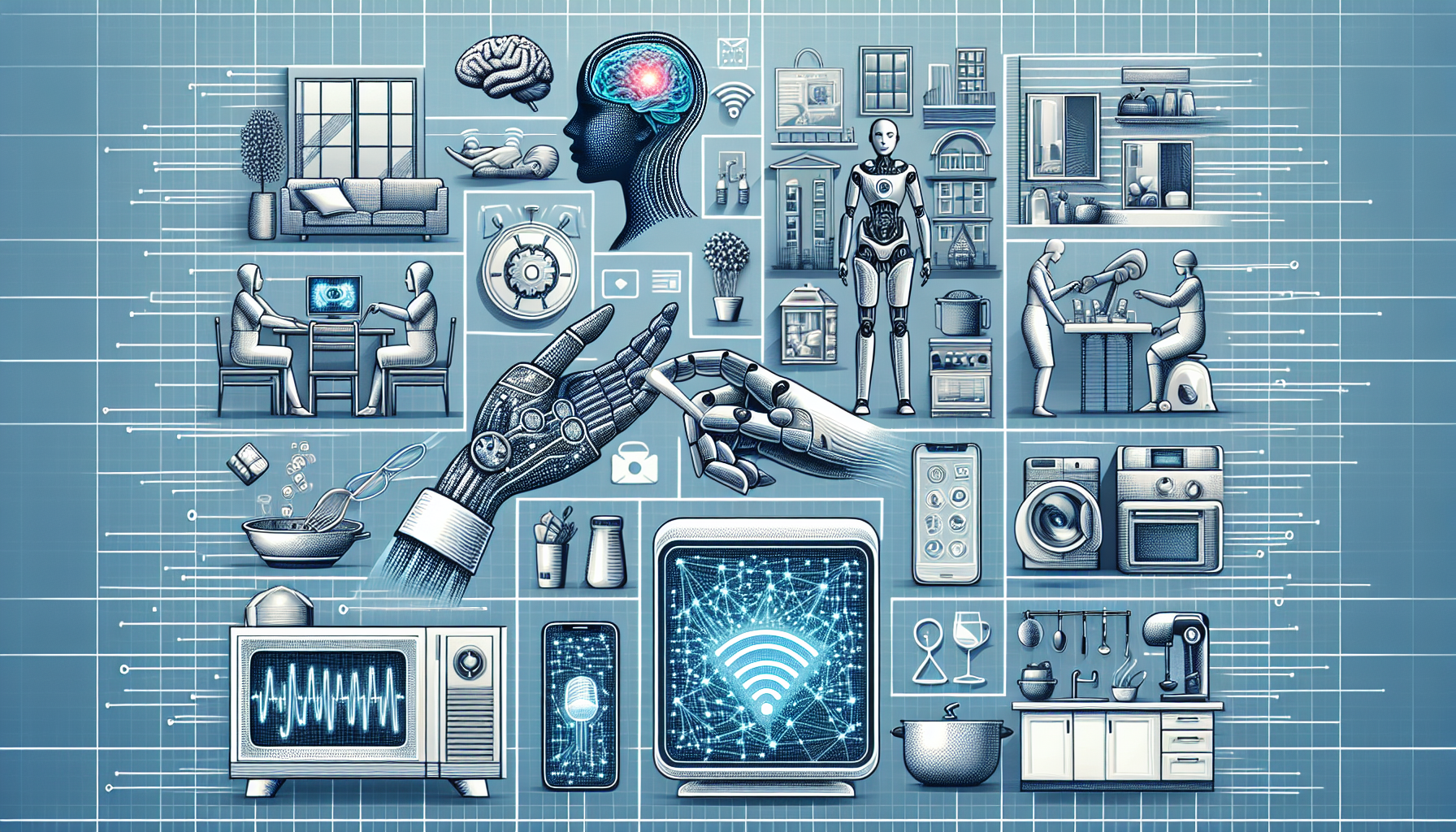
The Future of Artificial Intelligence in Everyday Life
Understanding Artificial Intelligence (AI)
Artificial intelligence (AI) is a branch of computer science that deals with creating machines capable of performing tasks that typically require human intelligence. These tasks include learning, reasoning, problem-solving, perception, language understanding, and more. While the roots of AI can be traced back to the mid-20th century, recent advancements in machine learning, deep learning, and natural language processing have propelled AI into mainstream applications.
AI in Personal Assistants
One of the most visible applications of AI in everyday life is the use of personal assistants like Siri, Google Assistant, and Amazon’s Alexa. These virtual assistants are designed to simplify daily tasks, such as setting reminders, playing music, and controlling smart home devices. The future looks promising, with advancements on the horizon featuring increased personalization and contextual understanding. As AI learns from user interactions, it will become smarter, capable of predicting needs and providing recommendations tailored to individual preferences.
Smart Home Technologies
AI will play a pivotal role in the evolution of smart home technologies. Smart thermostats, security systems, lighting, and appliances will become increasingly interconnected, allowing for seamless automation. Imagine a scenario where your home anticipates your arrival. Smart systems will adjust heating or cooling, turn on lights, and even prepare your favorite meal, all based on your daily habits and preferences. This level of interconnectivity will not only enhance convenience but also contribute to energy efficiency and enhanced safety protocols.
AI in Healthcare
The future of AI in healthcare is particularly compelling. AI algorithms are being developed to analyze medical data, predict disease outbreaks, and even assist in diagnostics. Virtual health assistants can provide users with personalized health recommendations, monitor vital signs, and alert healthcare providers of any potential health issues. Telemedicine is another area where AI will play a significant role, offering real-time assistance and remote monitoring for chronic conditions, thereby reducing the need for physical consultations.
AI in Transportation
The transportation sector is on the cusp of a significant transformation driven by AI technologies. Autonomous vehicles, powered by advanced AI algorithms, have the potential to drastically reduce traffic accidents, optimize routes, and alleviate congestion. AI can enhance public transport systems by analyzing real-time data to determine the best routes and schedules. Additionally, AI-driven traffic management systems can improve urban mobility, ensuring that vehicles and pedestrians coexist more safely.
advertisement

AI in Education
Education is another domain ripe for AI integration. Personalized learning experiences can be achieved using AI-powered educational platforms that tailor content and learning methods to each student’s needs. These systems analyze data from student interactions to identify strengths, weaknesses, and learning styles, allowing for a more customized curriculum. AI-driven tutoring systems can provide students with additional resources and exercises tailored to their progress, making learning more engaging and effective.
Customer Support and AI Chatbots
Customer service across various sectors is being transformed by AI chatbots and virtual agents. These intelligent systems can handle customer inquiries at any hour of the day, providing quick and accurate responses. Future chatbots will evolve to understand emotional cues, offering more nuanced interactions that can lead to improved customer satisfaction. This increase in efficiency allows businesses to allocate resources better while enhancing customer experiences.
AI in Finance
The financial industry is leveraging AI to detect fraud, manage risk, and enhance decision-making. Algorithms can analyze transaction patterns to identify unusual behavior that may indicate fraudulent activity. AI can also assist in investment strategies by analyzing market trends and providing insights that improve portfolio management. As personal finance applications become more advanced, users will benefit from tailored advice based on their financial habits and goals.
AI and Cybersecurity
As technology advances, so too do the threats it faces. AI will play a crucial role in bolstering cybersecurity measures. Intelligent systems will analyze patterns and anomalies in network traffic, allowing for quicker identification of potential threats. These AI-driven systems will adapt and learn over time, making them more effective against ever-evolving cyber threats. Enhanced security protocols will safeguard personal data, enabling consumers to navigate online spaces with greater confidence.
AI in Entertainment and Media
The entertainment industry is harnessing the power of AI for content creation, recommendation systems, and audience analysis. Streaming platforms like Netflix use AI algorithms to suggest shows based on user preferences and viewing habits. Furthermore, AI can assist in creating new content, from screenwriting to music production. Voice and video synthesis have already made headway into entertainment, indicating a future where consumer-generated content can seamlessly blend with professional production.
The Role of AI in Workplaces
AI is reshaping workplaces by optimizing operations and automating repetitive tasks. From project management to recruitment processes, AI tools can analyze resumes for potential matches, improving hiring efficiency. Virtual collaboration tools enhanced by AI will provide insights on team dynamics and productivity, assisting managers in creating better work environments. As AI becomes integrated, human workers will have the opportunity to focus on tasks that require creativity and strategic thinking.
Ethical Considerations in AI Development
With the growing influence of AI in everyday life, ethical considerations must be at the forefront of development. Issues such as bias in algorithms, privacy concerns, and the impact of automation on jobs demand careful attention. Transparency in AI decision-making processes will build public trust, while standards for ethical AI development can mitigate risks associated with misuse. Engaging diverse teams in AI development is essential to ensure a balance of perspectives, which can lead to more equitable outcomes.
AI-Driven Agriculture
Agriculture is on the brink of a transformation thanks to artificial intelligence. AI technologies such as drones and IoT devices are being utilized to monitor crop health, optimize water usage, and even predict yields. By employing predictive analytics, farmers will be able to make informed decisions, enhancing productivity while minimizing resource wastage. As AI-enabled farming techniques become mainstream, food production will become more sustainable.
The Integration of AI with IoT
The combination of AI with the Internet of Things (IoT) will revolutionize how devices communicate and process information. Smart home devices, industrial machinery, and even city infrastructure will leverage AI to analyze data in real time, leading to smarter decisions. For instance, AI algorithms can optimize energy consumption in smart cities by managing traffic signals and reducing energy use in residential areas, contributing to more sustainable urban living.
AI in Language Translation
Language barriers are being dismantled by AI-driven translation tools that enhance communication across cultures. Future developments will improve the accuracy and fluidity of translations, allowing for near-instantaneous communication. This advancement is particularly beneficial for businesses operating globally, fostering collaboration and understanding across language divides, and making international travel more accessible and enjoyable.
AI and Mental Health
The integration of AI in mental health care is growing, offering innovative solutions for therapy and support. Chatbots and virtual therapists are already being used to provide immediate support for individuals in distress. Future advancements will enhance the ability of these systems to recognize emotional cues and provide personalized coping strategies. AI can also analyze large data sets to identify trends and patterns, informing better mental health support strategies on a larger scale.
The Human-AI Collaboration
The future will see a paradigm shift towards human-AI collaboration rather than replacement. While AI can automate mundane tasks, humans will be empowered to focus on strategic, creative, and interpersonal aspects of work and life. The synergy between human intelligence and artificial intelligence will yield unprecedented innovations and solutions, enhancing productivity and creativity across various sectors.
Preparing for the AI Future
As AI continues to advance and permeate various aspects of daily life, individuals and businesses must adapt to this changing landscape. Education systems will need to evolve, incorporating AI literacy into their curricula to equip future generations with the necessary skills. Lifelong learning will become crucial, as workers seek to harness AI tools and complement their skills with technology.
Collaboration Across Sectors
A collaborative approach will be essential in shaping the future of AI. Governments, businesses, and academia must come together to establish standards and frameworks that prioritize ethical considerations and promote innovation. Such partnerships will drive research and development while ensuring that AI contributes positively to society rather than exacerbating inequalities.
Continuous Innovation
The landscape of AI is rapidly changing, and continuous innovation is key. Researchers and developers are tasked with addressing existing limitations, enhancing AI capabilities, and mitigating risks. Investments in research will pay off as breakthroughs emerge, enabling smarter AI systems that can operate in complex, real-world environments while maintaining ethical standards.
In summary, the future of artificial intelligence in everyday life presents vast opportunities and challenges. From personal assistants to smart homes and beyond, AI is poised to enhance convenience, effectiveness, and quality of life. As we navigate this future, embracing ethical considerations and fostering collaboration across sectors will be crucial to creating a world where AI benefits all.
advertisement