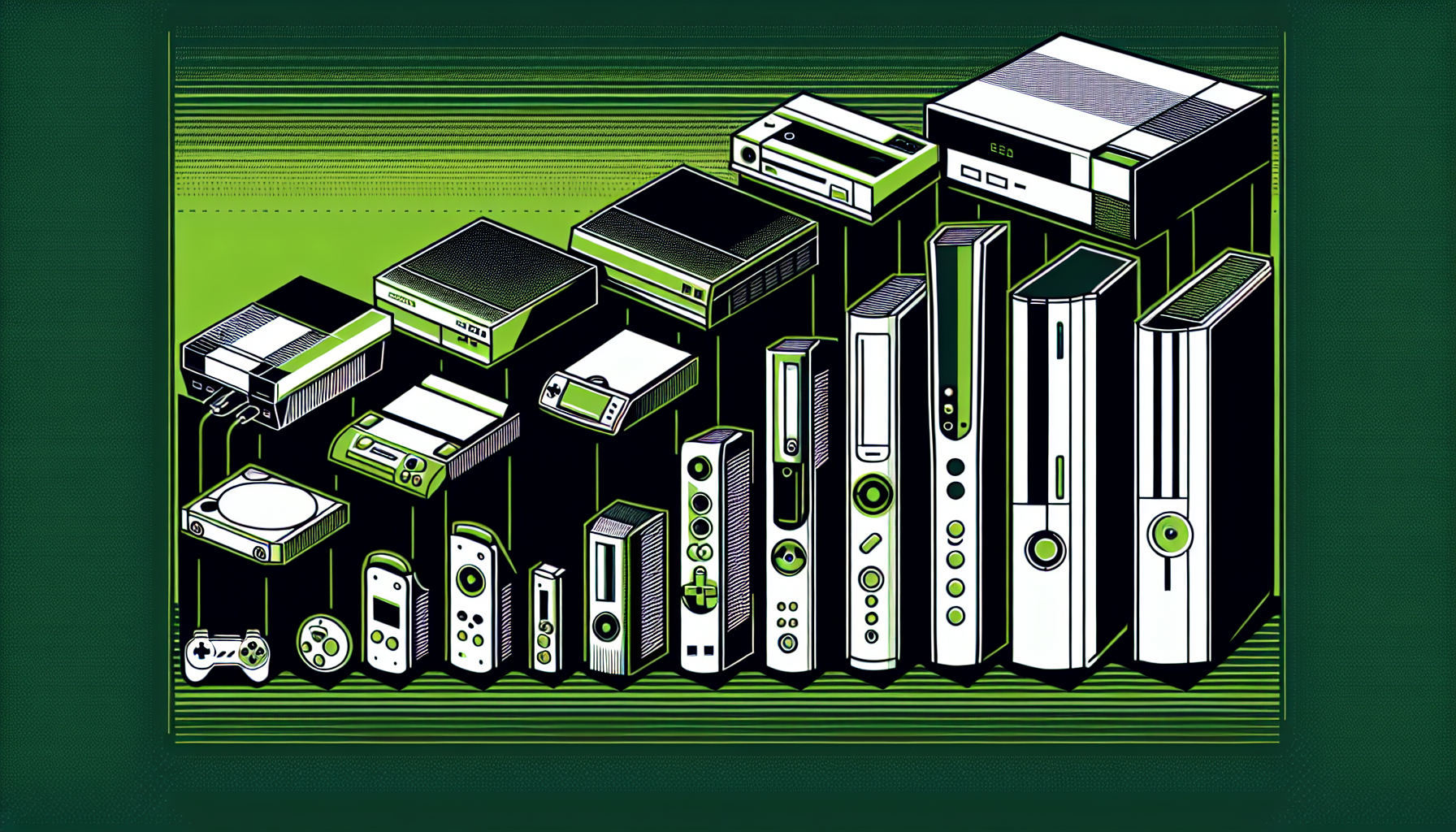
The Evolution of Xbox: From Original Console to Xbox Series X
Xbox: The Beginings (2001)
In 2001, Microsoft forayed into the gaming industry with the launch of the original Xbox. This marked a significant shift in the gaming landscape, as the tech giant sought to challenge established players like Sony and Nintendo. The original Xbox was groundbreaking; it was the first console to feature a built-in hard drive and support high-speed internet connectivity through Xbox Live.
The hardware specifications of the original Xbox were impressive for its time, boasting an Intel Pentium III processor, an NVIDIA GPU, and 64 MB of RAM. Notably, it featured a unique controller, which later evolved due to user feedback. The console’s launch title, “Halo: Combat Evolved,” became a benchmark in first-person shooters and helped establish Xbox as a credible brand within the gaming community.
The Success of Xbox Live
The success of the original Xbox can be attributed significantly to Xbox Live, an online gaming service that allowed players to compete against each other over the internet. Launched in 2002, Xbox Live transformed the console gaming experience by providing features like matchmaking, voice chat, and a robust digital storefront. This set a precedent for online multiplayer gaming that other consoles would soon follow.
Xbox 360: Redefining the Console Experience (2005)
Building on the foundation laid by the original Xbox, Microsoft released the Xbox 360 in 2005. This iteration represented a major leap in both hardware and online capabilities. The Xbox 360 was powered by a triple-core CPU and featured up to 512 MB of RAM. Its sleek white design and customizable faceplates appealed to a broader audience.
The Xbox 360 continued to innovate with Xbox Live, introducing features such as downloadable games, streaming services, and the Xbox Marketplace. It also cemented social gaming with the integration of friends lists and achievements, allowing users to compare their in-game accomplishments.
advertisement

However, the Xbox 360 wasn’t without its challenges. The “Red Ring of Death,” a hardware failure that caused many consoles to malfunction, became a notorious issue, leading to widespread consumer dissatisfaction. Microsoft responded by extending warranties and improving the console’s reliability through various hardware revisions.
Kinect: Innovative Motion Control (2010)
The launch of Kinect in 2010 was a transformative moment for the Xbox 360. This motion-sensing device allowed players to control games using their body movements and voice commands. It brought an innovative approach to gaming, appealing to casual gamers and families. Kinect’s success further solidified Microsoft’s strategy of expanding the gaming market beyond traditional gamers.
Xbox One: A New Era of Entertainment (2013)
In 2013, Microsoft introduced the Xbox One, positioning it as an all-in-one entertainment system rather than merely a gaming console. The Xbox One featured a more powerful processor, enhanced graphics, and the ability to multitask between games, apps, and television streams seamlessly.
The initial announcement of the Xbox One was met with controversy over its proposed DRM policies and a requirement for a constant internet connection. After backlash from the gaming community, Microsoft quickly reversed many of these policies, demonstrating its willingness to listen to consumer feedback.
The Xbox One also saw the introduction of the backward compatibility feature, which allowed gamers to play select Xbox 360 titles on the new console. The feature was a significant selling point, gaining traction as developers increased their support for previous-generation titles.
Xbox Game Pass: Revolutionizing Game Access (2017)
With the increasing popularity of subscription-based models, Microsoft launched Xbox Game Pass in 2017. This service provided gamers access to a vast library of games for a monthly fee, changing how users consumed gaming content. This innovative approach encouraged players to explore new titles without the hefty price tag associated with traditional purchases.
Xbox One X: The Most Powerful Console (2017)
In 2017, Microsoft released the Xbox One X, claiming it as the most powerful gaming console at the time. Sporting 6 teraflops of graphical power, it offered true 4K gaming experiences, catering to serious gamers who demanded high performance.
Xbox Series X: The Future of Gaming (2020)
The release of the Xbox Series X in November 2020 marked the next significant evolution in the Xbox brand. Promising superior performance with its custom AMD processor, the Series X is capable of 4K gaming at 120 frames per second and up to 8K output. The design was more compact and tower-like compared to its predecessors, with a focus on cooling and performance.
The Series X also introduced features such as Quick Resume, which allows players to switch between games rapidly without losing progress, and Smart Delivery, ensuring gamers would always have access to the best version of their purchased games across console generations.
The Role of Xbox Game Studios
An essential aspect of Xbox’s evolution has been the acquisition of various game development studios. The formation of Xbox Game Studios reflected Microsoft’s commitment to creating exclusive content for the Xbox ecosystem. Studios like Bethesda Softworks, Obsidian Entertainment, and Ninja Theory were integrated into the Xbox family, promising a diverse array of game releases for both Xbox One and Series X.
Cloud Gaming: Looking Ahead
The launch of Xbox Cloud Gaming (formerly known as Project xCloud) has introduced a new frontier for the Xbox brand. By allowing players to stream games directly to their devices without needing to own the console, Microsoft aims to reach new audiences and adapt to changing consumption habits. This cloud service combines the power of the Xbox Game Pass with accessibility, breaking down traditional barriers associated with console ownership.
Conclusion
The evolution of Xbox from its original console to the cutting-edge Xbox Series X reflects Microsoft’s strategy of innovation, adaptability, and consumer engagement. With each release, the Xbox brand has emphasized not just superior gaming hardware, but a wider ecosystem that incorporates social connectivity, game accessibility, and cutting-edge technology to create a compelling experience for gamers worldwide.
With the potential of cloud gaming and ongoing enhancements to Xbox Game Pass, Microsoft looks poised to continue shaping the future of interactive entertainment in the years to come. The Xbox journey illustrates a remarkable trajectory of growth, reflecting the dynamic landscape of gaming and technology.
advertisement