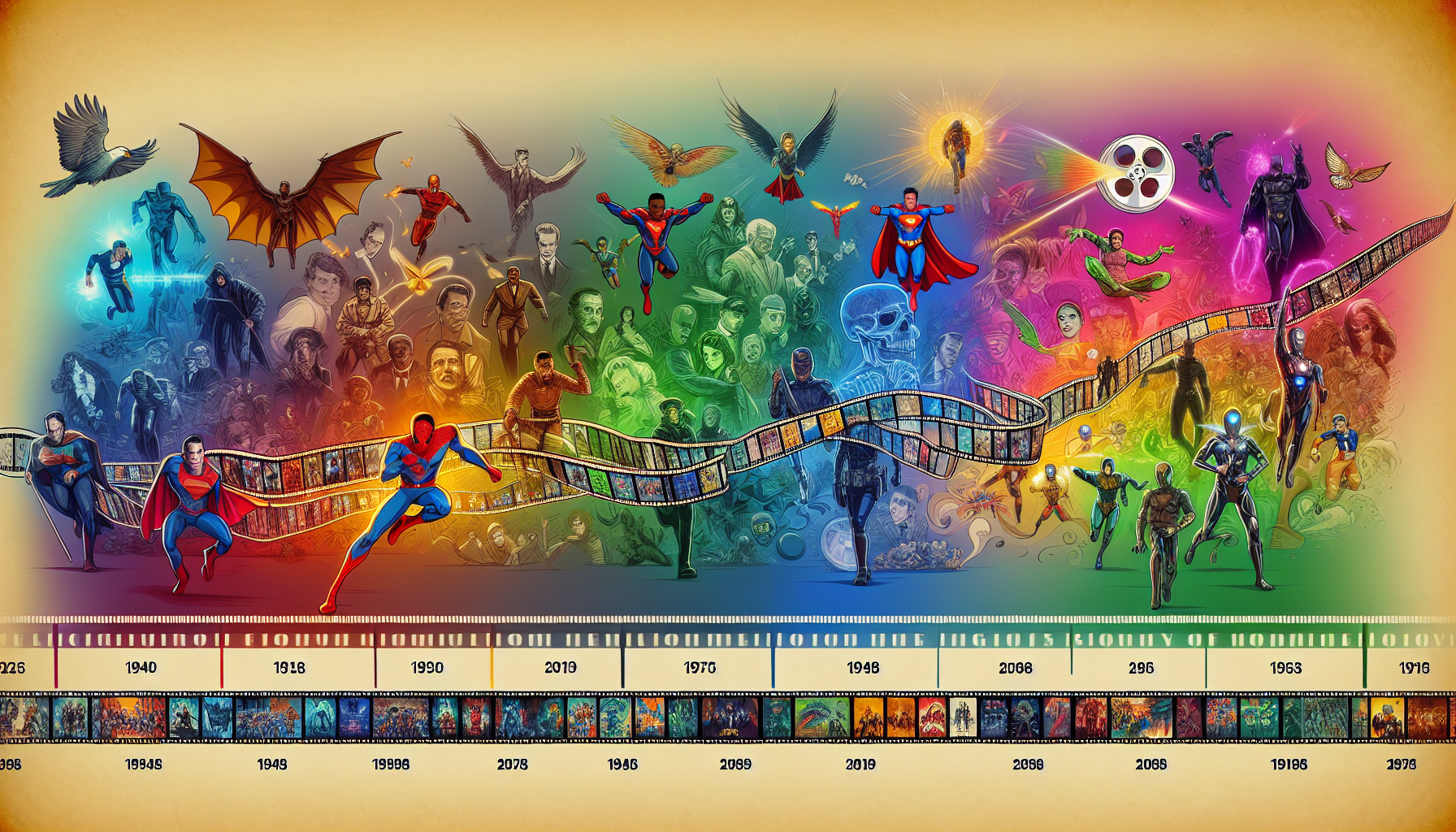
The Evolution of Superhero Movies
Early Origins: Comic Books to Screen
The lineage of superhero movies begins with their roots in comic books, with some of the earliest superheroes making their debut in the late 1930s. Characters like Superman, Batman, and Wonder Woman, created by iconic figures such as Jerry Siegel, Joe Shuster, and William Moulton Marston, captivated audiences and laid the groundwork for a genre that would evolve dramatically over the decades. The first major foray into film came in 1941 with the “Adventures of Captain Marvel,” which was a serial that combined live-action and animation—a precursor to the superhero feature films of today.
The Golden Age of Superhero Cinema (1940s-1950s)
During the 1940s and 50s, superhero films were mostly adapted as serials and featured various characters, but they lacked the cinematic sophistication seen in modern films. 1943 brought “Batman,” a serial film that introduced elements that would become staples of the genre—sidekicks, colorful costumes, and arch-nemeses. However, the allure was primarily for children, and the societal contexts of war and uncertainty often saw more complex narratives set aside.
The Silver Age and Campy Themes (1960s-1970s)
The 1960s marked a renaissance for comic book culture, with Marvel Comics gaining prominence under creative legends like Stan Lee and Steve Ditko through characters like Spider-Man and the X-Men. This era saw the introduction of the campy “Batman” TV series in 1966, starring Adam West. Its blend of humor and exaggerated portrayals of villains painted a vibrant narrative, although it didn’t take itself too seriously. After this series concluded, movies like “The Batman” from 1966 further established the hero’s presence on screen, yet they leaned heavily on the comedic and ridiculous.
The Birth of Modern Superheroes (1978-2000)
A seismic shift occurred in 1978 with Richard Donner’s “Superman.” Starring Christopher Reeve, it became the first blockbuster superhero film, achieving both commercial success and critical acclaim. Its special effects, storytelling, and portrayal of a superhero as a relatable character elevated the genre and set a new standard. The success of “Superman” paved the way for more serious adaptations, as seen with Tim Burton’s “Batman” in 1989, which revolutionized the tone of superhero films, infusing dark narratives and morally ambiguous characters.
In this same era, we witnessed the rise and fall of several adaptations, including the ill-fated “Batman & Robin” in 1997, which served as a cautionary tale of over-the-top interpretations. The late 1990s also introduced audiences to films like “Blade” (1998) and “X-Men” (2000). “X-Men,” directed by Bryan Singer, is critical for its mature themes of prejudice and acceptance, showcasing the superhero film’s capability to tackle real-world issues.
advertisement

The Marvel Cinematic Universe and the Superhero Boom (2008-present)
The turning point in superhero cinema undeniably came with the inception of the Marvel Cinematic Universe (MCU) in 2008 with “Iron Man.” Directed by Jon Favreau and starring Robert Downey Jr., this film was a game-changer. It not only revived the superhero genre but spawned a meticulously crafted universe of interconnected stories across multiple films. The box office successes of “The Avengers” (2012) and its sequels, along with films like “Black Panther” (2018), shifted perceptions of superhero narratives from childish escapism to complex storytelling suited for all audiences.
Beyond Marvel, the DC Extended Universe (DCEU) struggled for a foothold but saw considerable success with films like “Wonder Woman” (2017). These films challenged traditional gender representations, offering strong female heroes in prominent roles. This evolution of character representation reflects broader societal changes and the increasing demand for diverse storytelling within cinema.
The Rise of Independent Superhero Films
The superhero genre is no longer dominated solely by major studios. Independent films, often with unique takes on superhero tropes, have made substantial impacts as well. Movies like “Chronicle” (2012) explored the darker consequences of acquiring superpowers, while “Kick-Ass” (2010) provided a satirical lens on the lives of everyday superheroes. These films explore themes of morality, power dynamics, and the responsibilities of heroism, broadening the scope of superhero cinema.
In animated features, “Spider-Man: Into the Spider-Verse” (2018) received critical acclaim, celebrated for its unique animation style and storytelling. This film not only catered to fans of the genre but also attracted new audiences, emphasizing a message of acceptance and empowerment through the lens of multiple Spider-People.
Global Impact and Cultural Shifts
Superhero films increasingly reflect and influence global cultures. Films like “Black Panther” tap into themes of African identity, heritage, and pride, resonating beyond mere entertainment. The worldwide success illustrated how superhero narratives can transcend cultural barriers, gaining massive audiences from diverse backgrounds. The representation of different races, genders, and sexual orientations continues to evolve, emphasizing the genre’s role in advocating for social change.
Furthermore, the recent shift in cinematic output has encouraged non-Western interpretations of superhero lore, such as films from South America, Asia, and Africa. This broader narrative landscape will contribute to the richness of superhero storytelling and its multifaceted implications in various societies.
Influence of Streaming Services
The emergence of streaming platforms like Disney+, Netflix, and HBO Max has also had significant effects on the production and consumption of superhero content. With series such as “WandaVision” and “The Boys,” deep character explorations and unique storytelling formats are achieved through episodic structures. This streaming reality offers the flexibility to develop intricate plots and access fresh narratives, as well as introduce lesser-known characters.
Moreover, the increased frequency of releases has saturated the market, prompting discussions about the future of superhero films. With audiences continuously yearning for innovation, the genre must adapt, ensuring narratives remain compelling and engaging.
Technological Advances and Future Trends
As technology continues to advance, so does the medium through which superhero stories are told. Improved CGI, motion capture, and virtual reality experiences have elevated viewing experiences to new dimensions. Films are bound to explore more complex visual narratives, making audiovisual storytelling even more immersive and engaging.
In an ever-expanding universe of superheroes, the genre is set to tackle greater complexities in narrative arcs, exploring ethics, identity crises, and moral dilemmas that resonate with contemporary societies. The genre’s evolution suggests that it will continue to inspire discussions on heroism and societal roles, creating ample opportunity for diverse stories in the years to come.
Conclusion (for reference only)
The journey of superhero movies reflects broader societal changes and the evolution of cinematic storytelling. As the genre matures, the expectations for storytelling quality and representation will grow, promising intriguing developments in the superhero movie landscape.
advertisement