The Evolution of PC Gaming: From DOS to Modern Graphics
The Early Years: The Birth of Computer Gaming
The history of PC gaming can be traced back to the early 1970s when the first computer-based games began appearing. The lineage of PC gaming is often rooted in the UNIX-based operating system, where the first known game, Spacewar!, was created in 1962 by Stephen Russell and colleagues. However, it wasn’t until the advent of personal computers in the 1970s and 1980s that interactive gaming started becoming accessible to the general public.
The DOS Era: A New Frontier (1980s)
With the introduction of MS-DOS (Microsoft Disk Operating System) in the early 1980s, gaming evolved rapidly. The MS-DOS environment supported text-based games that utilized the keyboard and early graphics. One of the most notable early titles was Pac-Man (1980), which was adapted for personal computers. Text-based adventures like Zork also became immensely popular, showcasing the narrative capabilities of games.
This period also saw the rise of the IBM PC platform, which solidified PC gaming as a viable alternative to consoles. The 8-bit graphics of this era started to evolve with titles like King’s Quest (1984). This graphic adventure game used the innovative Sierra On-Line’s AGI (Adventure Game Interpreter), which allowed for more detailed graphics and sound.
The Transition to GUI: A More User-Friendly Experience (1990s)
As graphic technologies improved, the 1990s witnessed a significant shift with the introduction of the Windows operating system, notably Windows 3.0. In this era, graphical user interfaces (GUIs) became standard, providing a more user-friendly experience for gamers and developers.
advertisement

Noteworthy releases from this period include Wolfenstein 3D (1992) and Doom (1993), which not only pioneered the first-person shooter (FPS) genre but also utilized advanced graphics for the time. These games leveraged a technique called raycasting, allowing for fast rendering of pseudo-3D environments.
This period also marked the rise of real-time strategy (RTS) games, with titles like Command & Conquer (1995) introducing intricate gameplay mechanics and multiplayer capabilities through local area networks (LAN).
The Rise of 3D Acceleration and CD-ROMs (Late 1990s)
The late 1990s saw the fiscal success of computer games reach unprecedented highs, partially due to the rise of CD-ROMs which allowed for larger storage capacities compared to floppy disks. This storage expansion meant developers could craft more detailed worlds with rich audio and graphics. Games like Quake (1996) effectively utilized hardware acceleration with graphics processing units (GPUs), which began to emerge as a separate component from CPUs.
With 3D graphics processing becoming more sophisticated, games such as Half-Life (1998) utilized advanced rendering techniques to create immersive environments and storytelling, setting new standards for game design. The arrival of the Nvidia Riva 128 – one of the first affordable consumer graphics cards – also helped democratize high-end graphics for gamers, leading to enhanced graphical fidelity in PC gaming.
The Emergence of Online Gaming: Dial-Up and Beyond (1999-2005)
The dawn of the 21st century marked the transition from single-player experiences to online gaming. Services such as AOL and later broadband technology significantly changed the gaming landscape, enabling multiplayer experiences and persisting online worlds with titles like EverQuest (1999), which introduced the MMORPG genre.
The 2000s saw a further refinement in graphics with the release of the GeForce series by Nvidia, pushing PC gaming into the realm of realistic graphics. Games like World of Warcraft (2004) revolutionized online gaming, boasting millions of subscribers and setting benchmarks for social interaction within gaming ecosystems.
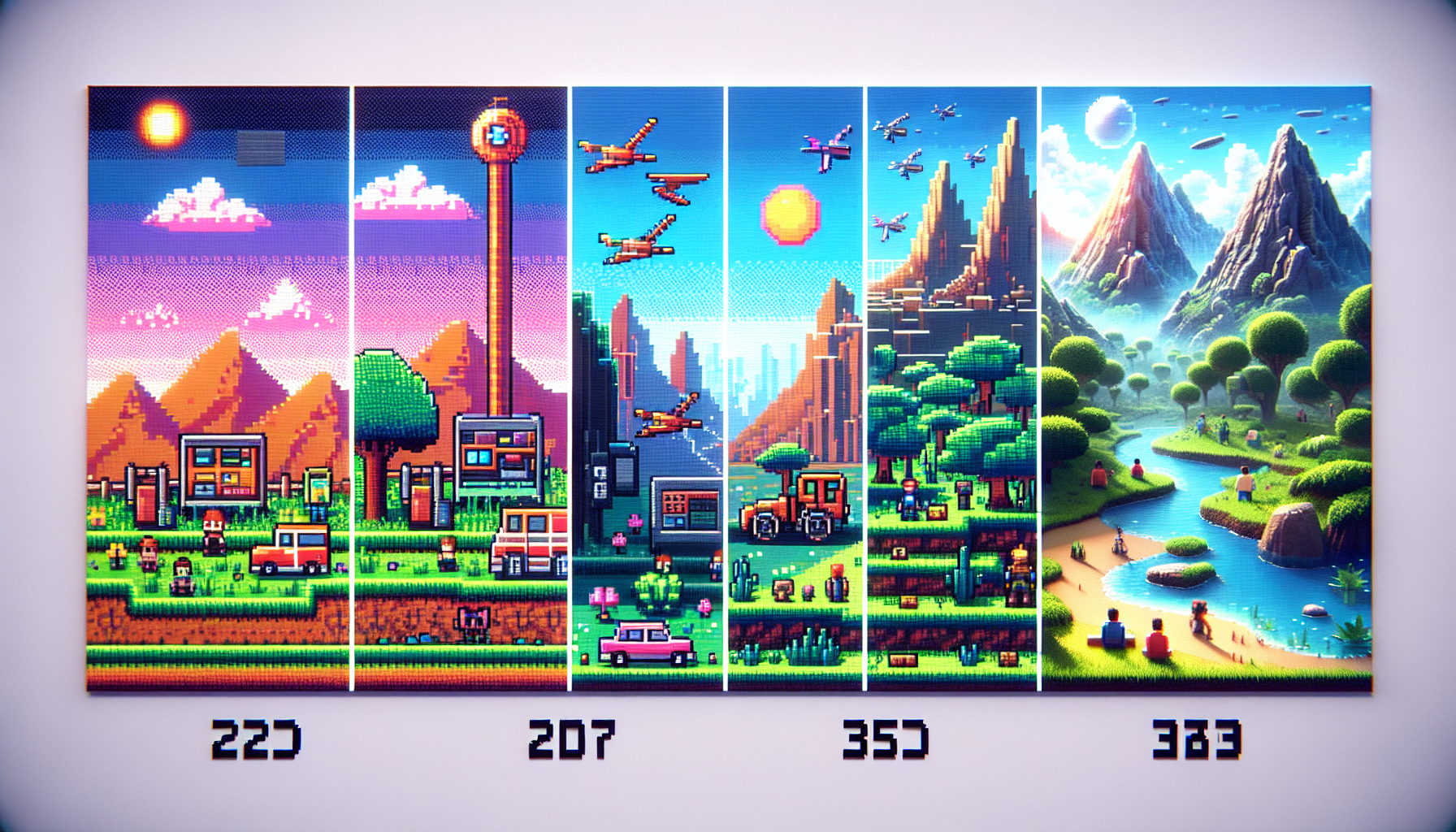
The Graphics Leap: From Pixelated to Photorealistic (2006-2010)
The introduction of DirectX 10 in 2006 by Microsoft marked a pivotal moment in PC gaming. This new API enabled developers to create richer 3D environments, pushing graphical performance further. Titles such as Crysis (2007) became the benchmark for gaming graphics, demanding advanced hardware capabilities. The game showcased dynamic lighting, complex physics, and expansive open-world environments.
Simultaneously, as graphics became more sophisticated, game engines like Unreal Engine 3 and CryEngine enabled developers to produce games with high levels of fidelity while allowing for complex gameplay mechanics and storytelling.
The Era of HD Gaming and Indie Revolution (2010-2015)
The introduction of HD graphics in games represented a culmination of decades of development. The release of consoles like the PlayStation 3 and Xbox 360 also influenced PC gaming, as developers created cross-platform titles that maximized graphics on all platforms. Games like The Witcher 3: Wild Hunt (2015) exhibited vast open worlds with richly designed environments.
Indie games began to flourish during this period, as devs leveraged tools like Steam and Unity to reach players without the financial constraints of traditional gaming studios. Titles such as Super Meat Boy (2010) and Stardew Valley (2016) showcased the potential of simple yet engaging gameplay combined with unique artistic styles.
Modern Gaming: VR and Real-time Ray Tracing (2016-Present)
The last few years have seen a transformative leap with the advent of virtual reality (VR) gaming and real-time ray tracing. The release of VR platforms like Oculus Rift and HTC Vive has offered immersive experiences that transport gamers into virtual worlds. Games such as Beat Saber and Half-Life: Alyx demonstrate the capabilities of VR for interactive gameplay.
On the graphical side, real-time ray tracing has been introduced, allowing for more realistic lighting, shadows, and reflections. The launch of Nvidia’s RTX 20-series graphics cards in 2018 marked the beginning of this new era, with games like Cyberpunk 2077 taking advantage of these technologies to render photorealistic graphics.
The Role of Streaming and Cloud Gaming
In addition to these technological advances, streaming and cloud gaming services such as Google Stadia, NVIDIA GeForce NOW, and Xbox Cloud Gaming (formerly Project xCloud) are reshaping accessibility and the gaming market. These services allow gamers to stream high-quality games without the need for powerful hardware, emphasizing the shift toward digital access over physical copies.
Conclusion
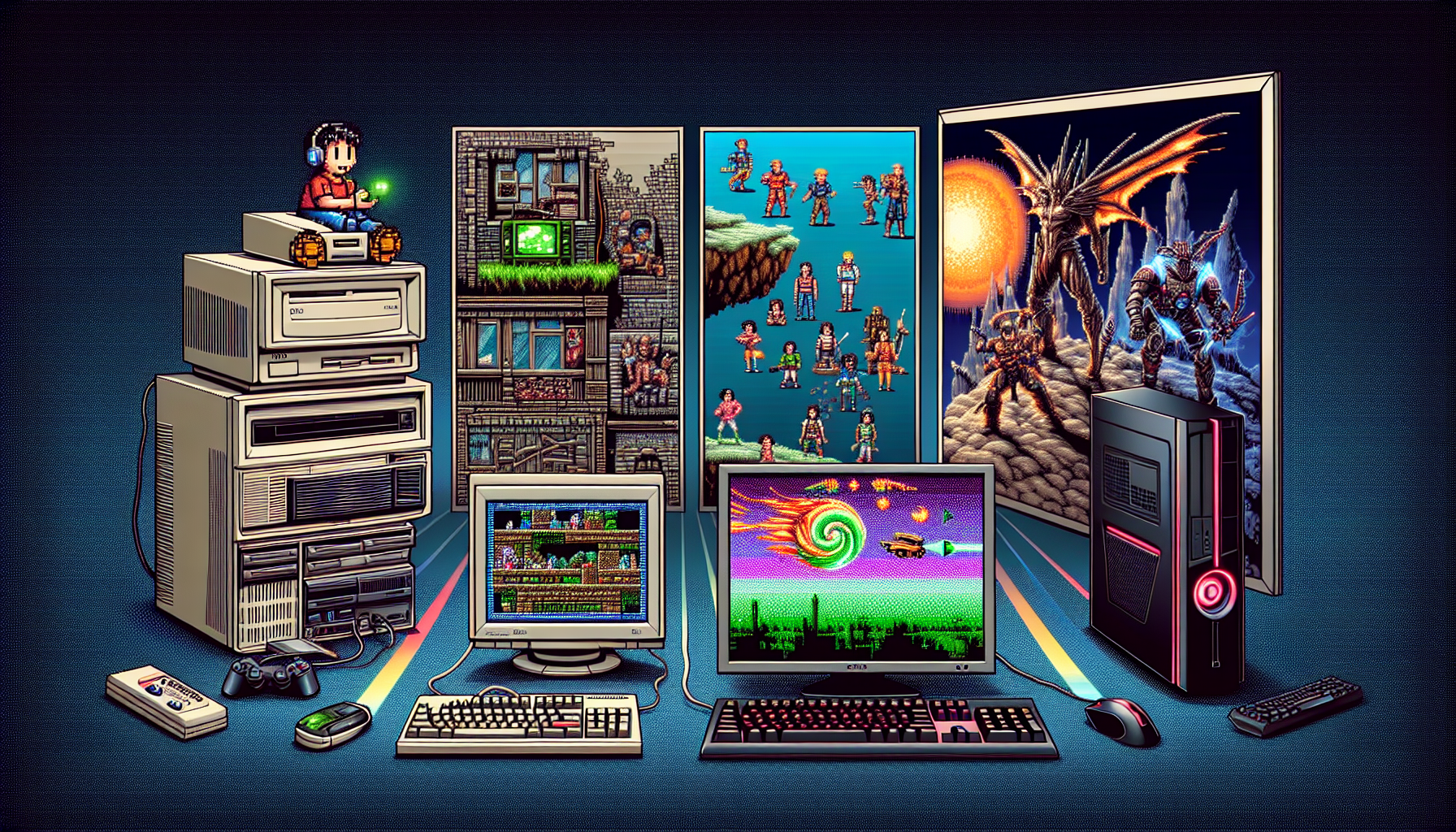
The evolution of PC gaming has been driven by rapid technological advancements and changing player expectations. From the monochrome screens of DOS to the stunning, immersive worlds of modern graphics powered by deep learning, each technological leap has been accompanied by new genres, gameplay styles, and artistic representations.
What began as simple text-based games has exploded into a billion-dollar global industry that continues to push the boundaries of creativity and technology. As future innovations emerge, PC gaming will undoubtedly continue evolving, offering fresh experiences that redefine what it means to play games.
advertisement