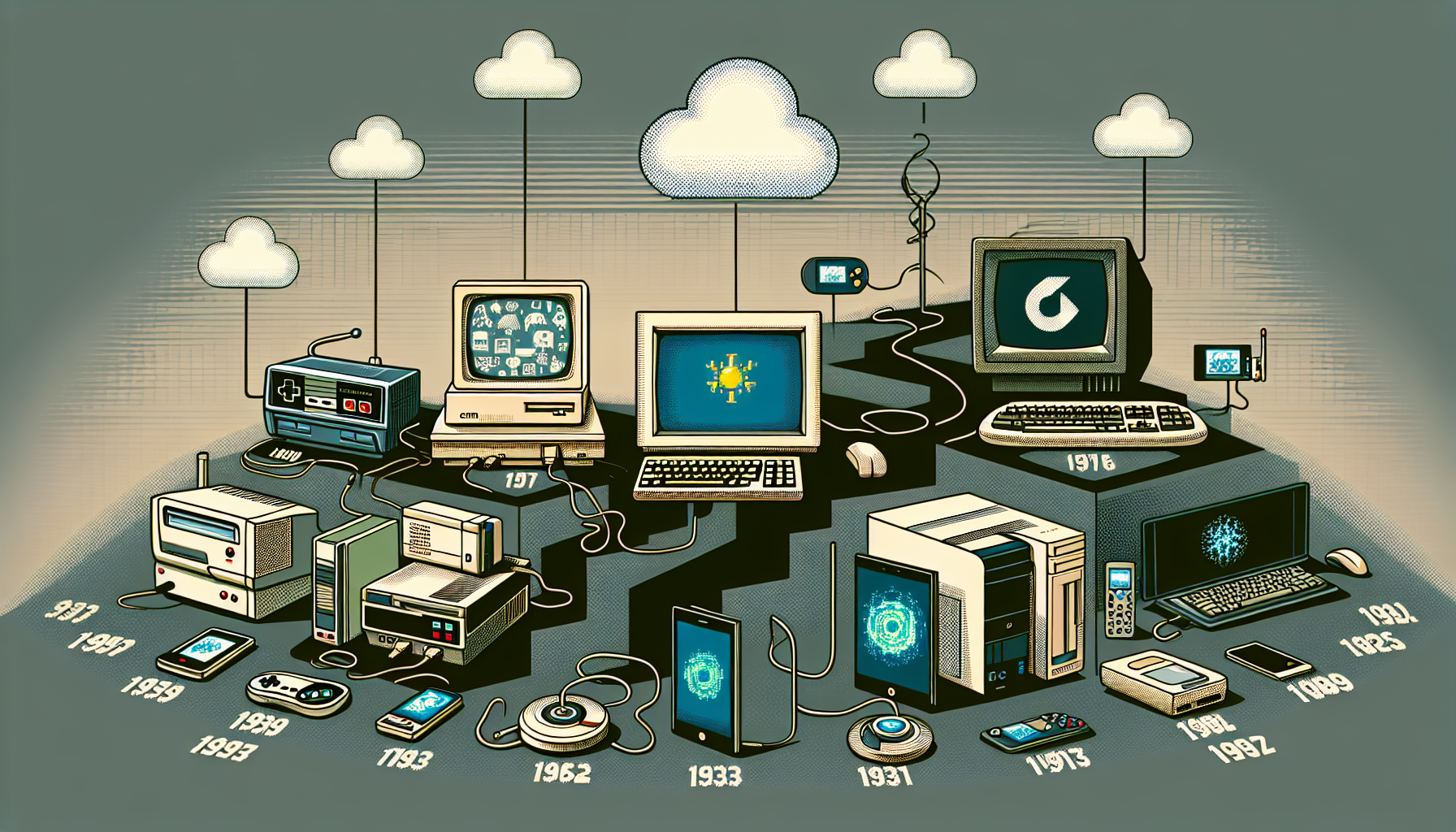
The Evolution of Online Gaming: From Dial-Up to Cloud
1. The Dawning of Online Gaming (1970s-1990s)
The origins of online gaming can be traced back to the 1970s when pioneers began experimenting with multi-user environments. The first instance of an online game was MUD (Multi-User Dungeon), a text-based adventure game created in 1978 by Roy Trubshaw. This game allowed players to interact in a shared virtual world, laying the foundational elements that would later flourish into modern gaming.
With the advent of personal computers, text-based games proliferated, allowing players to engage in multiplayer formats over local area networks (LANs). In the late 1980s, popular multiplayer games like Island of Kesmai emerged. These early online gaming experiences relied primarily on dial-up modems, operating at speeds of just 300 to 2400 baud. This slow connectivity heavily influenced game design, focusing on text and simple graphics due to bandwidth constraints.
2. The Rise of Massively Multiplayer Online Games (MMOs) in the Late 1990s
The 1990s saw a considerable shift in online gaming with the introduction of the MMORPG (Massively Multiplayer Online Role-Playing Game). Games like Meridian 59 (1996) and Ultima Online (1997) pioneered this genre, allowing thousands of players to inhabit expansive virtual worlds simultaneously. The introduction of graphical interfaces marked a significant transition from text-based environments, improving player immersion.
Despite the limitations of dial-up connections, these early MMOs thrived, driven by community interaction and player-driven economies. The popularity of these games contributed to the demand for better internet connections, leading to the adoption of broadband technology a few years later.
3. The Broadband Revolution (Early 2000s)
As broadband connections became widely available in the early 2000s, online gaming entered a new phase of evolution. The faster internet speeds allowed for richer graphics and more complex game mechanics. MMOs like World of Warcraft, which debuted in 2004, capitalized on this technological shift, gaining millions of subscribers worldwide.
advertisement

World of Warcraft combined captivating storytelling with robust gameplay systems to create a vibrant online community. Players formed guilds, organized events, and engaged in competitive PvP battles, leading to the game’s cultural impact, which can still be felt today. The success of such games prompted developers to invest heavily in multiplayer formats, further solidifying the online gaming industry’s position in the entertainment sector.
4. The Era of Consoles and Social Gaming (Mid-2000s to Early 2010s)
With the dominance of PCs in earlier years, consoles began entering the online gaming space. Sony’s PlayStation Network and Microsoft’s Xbox Live introduced subscription services that allowed console players to engage in multiplayer gaming and digital downloads. The introduction of systems like the Xbox 360 in 2005 created a new demographic for online gaming.
Social gaming emerged as a new sensation, especially with the launch of Facebook in 2004. Games like FarmVille (2009) showcased how casual gaming could capture a vast audience, focusing on easy accessibility rather than complex mechanics. The freemium model, where players could access the game for free but purchase in-game items, revolutionized the gaming economy, allowing developers to monetize user engagement without the upfront costs of traditional game purchases.
5. The Mobile Gaming Boom (2010s)
The introduction of smartphones marked another leap in online gaming. As mobile technology advanced, so did the prevalence of mobile games. Titles like Angry Birds and Candy Crush Saga achieved massive success, illustrating that gaming could reach everyday consumers without the need for a gaming console or a powerful PC.
App stores provided a platform for indie developers to create and publish games, democratizing game development. The prevalence of 4G networks allowed for seamless online gaming experiences on the go, shifting the paradigm of gaming from home consoles and PCs to handheld devices.
6. The Rise of Free-to-Play and Esports (2010s)
In the late 2010s, the free-to-play model became even more popular, exemplified by games like Fortnite and League of Legends. These games utilized in-game purchases and cosmetics to generate revenue while remaining free for players. This model significantly changed player consumption behavior and expectations surrounding online gaming.
Esports also gained momentum during this time, becoming a billion-dollar industry. Competitive gaming events attracted large audiences and sponsorships, creating a professional environment where gamers could make a living from playing video games, thereby enhancing the visibility and legitimacy of online gaming globally.
7. Cloud Gaming: The New Frontier (2020 Onwards)
As internet speeds continued to accelerate with the rollout of 5G technology, cloud gaming emerged as the next frontier. Services like Google Stadia, NVIDIA GeForce Now, and Xbox Cloud Gaming allow players to stream games directly to their devices without the need for high-end hardware. This technology mitigates traditional barriers to entry, such as the need for costly gaming consoles or high-spec PCs.
The cloud gaming model relies heavily on data centers to handle computing tasks and streaming, requiring significant infrastructure investments. As this technology matures, it presents a compelling alternative to traditional gaming systems, appealing to casual and hardcore gamers alike.
8. The Impact of Virtual Reality and Augmented Reality
Virtual Reality (VR) and Augmented Reality (AR) have added new dimensions to online gaming experiences. Titles like Beat Saber and Pokémon GO showcased how immersive technology could redefine gameplay. VR provides users with an unparalleled experience, enabling interaction in three-dimensional spaces that mimic real-life dynamics.
As the technologies improve and the costs decrease, developers are starting to integrate VR and AR elements into mainstream online gaming, pushing the limits of player engagement and interaction in virtual environments.
9. The Future of Online Gaming
The trajectory of online gaming continues to point towards increased accessibility, immersion, and community engagement. With ongoing advancements in technology, including machine learning and artificial intelligence, future gaming experiences are likely to become even more personalized and adaptive to individual player styles.
Cross-platform play is becoming a standard expectation, allowing players on different devices to compete and collaborate within the same gaming ecosystems. This trend is expected to continue, fostering larger communities and more inclusive environments.
Furthermore, as the industry navigates issues around data privacy and cyber security, developers are likely to invest in robust measures to protect their users. Community-driven feedback will play a significant role in shaping future online gaming experiences, ensuring they remain engaging, secure, and inclusive.
10. Conclusion
The evolution of online gaming illustrates a remarkable journey driven by technological progress and cultural shifts. From the rudimentary text-based games of the 1970s to immersive cloud gaming and VR experiences, online gaming has continuously adapted and evolved to meet the needs and desires of its players. The gaming landscape will continue to expand, promising even more thrilling experiences for future generations.
advertisement