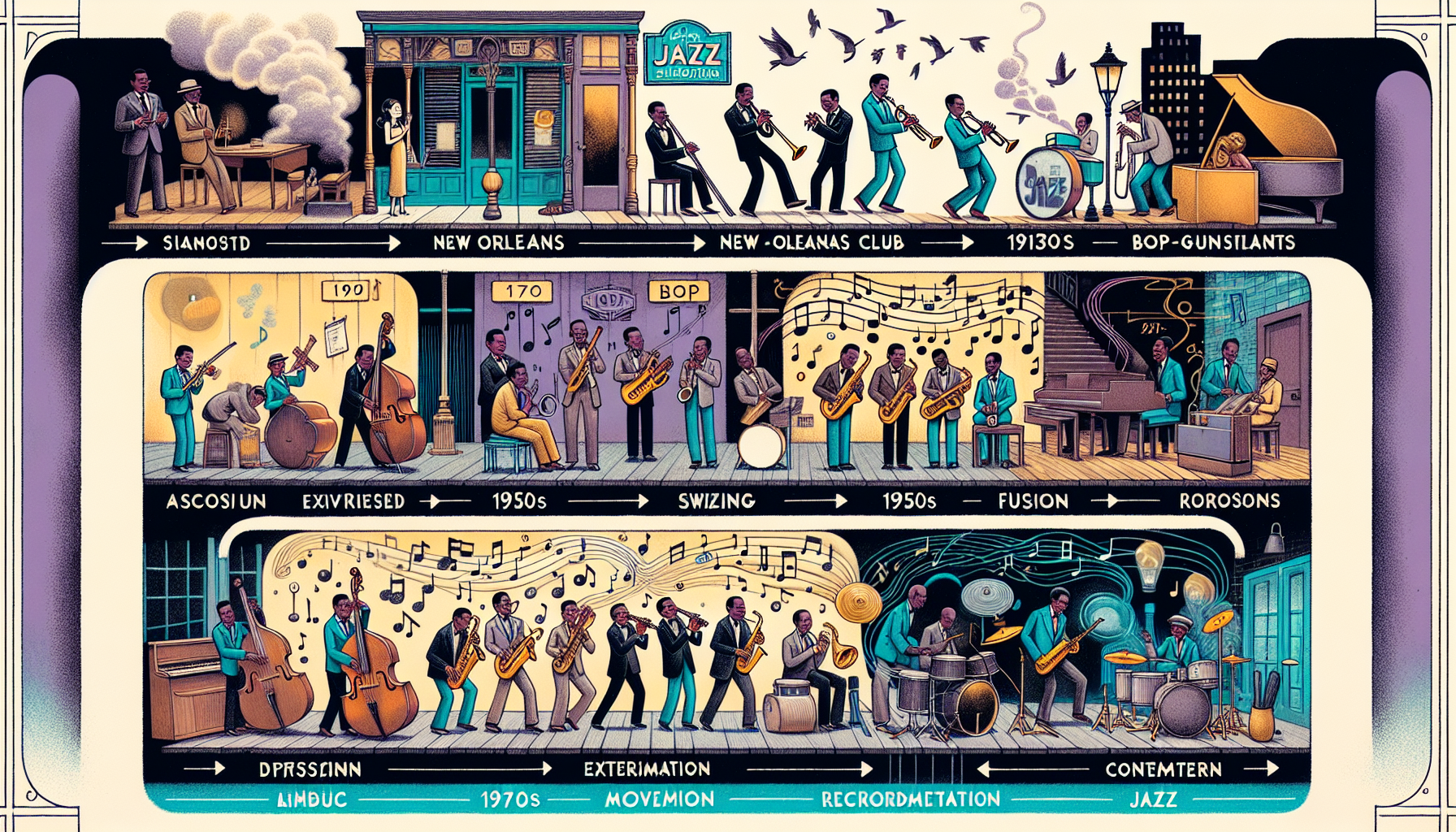
The Evolution of Jazz: A Journey Through Time
The Origins of Jazz (Late 19th Century)
Jazz has deep roots in African American history, with its origins traced back to the late 19th century in New Orleans. The fusion of African, European, and Caribbean musical traditions created a unique sound characterized by improvisation, syncopation, and swing. African slaves brought with them various musical forms, including chants, field hollers, and spirituals, which were influenced by West African rhythms.
New Orleans, a melting pot of cultures, played a crucial role in the development of jazz. The influence of ragtime, a genre popularized by composers like Scott Joplin, introduced syncopation to the mix. Moreover, brass bands, which were prevalent in New Orleans parades and celebrations, added elements of collective improvisation and vibrant instrumentation. The blending of these various influences laid the foundation for what would become jazz.
Early Jazz: Roots and Traditions (1900-1920)
By the early 20th century, jazz began to emerge as a distinct genre. Important figures during this period included Louis Armstrong, whose innovative trumpet playing and vocal style helped to define the sound of jazz. The introduction of instruments like the clarinet and trombone enriched the orchestration, while the role of the rhythm section began to solidify with the inclusion of piano, banjo, and drums.
Jazz began to spread northward from New Orleans, especially to Chicago and New York City, due to the Great Migration. Musicians like King Oliver and Jelly Roll Morton brought their unique styles to these urban centers, making jazz a national phenomenon. During this time, the use of improvisation became a hallmark of the genre, allowing musicians to express their creativity and individuality.
The Harlem Renaissance and the Birth of Swing (1920s)
The 1920s marked a pivotal moment in jazz history, coinciding with the Harlem Renaissance. This cultural explosion saw a surge in African American arts, with jazz at the forefront. The Cotton Club, a popular venue in Harlem, showcased stars like Duke Ellington and Bessie Smith, helping to elevate the genre’s status.
advertisement

The musical form of jazz evolved during this era, transitioning from the improvisational styles of New Orleans to more structured compositions. Big bands emerged, and swing became the dominant style. The swing era was characterized by its danceable rhythms and larger ensembles, which included brass and woodwind sections, played an essential role in the music’s popularity. Composers like Glenn Miller and Benny Goodman brought jazz to mainstream audiences, featuring catchy melodies and arrangements that appealed to a wide range of listeners.
The Bebop Revolution (1940s)
The 1940s saw the rise of bebop, a radical departure from the big band swing style that dominated the previous decade. Pioneered by musicians like Charlie Parker and Dizzy Gillespie, bebop emphasized complex harmonies, fast tempos, and intricate melodies. This style was built for listening rather than dancing, allowing musicians to push the boundaries of improvisation and composition.
Bebop’s innovative approach incorporated elements of modern classical music and expanded the harmonic palette of jazz. Players began to experiment with time signatures and polyrhythms, showcasing their virtuosity. Clubs like Minton’s Playhouse became hotspots for this new sound, fostering a creative environment where musicians could collaborate and innovate.
Cool Jazz and Hard Bop (1950s)
As the bebop craze settled, the 1950s ushered in two distinct movements: cool jazz and hard bop. Cool jazz emerged as a reaction to the frenetic energy of bebop, characterized by a more relaxed tempo and smooth, laid-back melodies. Artists like Miles Davis, Chet Baker, and Dave Brubeck gained fame for their sophisticated compositions and tranquil soundscapes.
Contrasting with cool jazz, hard bop reintroduced the emotional intensity and rhythmic drive associated with the blues and gospel music. Musicians like Art Blakey, Horace Silver, and Miles Davis embraced the simpler forms and catchy hooks while incorporating improvisation. Hard bop became the soundtrack of urban life, reflecting the struggles and triumphs of the African American community.
Free Jazz and Avant-Garde (1960s)
The 1960s bore witness to the free jazz movement, a radical form that rejected conventional structures and embraced a more chaotic, spontaneous approach to music. Pioneered by artists like Ornette Coleman and John Coltrane, free jazz emphasized total improvisation and deconstructed melodies, exploring new sound textures.
Coltrane’s work during this period, including the groundbreaking album “A Love Supreme,” exemplified the spiritual and emotional depth that free jazz sought to achieve. Simultaneously, artists like Sun Ra and Cecil Taylor pushed boundaries even further, experimenting with unconventional instruments and extended techniques to create a completely unique sound.
Jazz Fusion and Beyond (1970s-1980s)
The 1970s brought the fusion of jazz with rock, funk, and R&B, marking another significant evolution in the genre. Musicians like Herbie Hancock and Chick Corea blended jazz improvisation with electric instruments, creating a new sound that appealed to a younger audience. Albums such as Hancock’s “Head Hunters” showcased infectious grooves and innovative production techniques, pushing jazz into mainstream popularity.
During this time, many jazz musicians began to collaborate with rock artists, creating cross-genre masterpieces that redefined what jazz could encompass. However, some traditionalists critiqued the commercialization of jazz, arguing that authenticity was sacrificed in the pursuit of popularity.
In response to the fusion movement, artists like Wynton Marsalis sought to return to the roots of jazz, emphasizing acoustic sounds and traditional forms. Marsalis’ dedication to preserving the heritage of jazz while also pushing creative boundaries helped to spark renewed interest in jazz’s rich history.
Contemporary Jazz and Global Influences (1990s-Present)
As jazz entered the 1990s and into the 21st century, it continued to evolve and adapt. Contemporary jazz features a diverse range of styles, including Latin jazz, smooth jazz, and nu-jazz, reflecting the genre’s flexibility. Musicians such as Esperanza Spalding and Kamasi Washington have garnered critical acclaim while infusing elements of hip-hop, soul, and world music into their work, illustrating how jazz remains relevant in today’s cultural landscape.
Moreover, the globalization of music has led to a fusion of jazz with various international styles. Musicians like Ibrahim Maalouf and Sadao Watanabe incorporate their cultural influences, creating hybrid forms that showcase the universal appeal of jazz. Jazz festivals around the world highlight the genre’s global reach, celebrating the rich tapestry of sounds that make up contemporary jazz.
Technology and the Future of Jazz (21st Century)
As technology continues to advance, the future of jazz is being shaped by new musical tools and platforms. Digital recording techniques, online streaming services, and social media allow musicians to reach audiences without the traditional label systems. Artists can collaborate remotely, blending sounds and ideas from diverse geographical locations and genres.
The emergence of Artificial Intelligence (AI) and machine learning has also introduced new creative possibilities, enabling musicians to compose and experiment with sound in unprecedented ways. While some purists may question the authenticity of machine-generated compositions, others embrace these innovations as part of the ongoing evolution of jazz.
Key Takeaways
The evolution of jazz is an ongoing narrative filled with innovation and cultural significance. From its origins in New Orleans to its contemporary manifestations, jazz has continuously adapted, reflecting the social and artistic currents of its time. It remains a vibrant, living art form celebrated globally, appealing to diverse audiences while maintaining a commitment to improvisation, creativity, and emotional expression. Jazz, with its rich history and limitless potential, continues to inspire new generations of musicians and listeners alike, ensuring that this beloved genre will thrive for years to come.
advertisement