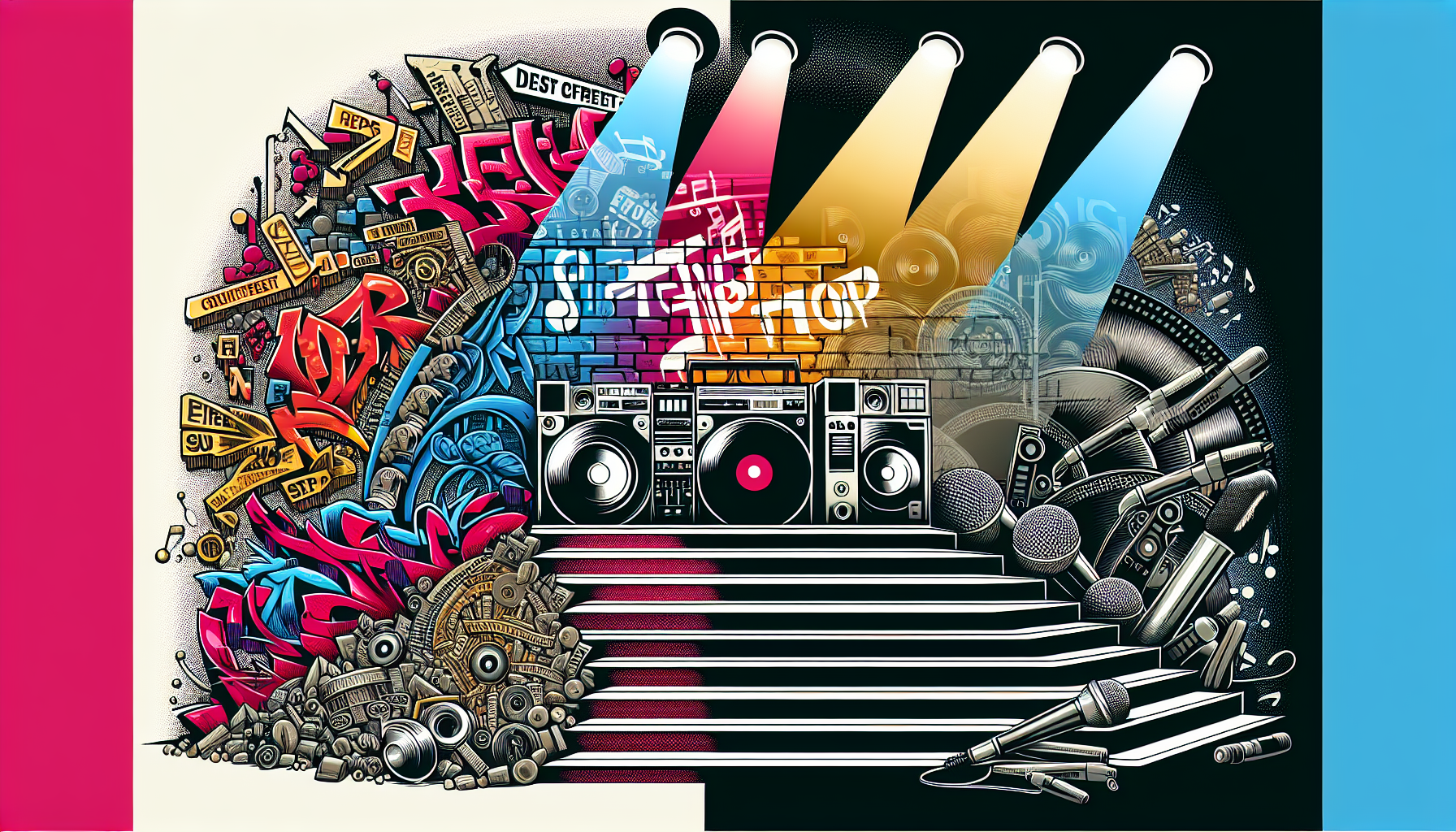
The Roots of Hip Hop: A Cultural Movement Emerges
Hip hop has its roots in the late 1970s in the South Bronx, New York City, as a response to social, economic, and political challenges. It emerged as a platform for marginalized voices to express their experiences. Graffiti, breakdancing, DJing, and rap made up the fundamental pillars of this revolutionary cultural movement. The process of defining and understanding hip hop culture starts with the realization that it is more than music; it is a multifaceted artistic expression deeply tied to the history of African American communities.
The Graffiti Art Form: Visual Expression of Rebellion
Graffiti was among the earliest forms of hip hop. The art was not simply vandalism but an assertion of identity and a declaration of presence. Artists like Keith Haring and Jean-Michel Basquiat brought street art to a broader public, although the roots were in tagging, where individuals would scribble their names or code on walls.
Graffiti was a means to occupy public spaces in a neighborhood that felt neglected. It transformed bleak urban landscapes into vibrant galleries. What began as an underground movement gradually found its way into mainstream art. As graffiti artists gained recognition, galleries began showcasing their work, which further elevated the cultural currency of street art.
Breakdancing: The Physical Expression of Hip Hop
Simultaneously, breakdancing—also known as b-boying—became a defining form of artistic expression. Originating during dance parties in community centers and on street corners, breakdancing allowed people to showcase their skills through acrobatics, intricate footwork, and dynamic freezes.
Competitions known as “battles” emphasized not only technical prowess but also personal style. Breakdancing created a healthy competitive environment that brought communities together. The inclusion of this dance style in films such as “Flashdance” and “Beat Street” introduced it to global audiences, demonstrating the interconnectedness of hip hop culture.
advertisement

DJing: The Sonic Foundation of Hip Hop
DJing served as the backbone of the hip hop movement. Pioneering figures such as Kool Herc and Grandmaster Flash revolutionized how music was consumed at parties. They manipulated records, employing techniques like “breakbeat” and “scratching” to create new sounds. Kool Herc’s “merry-go-round” technique, in which he looped segments of songs, laid the groundwork for the hip hop sound that would define the genre.
Syncing the beat with lively dance created an atmosphere where creativity could flourish. By selecting records that resonated with community narratives, DJs played a crucial role in hip hop’s rise, allowing attendees to connect through music and dance.
The Birth of MCing: Lyrical Innovation
As the scene evolved, so did the role of MCs (Master of Ceremonies). Initially, MCs primarily acted as hype men, engaging the audience and introducing DJs. Gradually, the lyrical aspect of the art began to flourish. The late 1970s saw artists like Grandmaster Melle Mel transform simple chants into poetic expressions that addressed social issues, aiming to educate the audience while keeping them entertained.
By the 1980s, rap lyrics became more personal, telling stories about life in the inner city, the struggle against systemic injustices, and the celebration of cultural heritage. The Sugarhill Gang’s “Rapper’s Delight” marked the first commercial success, reaching broad audiences and allowing rap to emerge as a legitimate art form.
The Influence of Mainstream Media: The 1980s Resurgence
The rise of hip hop coincided with the explosion of music videos and television shows, aiding in its spread. Programs like “Yo! MTV Raps” and radio stations began to spotlight hip hop artists, thus offering a platform to new voices. This pivotal moment enabled artists such as Run-D.M.C., LL Cool J, and Beastie Boys to break into the mainstream, combining rap with rock and pop elements.
The fusion of genres pushed hip hop into the limelight and facilitated international interest. These artists not only made significant contributions in terms of music but also in fashion, imagery, and language, creating an aesthetic that continues to inspire today.
The Golden Age of Hip Hop: 1986-1996
The late 1980s to mid-1990s is often referred to as the golden age of hip hop. This era produced a wealth of influential albums and artists, including A Tribe Called Quest, Nas, Wu-Tang Clan, and Tupac Shakur. The lyrical content was more ambitious, delving deeper into themes of identity, systemic oppression, and life experiences.
Collaborative albums and collective approaches became common, leading to the establishment of labels like Def Jam and Bad Boy Records. The emergence of subgenres such as gangsta rap, conscious rap, and alternative hip hop signified the genre’s versatility and its ability to adapt to cultural shifts.
The Rise of Independent Labels: Diversifying the Sound and Message
As DJs and MCs represented specific neighborhoods, independent labels began to emerge. This provided artists with chances to maintain creative control and engage directly with their audiences. Labels like Rawkus and Stones Throw sought to redefine hip hop away from mainstream expectations, focusing on authenticity and artistic merit.
The late 1990s and early 2000s saw the rise of underground rappers like MF Doom and companies like Anticon further pushing the boundaries of hip hop. This shift allowed experimentation with unconventional sounds and dedications to both regional and alternative expressions, cultivating a more diverse hip hop scene.
The Digital Age: Hip Hop in the 21st Century
The arrival of the internet revolutionized the distribution and consumption of music. In the 2000s, platforms like MySpace allowed unknown artists to share their music widely without the need for a record deal. Websites dedicated to unsigned talent began to flourish—giving rise to artists like Lil Wayne and Soulja Boy, who used these new technologies to reach audiences directly.
Streaming services like Spotify and Apple Music further transformed how listeners consumed music. Artists began releasing singles as opposed to entire albums, catering to short attention spans while allowing for rapid experimentation and reactivity to audience feedback.
Globalization of Hip Hop: A Worldwide Influence
As the 2000s progressed, hip hop became a global phenomenon. Artists from countries like the UK, Brazil, France, and South Korea adopted the genre, melding it with local sounds and languages. The British grime scene, led by artists like Dizzee Rascal and Stormzy, showcased how hip hop could evolve and reflect different cultural experiences.
In Africa, artists like K’naan and M.anifest adapted hip hop to express various sociopolitical messages while weaving in their unique cultural narratives. The global hip hop landscape grew increasingly diverse, making it one of the world’s most celebrated musical genres.
The Role of Social Media: Connection and Activism
With the rise of social media platforms like Instagram, TikTok, and Twitter, hip hop artists have harnessed these tools for self-promotion, engagement, and activism. The spontaneous nature of content sharing enables artists to respond to current events and societal issues in real-time, solidifying hip hop as a potent form of commentary.
Twitter campaigns and hashtags, often spearheaded by hip hop influencers, have raised awareness surrounding pivotal issues—such as police brutality and racial injustice. This intersection of social media and hip hop has enabled quick reactions to crises, uniting communities and amplifying marginalized voices.
The Future of Hip Hop: Innovation and Collaboration
Looking ahead, the future of hip hop appears to be defined by innovation and cross-genre collaboration. Artists are increasingly willing to join forces with musicians from various styles, including electronic, pop, and rock. This blending leads to dynamic, genre-defying music. With advancements in technology, virtual reality concerts and AI-generated music present new avenues for expression.
Virtual collaborations and the metaverse offer exciting prospects for hip hop artists to connect with fans in immersive ways while harnessing the power of global platforms. The ongoing evolution of hip hop signifies its resilience and ongoing relevance.
The Cultural Legacy of Hip Hop
The legacy of hip hop transcends entertainment. It has profoundly impacted fashion, language, and societal attitudes, marking it as one of the significant cultural movements of the 20th and 21st centuries. Educational programs rooted in hip hop culture highlight its value as a tool for teaching history, art, and social justice.
Scholarship and research focused on hip hop’s influence are growing, further securing its place as a critical facet of contemporary culture. Universities are beginning to offer programs centered around its study, reflecting its significance in understanding modern society.
Conclusion: A Continuously Evolving Narration
From graffiti-adorned streets to global music charts, hip hop has undergone significant evolution over decades. It has maintained its core principle—giving voice to the voiceless—while continuously adapting and embracing innovation. As technology advances and new generations rise, hip hop will undoubtedly continue to shape the cultural landscape in ways yet unimaginable, proving it is far more than a musical genre; it is a transformative and enduring cultural movement interconnected with the fabric of society.
advertisement