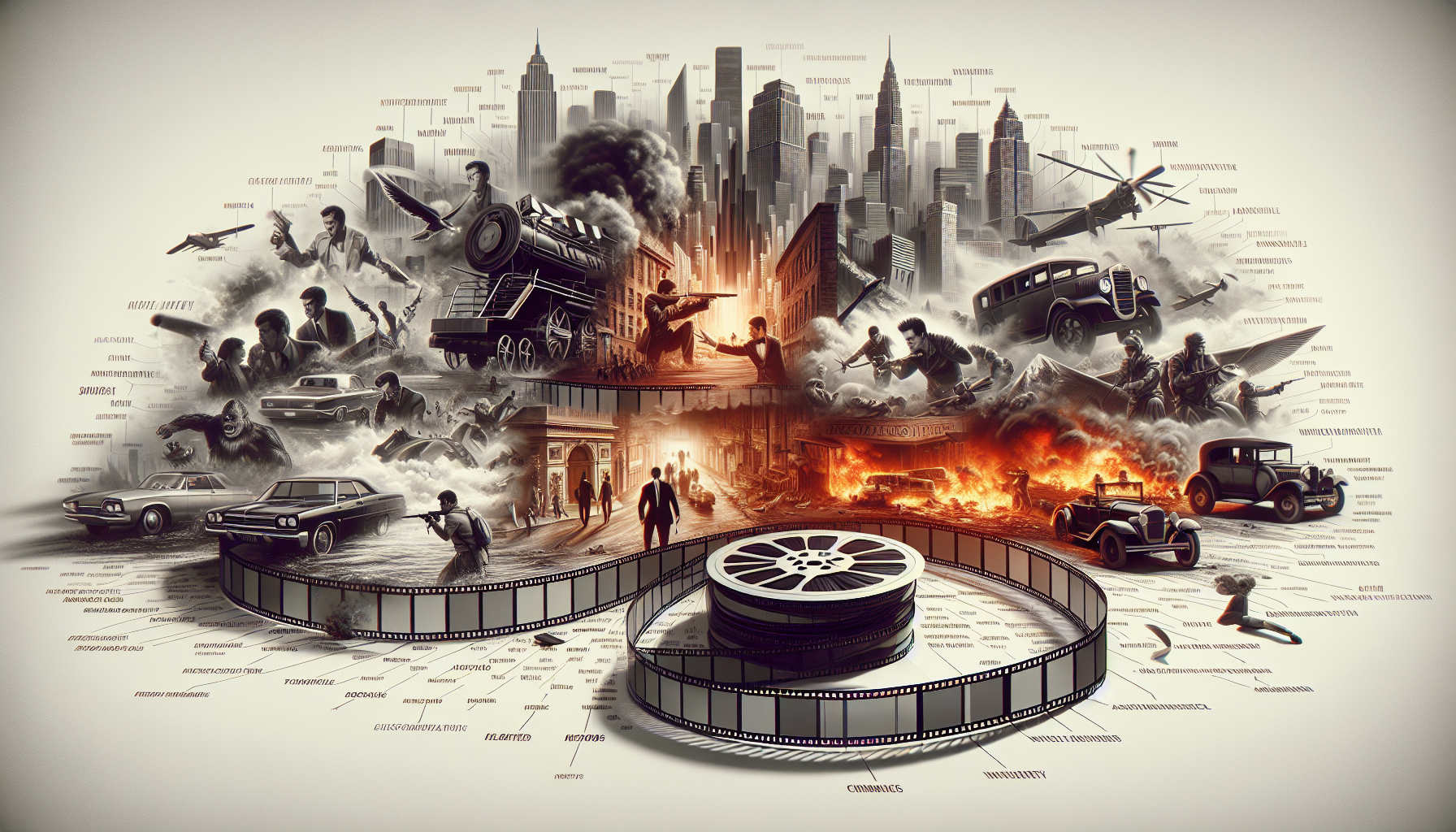
The Evolution of Action Movies: Explosions and Adrenaline
The Birth of Action Cinema
The action genre finds its roots in the silent film era, where thrilling chases and daring feats took center stage. Pioneers like Buster Keaton and Charlie Chaplin showcased their physical prowess and comedic timing through high-adrenaline stunts and slapstick comedy. However, it wasn’t until the late 1920s and early 1930s that the genre began to take shape with the introduction of sound and better special effects.
The Influence of Film Noir
In the 1940s, action began to integrate with film noir elements, creating a gritty atmosphere that fascinated audiences. Movies like “The Maltese Falcon” showcased not just physical confrontation but also a psychological edge, making the stakes even higher. The visual style of noir, coupled with sharp dialogues and complex characters, set the stage for future action films that combined brawn with brains.
The Golden Age of Action Films
The 1960s marked the golden age of action cinema, particularly in Hollywood. The emergence of larger-than-life characters and elaborate plots drew in massive audiences. Films like “James Bond” (1962), starting with “Dr. No,” introduced a new style of storytelling that relied on a mix of espionage, violence, and sophisticated settings. The iconic character of Agent 007, played initially by Sean Connery, brought with him an adrenaline rush that became synonymous with the action genre.
Technological Advancements
Advancements in technology played a crucial role in paving the way for action films’ evolution. The introduction of color film brought vibrancy to explosions, gunfights, and car chases. Sound design also evolved, heightening the auditory experience of viewers. These elements made actions sequences more engaging, leading to significant box office successes.
The Rise of Blockbusters
With the advent of the blockbuster era in the 1970s, action movies turned into megastars. Films like “Jaws” (1975) and “Star Wars” (1977) created an entirely new standard for spectacle and excitement, integrating groundbreaking special effects. The creation of the summer blockbuster established new marketing and distribution strategies that emphasized adrenaline-pumping content.
advertisement

Explosions Take Center Stage
The iconic blasts and boyish charm of the action heroes cemented a formula that essentially sold the genre. The explosion as a cinematic device became not just a spectacle but a character in itself. From the destruction of the Death Star to the cinematic city demolitions in “Die Hard” (1988) and “Lethal Weapon” (1987), filmmakers sharpened their tools to deliver cathartic, edge-of-the-seat experiences.
The 80s and 90s: The Action Hero Archetype
The 1980s and 90s brought forth a wave of action heroes characterized by their unyielding toughness, such as Arnold Schwarzenegger and Sylvester Stallone. Films like “Predator” (1987) and “Rambo: First Blood” (1982) presented tough-guy personas who faced off against overwhelming odds, inspiring a generation of viewers.
Evolution of Stunts and Action Choreography
During this period, stunt coordination became more nuanced, with directors like John McTiernan and Tony Scott providing elaborate set-pieces. Martial arts films also gained mainstream appeal, with stars like Bruce Lee leading the way with iconic films such as “Enter the Dragon” (1973). The cross-culture appeal and skillful choreographed fight sequences expanded the genre’s reach, leading to a homogenization of action styles worldwide.
The New Millennia: Technology and Genre Blending
The new millennium witnessed an infusion of technology along with a blending of genres. Action films started to incorporate elements of fantasy, science fiction, and even horror. Movies like “The Matrix” (1999) revolutionized the choreographed fight scene with wire-fu, introducing a level of stylized action previously unseen. With the advent of CGI, filmmakers had newfound possibilities, allowing them to create surreal environments and experiences for action sequences.
The Rise of Female Action Heroes
As society continued to evolve, so did the landscape of action cinema. The 2000s heralded the emergence of female action heroes in high-octane films. Characters like Trinity in “The Matrix” series and Lara Croft in “Tomb Raider” (2001) showcased women defying stereotypes and embodying strength and resilience.
Action Movies in the Streaming Age
With the rise of streaming services in the late 2010s, action movies adapted once again. Platforms such as Netflix and Amazon began producing original action films like “Extraction” (2020) and “The Old Guard” (2020), allowing audiences easy access to adrenaline-fueled content. These films leveraged innovative stunts and high-caliber special effects while also emphasizing character-driven storytelling.
International Action Cinema Takes Center Stage
Globalization of the film industry saw international action films gaining immense popularity. The “John Wick” series (2014) introduced audiences to a stylized approach to action filmmaking, while South Korean films like “Train to Busan” (2016) showcased a unique blend of horror and action, further diversifying genre offerings. The evolution of martial arts films continued with entries like “The Raid” (2011), pushing the boundaries of action choreography.
The Future of Action Cinema
As filmmakers continue to explore stories rich in diversity and character depth, the future of action cinema looks promising. While CGI remains a powerful tool, there’s a resurgence in valuing practical effects and real stunts to deliver authenticity. Productions like “Mission: Impossible” have garnered attention for incorporating real-life stunts and adrenalized sequences, emphasizing that the human element remains central to action.
Diverse Storytelling with Dynamic Action
The expectation of action films has evolved; audiences are no longer satisfied with mere explosions and chaos. There is a growing trend toward deeper narratives that tackle pressing societal issues. Films like “Black Panther” (2018) and “Wonder Woman” (2017) demonstrated that action films can base their narratives around cultural identity and personal struggle.
Characteristics Defining Modern Action Movies
Modern action films are complex, incorporating a variety of elements that cater to diverse audiences.
High-Octane Action Sequences
The heartbeat of any action film is its action sequences—car chases, shootouts, and hand-to-hand combat should set hearts racing. Directors pay close attention to pacing as they balance intense scenes with quieter moments for character development, ensuring a roller-coaster viewing experience.
Character Arcs and Relationships
Forget simplistic heroes and villains; modern action films present multifaceted characters that evolve through their journeys. Relationships intertwine with their quests, creating emotional stakes that resonate with viewers.
The Balance of Style and Substance
The careful blending of visual spectacle and rich storytelling is defining modern action cinema. Stylization, combined with an understanding of narrative and character development, allows filmmakers to forge deeper connections with their audience.
Marketing the Explosive Appeal
Marketing plays a significant role in the success of action films. Intriguing trailers highlighting explosions, car chases, and nail-biting confrontations generate buzz and create anticipation among fans. Social media campaigns, fan events, and behind-the-scenes glimpses further engage audiences, building excitement before a film’s release.
Merchandise and Cultural Impact
Action movies often inspire a range of merchandise, from toys to video games to clothing lines. Iconic action heroes like Indiana Jones and Iron Man have transcended film to become cultural icons, influencing everything from fashion trends to video game development.
Conclusion
The evolution of action movies is a testament to the genre’s ability to adapt and thrive through changing societal norms and technological advancements. While it began with simple stunts and silent spectacles, action cinema now sprawls into a complex web of narratives exploring human experiences through the thrill of explosions and adrenaline. With a promising future ahead, the evolution continues, giving viewers even more reasons to feel their hearts race as they embark on thrilling cinematic adventures.
advertisement