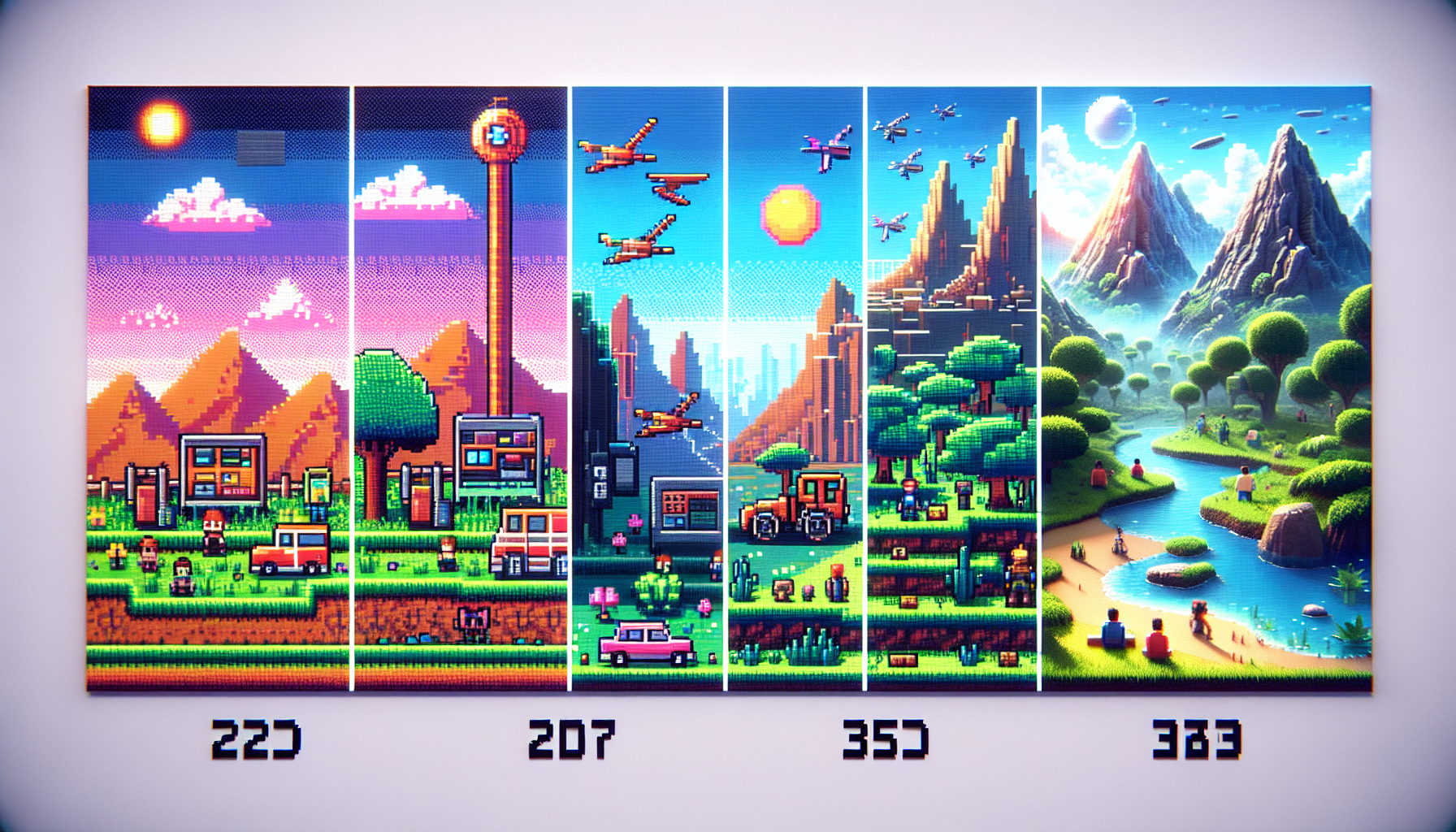
The Evolution of Open World Games: From 2D to Immersive Experiences
The Early Days of Open World Gaming
The concept of open-world gameplay can be traced back to the late 1970s and early 1980s with text-based games and simple graphics. Colossal Cave Adventure (1976), developed by Will Crowther and later expanded by Don Woods, is often considered one of the first open-world games. It featured a vast cave system that players could explore freely, relying heavily on text descriptions and player imagination. This game set the foundational elements of exploration and non-linear narratives that would define the genre.
The transition to graphical interfaces began in the mid-1980s. Titles such as Ultima I: The Game (1981) and Zelda: The Legend of Zelda (1986) incorporated a more visually engaging experience. The Legend of Zelda introduced an expansive world with a combination of puzzles, combat, and exploration, establishing the foundational mechanics of open-world gaming in a 2D environment. Players navigated the kingdom of Hyrule, uncovering secrets, dungeons, and items at their own pace.
Maturing Graphics and Evolving Mechanics
As technology advanced, so did the complexity of open-world titles. The arrival of 16-bit consoles in the early 1990s facilitated richer graphics and more detailed worlds. The Elder Scrolls: Arena (1994) was revolutionary for its time, allowing players to explore a massive fantasy world in a manner previously unseen. The game utilized randomly generated landscapes, delivering a virtually infinite environment filled with towns, dungeons, and quests.
Meanwhile, Super Mario 64 (1996) marked a significant shift to 3D open worlds. While not open-world in the modern sense, it allowed players to explore various kingdoms at their leisure, pioneering 3D platformer mechanics that would influence future game design. Players could tackle levels in various orders, offering a degree of freedom that had been previously unexplored in video games.
The Emergence of 3D Open World Games
As 3D graphics became the norm in the late 1990s, the open-world genre flourished. Games like Grand Theft Auto III (2001) transformed the landscape by introducing fully realized urban environments for players to explore. The game’s free-roaming Liberty City enabled players to engage in missions at their own pace or simply roam the streets causing chaos, which resonated profoundly with gamers.
advertisement

Another crucial title from this era is The Legend of Zelda: Ocarina of Time (1998), which blended open-world elements with structured storytelling and gameplay mechanics. Its expansive lands, combined with time-travel mechanics and intricate dungeons, created a rich narrative and gameplay experience that left a long-lasting impact on the industry.
The Role of Graphics and Realism in Open Worlds
By the mid-2000s, open-world games advanced further, featuring increasingly intricate graphics and improved AI systems. Games like The Elder Scrolls V: Skyrim (2011) set new standards with its vast, detailed world filled with quests, characters, and lore. The game provided players with a living ecosystem—they could experience dynamic weather, wildlife interactions, and engage in countless side quests that added depth to the immersive world.
Moreover, realism began playing an important role in the design of open-world games. The introduction of physics engines allowed for more believable movement and interactions in the environment. Red Dead Redemption (2010) showcased this evolution by not only allowing players to traverse a lively Wild West world but also encountering realistic ecosystems, diverse wildlife, and NPC behaviors that reacted dynamically to player actions.
Narrative and Player Agency
As technology progressed, open-world games began prioritizing player agency in narrative choice. The Witcher 3: Wild Hunt (2015) highlighted this trend with an intricately woven tale, where player decisions profoundly impacted the story’s course, showcasing multiple endings shaped by the choices made throughout the game. The game featured various side quests that enhanced the world-building and provided players with nuanced interactions that felt consequences-driven.
Additionally, narratives in these games often emphasized moral dilemmas, engaging players in reflective thinking about the choices they make. The depth and branching paths in open-world narratives pushed players to invest themselves emotionally in their virtual avatars, showcasing the genre’s capacity to deliver compelling storytelling.
The Transition to Online Experiences
The last decade has seen another significant shift with the integration of online multiplayer frameworks in open-world games. Grand Theft Auto Online and Minecraft harnessed this trend, creating expansive worlds where players could interact, build, and engage together. These online environments transformed traditional open-world gameplay into social spaces, encouraging collaboration and competition among players.
Online functionalities brought unique experiences, enabling players to partake in dynamic events, updates, and content expansions. Free-to-play models and ongoing services have revolutionized how developers approach game longevity and player retention, paving the way for evolving game worlds that continually grow and change.
The Future of Open World Games
The landscape of open-world games continues to evolve, embracing new technologies such as virtual reality (VR) and augmented reality (AR). VR experiences promise to immerse players deeper into expansive worlds, enabling indescribable levels of interaction and presence. Titles like No Man’s Sky (2016) pushed the boundaries of procedural generation, creating an entire universe with countless planets to explore, each distinct and offering unique gameplay experiences.
Additionally, artificial intelligence is set to revolutionize open-world gaming. More intelligent NPCs could create richer ecosystems where characters feel alive and responsive to player actions. The potential for AI to influence narrative elements and adapt gameplay according to player behavior heralds a new era of immersive storytelling.
Key Elements Defining Today’s Open World Games
Today’s open-world games thrive on various key components that enhance player experiences:
-
Immersive Environments: Environments are detailed with stunning graphics, realistic physics, and dynamic weather systems, making the world feel alive and engaging.
-
Player Choice and Agency: Decisions made by players create meaningful impacts on narratives and gameplay outcomes, fostering emotional investment.
-
Robust Content Creators and Communities: User-generated content, modding communities, and expansion packs cultivate vibrant ecosystems for exploring new ideas and experiences.
-
Online Integration: Multiplayer elements, shared experiences, and consistent world updates create living, breathing game environments that evolve over time.
-
Incorporating New Technologies: Innovations in augmented, virtual, and mixed reality offer exciting possibilities for gameplay, bringing players even closer to the worlds they explore.
The evolution of open-world games illustrates a journey marked by technological advancements, innovative gameplay mechanics, and a persistent push for deeper player engagement. From early 2D offerings to the immersive experiences of today, this genre has evolved profoundly, offering players not just games, but vast worlds filled with possibilities, narratives, and experiences waiting to be discovered.
advertisement