The Ultimate Guide to Cooking Pork Chops
Understanding Pork Chops
Pork chops are a beloved cut of meat thanks to their versatility, flavor, and ease of preparation. They come from the loin, located between the pig’s shoulder and its back legs, and can be broken down into various cuts, each with unique characteristics.
Types of Pork Chops
-
Loin Chops: These are T-bone or Porterhouse cuts that include both a portion of the loin and the tenderloin. They are lean, tender, and perfect for quick cooking methods.
-
Rib Chops: Cut from the rib section, rib chops are flavorful and marbled with fat, making them very juicy. They contain a bone that adds flavor and can stand up to grilling or roasting.
-
Shoulder Chops: These are more economical and marbled with fat, leading to a rich flavor. They require longer cooking times to break down tough fibers but are excellent for braising and slow-cooking.
-
Boneless Chops: These are cut from the loin and are specifically trimmed of bones, making them convenient for quick cooks. They can dry out quickly if overcooked.
-
Center-Cut Chops: Taken from the middle of the loin, these are equally meaty and tend to be tender and flavorful, making them ideal for various cooking methods.
Selecting the Right Pork Chop
When selecting pork chops, quality is key. Look for chops that are pinkish-red and have a little marbling. The fat will render and contribute to the flavor during cooking. If possible, choose chops that are organic or pasture-raised for the best taste and ethical standards.
Preparing Pork Chops
-
Brining: A simple brine of water, salt, and sugar can enhance the juiciness of pork chops. Soaking them for about 30 minutes to two hours will prevent the meat from drying out during cooking.
-
Marinating: Marinating can add significant flavor. Use a mixture of acidic ingredients (like vinegar or citrus juice) combined with herbs, spices, and oil. Aim for at least 30 minutes, but overnight is ideal.
-
Pounding: For even cooking, especially with boneless chops, pound them to an even thickness. This practice can tenderize the meat and enhance the absorption of marinades.
Cooking Methods
Pork chops can be prepared using various techniques, each yielding delicious results:
1. Grilling
Grilling imparts a smoky flavor that complements the natural taste of pork.
- Preparation: Preheat the grill to medium-high.
- Cooking: Season the pork chops with salt and pepper or a marinade of your choice. Grill for approximately 4-5 minutes per side, depending on thickness. Aim for an internal temperature of 145°F (63°C) for juicy results.
- Tip: Let the chops rest for 5-10 minutes before serving to allow juices to redistribute.
2. Pan-Searing
Pan-searing enables a golden crust while keeping the inside moist.
advertisement

- Preparation: Heat a tablespoon of oil in a heavy skillet over medium-high heat.
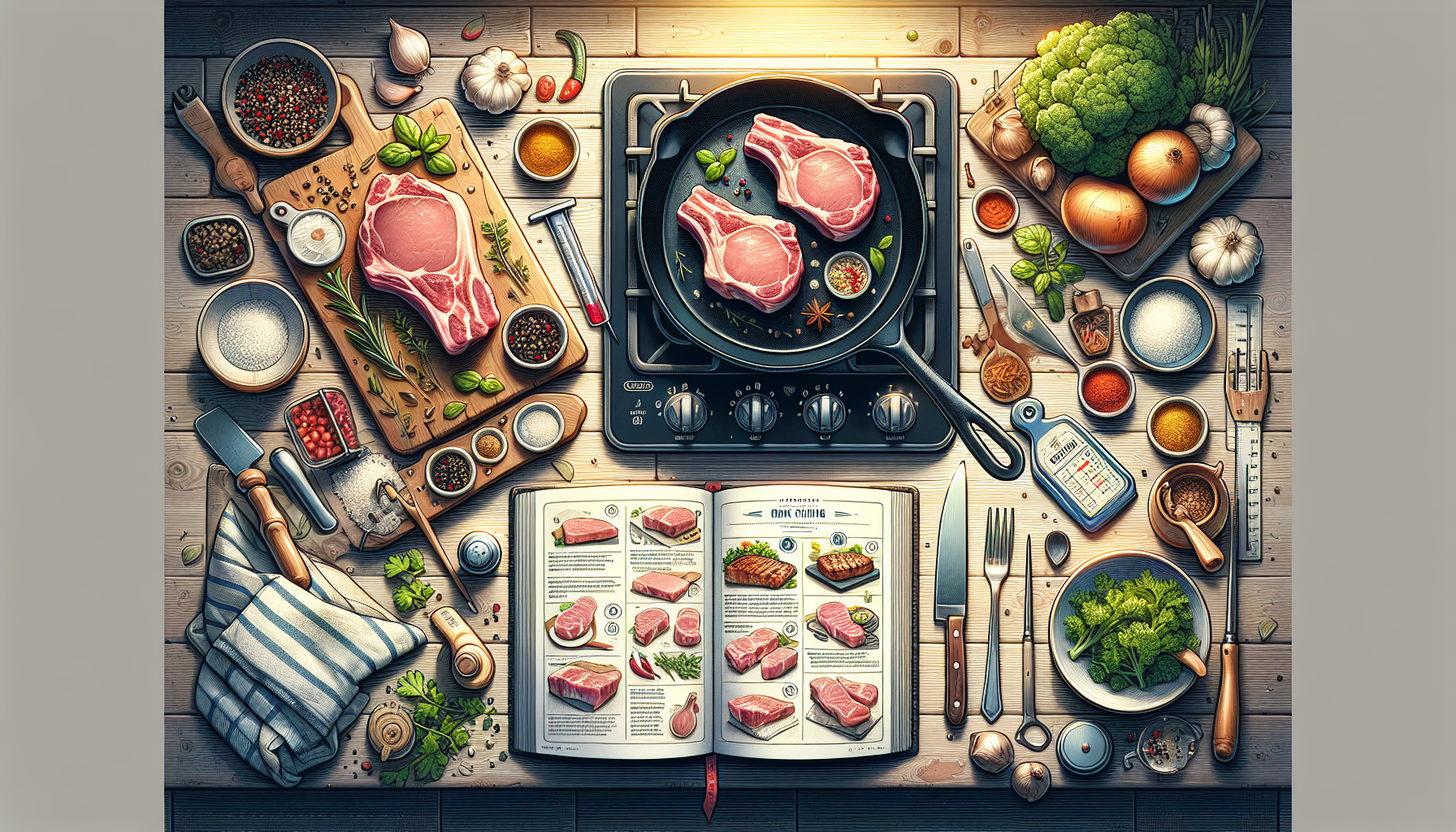
- Cooking: Season the chops and place them in the skillet. Sear for about 4-5 minutes per side, reducing heat to medium after the initial sear. Add a knob of butter and thyme, basting the chops for extra flavor.
- Tip: Finish with a splash of balsamic vinegar or lemon juice for a bright flavor.
3. Baking
Baking is a simple and hands-off method ideal for larger batches.
- Preparation: Preheat the oven to 400°F (204°C).
- Cooking: Place seasoned chops on a baking sheet. Bake for 15-20 minutes, depending on thickness, until they reach 145°F (63°C).
- Tip: For a crispy finish, broil for the last 2-3 minutes.
4. Slow-Cooking
Slow cooking is excellent for tougher cuts, allowing since they become tender and flavorful.
- Preparation: Season the pork chops, and sear in a skillet if desired.
- Cooking: Transfer to a slow cooker with broth or sauce of your choice and cook on low for 6-8 hours.
- Tip: Pair with vegetables like carrots and potatoes for a complete meal.
5. Sous Vide
Sous vide ensures precision cooking to achieve perfectly tender chops.
- Preparation: Season and vacuum-seal the pork chops.
- Cooking: Submerge in a water bath preheated to 140°F (60°C) for 1-4 hours, then sear in a hot pan for a golden crust.
- Tip: Finish with a squeeze of fresh citrus for brightness.
Flavor Pairing
Pork chops lend themselves well to various flavor profiles:
- Savory: Incorporate garlic and rosemary, pairs well with rich gravies or mushrooms.
- Sweet: Apples, peaches, or even maple syrup can enhance pork’s natural sweetness.
- Spicy: Season with paprika, chipotle, or BBQ sauce for a kick.
- Herbal: Fresh herbs like thyme, tarragon, or parsley highlight the pork flavor.
Side Dishes
Pair your pork chops with delicious sides:
- Vegetables: Roasted asparagus, sautéed green beans, or a fresh salad make for great accompaniments.
- Starches: Consider serving with mashed potatoes, rice pilaf, or polenta.
- Condiments: A fruit salsa, apple sauce, or mustard glaze enhances the meal’s richness.
Storing Leftovers
Proper storage can keep your pork chops tasting great for days.
- Refrigeration: Store leftovers in an airtight container in the fridge for up to 3-4 days.
- Freezing: For longer storage, freeze cooked pork chops by wrapping each in plastic wrap and placing them in a freezer-safe bag. They can last up to 3 months.
Final Cooking Tips
- Always rest pork chops before slicing to preserve moisture.
- Invest in a meat thermometer for precise cooking and optimal results.
- Experiment with different seasonings and sauces to find your perfect flavor combination.
By mastering these techniques and understanding the nuances of pork chops, you can elevate your cooking and enjoy a deliciously prepared meal.
advertisement