The Evolution of Anime: From Hand-Drawn to Digital Masterpieces
Origins of Anime: The Early Years
The story of anime begins in the early 20th century in Japan. Inspired by Western animation techniques, Japanese filmmakers sought to create their own animated narratives. The earliest examples include “Namakura Gatana” (1917), a short silent film, and works by Katsudō Shashin, which utilized simplistic frames to tell a story. These early animations laid the groundwork for what would later evolve into a unique and distinctive art form.
The Rise of Hand-Drawn Techniques
Through the 1930s to the 1950s, hand-drawn animation became the backbone of the anime industry. This period saw the emergence of significant figures like Osamu Tezuka, often dubbed the “God of Manga.” Tezuka’s works, such as “Astro Boy” (1963), brought forth elements like large eyes and dynamic character expressions that became hallmarks of anime. His use of limited animation techniques, which involved reusing backgrounds and minimizing the number of frames per second, made anime more cost-effective and appealing.
The Golden Age of Anime (1960s to 1980s)
The 1960s marked a transformative era in anime. With the broadcast of “Astro Boy”, anime began to gain a significant television audience. This decade saw the birth of classic series that would influence generations, including “Kimba the White Lion” and “Speed Racer.” As the cultural landscape of Japan changed, so did the themes of anime, shifting towards more sophisticated storytelling and character development.
In the 1970s, the genre diversified. Science fiction and fantasy themes gained popularity, exemplified by classics such as “Mobile Suit Gundam” and “Battle of the Planets.” This era also birthed the shōnen and shōjo genres, specifically targeting young male and female audiences, respectively. Series like “Sailor Moon” (1991) and “Dragon Ball” (1986) became monumental successes, setting the stage for franchise marketing.
Transitioning to the 1990s: A New Era of Storytelling
The 1990s marked a watershed moment when anime expanded its influence globally. Iconic series such as “Neon Genesis Evangelion” challenged traditional storytelling by incorporating complex psychological themes and existential questions. Additionally, movies by Studio Ghibli, including “My Neighbor Totoro” (1988) and “Spirited Away” (2001), won critical acclaim and showcased the artistic depth of animation.
advertisement

Technological advancements allowed for enhanced creativity. One example is the use of computer-generated imagery (CGI), which started to merge with traditional techniques. While fully computer-generated series were still rare, hybrid styles began to emerge, leading to visually stunning results. The fusion of hand-drawn and CGI has now become a staple in contemporary anime, adapting themes to various audience demographics.
The Digital Revolution: From Cells to Pixels
The advent of digital animation revolutionized the anime industry in the early 2000s. The transition to digital tools allowed for faster production times and more intricate animations. Studios began to employ software like Adobe Photoshop and Toon Boom Harmony, which revolutionized the way animators created art. Digital painting made the once meticulous task of coloring each cell much quicker and enabled a wider array of colors and effects.
A prime example of this evolution is seen in “Cyberpunk: Edgerunners”, which utilized both 2D and 3D techniques to produce visually arresting sequences. The ability to integrate digital tools required a rethinking of previous aesthetic conventions, paving the way for daring new visuals and storytelling styles.
Streaming Platforms and Global Reach
As the 2010s unfolded, the growth of streaming platforms such as Crunchyroll, Netflix, and Funimation fundamentally changed how anime was consumed. The cancellation of geographic barriers allowed audiences worldwide to access a vast library of anime titles. This democratization led to increased popularity and accessibility, resulting in a surge of new genres and the expansion of niche markets.
Simultaneously, international collaborations began to take shape; programs like “Castlevania” on Netflix showcased how Western creators could integrate anime aesthetics and storytelling. Such cross-cultural influences have blended styles, allowing genre-defying series to thrive.
The Rise of 3D Animation and VR
As technology continues to advance, the lines between traditional 2D animation and 3D models are increasingly blurred. The game-changing 3D anime series like “Land of the Lustrous” and “Beastars” are examples of how emotion and character depth can be conveyed effectively using 3D artistry. These series successfully demonstrated that 3D animation could evoke the same emotional responses as traditional 2D works.
Moreover, with virtual reality (VR) gaining traction, the anime industry is exploring ways to create immersive narrative experiences. Projects such as “VR Kanojo” offer a unique intersection between anime storytelling and new interactive technology, hinting at endless possibilities for future narratives.
Thematic Evolution: Beyond Viewer’s Expectations
As anime continues to evolve, so too do the themes and narratives it explores, reflecting societal changes and cultural conversations. Series such as “Attack on Titan” and “Your Name” explore darker themes while also tackling issues such as trauma, identity, and the human condition. The growing tendency toward deeper explorations of character and narrative complexity pushes the boundaries of what anime can portray, gradually shedding its previous stigma as merely children’s entertainment.
Additionally, collaborations between anime studios and non-Japanese creators signify a broader acceptance and recognition of anime as an art form worthy of global reverence. Increasingly, creative storytelling tackles issues of social justice, mental health, and relationships in a nuanced manner.
Future Trends and the Road Ahead
Looking ahead, the animation industry is poised to undergo further transformations influenced by emerging technologies like Artificial Intelligence (AI) and Machine Learning. Automation in animation production could accelerate workflows, yet the enduring human touch that embodies the art of anime will remain essential.
Furthermore, as preferences evolve, we may see more interactive anime, blending gaming elements within animated narratives, allowing viewers to engage more actively with the content. Such innovations promise a vibrant future for anime, ensuring it continues to captivate audiences worldwide.
Conclusion: A Journey Through Time
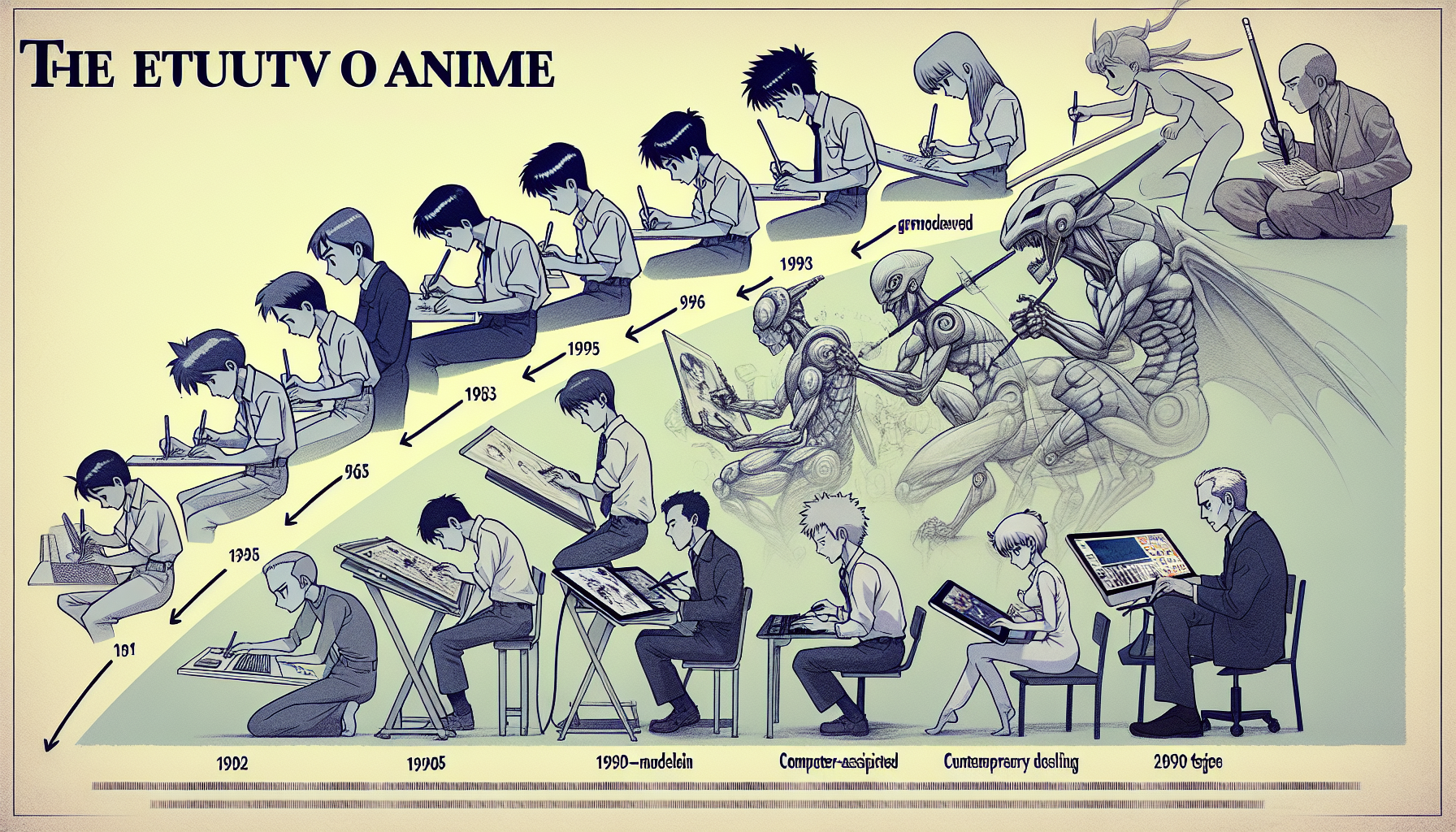
The journey of anime from hand-drawn pioneers to the dazzling digital era showcases the resilience and adaptability inherent in this art form. As technology advances and societal viewpoints evolve, anime promises to persist as a relevant cultural phenomenon that thrives on creativity and exploration, redefining itself while maintaining the charm that drew audiences to it decades ago.
Through its evolution, anime remains a testament to the power of storytelling and artistic expression, capturing the hearts of millions and inviting them into richly imagined worlds that continue to inspire and awe.
advertisement