The Evolution of Hip Hop: From the Streets to Mainstream
The Origins of Hip Hop
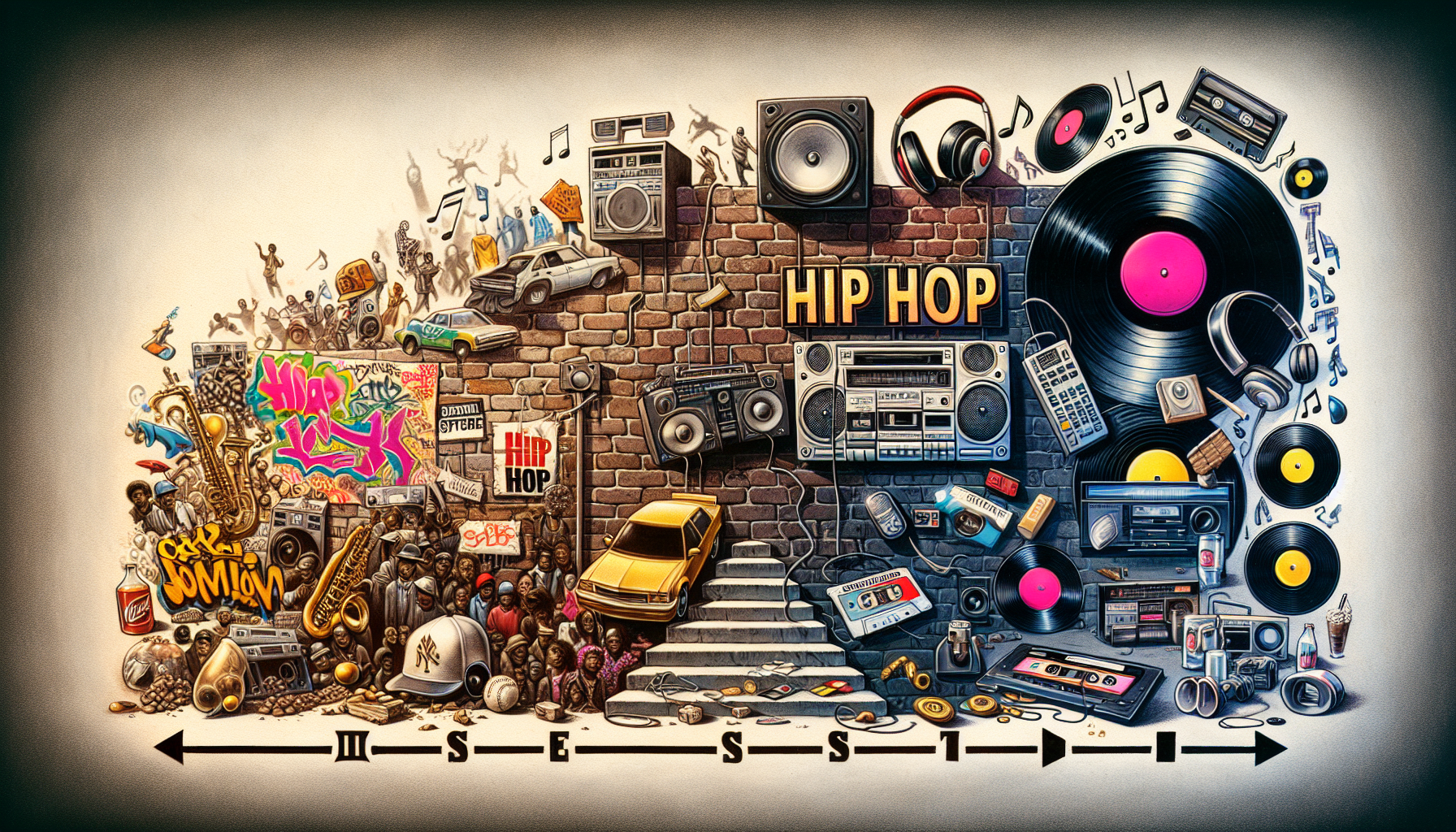
Hip hop culture originated in the late 1970s in the Bronx, New York City, often associated with the social and economic upheaval of the area. It emerged as an artistic expression of African American youth, incorporating four primary elements: rapping (MCing), DJing, graffiti art, and breakdancing (B-boying). DJ Kool Herc is credited with pioneering the genre, utilizing two turntables to create a “break beat” for dancers, which laid the sonic foundation for hip hop. Parties thrown by Herc became the blueprint for what would become block parties.
The 1980s: The Birth of Recorded Hip Hop
As hip hop gained popularity, it began to transition from local block parties to recorded music. DJs started mixing tracks, leading to the creation of iconic songs such as “Rapper’s Delight” by The Sugarhill Gang in 1979, which is often credited as the first commercially successful hip hop single. This marked the beginning of hip hop’s presence in the music industry.
During the early 1980s, Run-D.M.C. emerged, blending rock and rap, and allowing for a more crossover appeal. Their collaboration with Aerosmith on “Walk This Way” in 1986 opened doors for future hip hop artists. During this decade, labels like Def Jam Recordings began to form, focusing on hip hop artists, thus laying the groundwork for future mainstream hip hop success.
The Golden Age of Hip Hop (Mid-1980s to Early 1990s)
The late 1980s and early 1990s is often referred to as the Golden Age of Hip Hop. This period was characterized by diversity in style, innovation in lyrical content, and a creative explosion of subgenres. Artists like Public Enemy used their platform to address social and political issues, while others like A Tribe Called Quest and De La Soul promoted a more playful style, fostering an environment for artistic experimentation.
The emergence of gangsta rap, led by groups such as N.W.A, marked a significant turning point. Their acclaimed album “Straight Outta Compton” (1988) showcased raw lyrical content that delved into the harsh realities of inner-city life. This style of rap not only earned popularity but also sparked controversy, with the group’s unapologetic representation of violence and racial issues.
advertisement

The Mainstream Breakthrough of the 1990s
As the 1990s progressed, hip hop began to penetrate mainstream culture more aggressively. Artists like Tupac Shakur and The Notorious B.I.G. became household names, popularizing the West Coast and East Coast rap rivalry. Their albums, “All Eyez on Me” and “Ready to Die,” respectively, propelled hip hop into the global eye. Unfortunately, the violent feud between these two icons culminated in their tragic deaths, leading to a period of reflection within the genre regarding its representation of violence.
Simultaneously, women began to make their mark in hip hop, with artists like Queen Latifah and MC Lyte paving the way for female MCs by blending elements of empowerment with traditional rap themes. Their influence granted visibility to women in a male-dominated industry, showcasing the multifaceted nature of hip hop.
The 2000s: Commercial Success and the Globalization of Hip Hop
The early 2000s marked a period of unprecedented commercial success for hip hop. Artists like Jay-Z, Eminem, and 50 Cent dominated charts, altering the landscape of music sales and collaborations. Jay-Z’s 2001 album “The Blueprint” solidified his status as a hip hop mogul, while Eminem’s narrative lyricism and controversial content made him a global phenomenon.
The globalization of hip hop began to take shape, with artists from various countries infusing local culture with hip hop elements. French rapper MC Solaar gained international attention, and South African groups like Die Antwoord brought unique perspectives to the global hip hop narrative. This cross-cultural exchange showed hip hop’s versatility, leading to hybrid genres like reggaeton, which incorporated rap elements.
The Digital Revolution: 2010s and Beyond
As the internet reshaped the music industry, hip hop emerged as one of the most dominant genres in the 2010s. Platforms like YouTube, SoundCloud, and social media allowed indie artists to bypass traditional media channels and gain instant recognition. This democratization of music-making led to the rise of artists like Lil Nas X, whose viral hit “Old Town Road” blurred the lines between hip hop and country music, challenging genre classification.
The rise of streaming services drastically changed how music was consumed. Platforms like Spotify helped emerging artists reach larger audiences than ever before. Hip hop began to diversify even further with the emergence of subgenres like trap, which gained massive popularity through artists like Future and Migos.
Lyrical Innovation and Conceptual Depth
As hip hop continued to evolve, many artists began exploring more complex lyrical content and narratives. Kendrick Lamar’s critically acclaimed albums, particularly “To Pimp a Butterfly” and “DAMN.,” tackled themes of racial identity, personal struggles, and sociopolitical issues. Lamar’s ability to weave intricate stories and metaphors set a new standard for lyrical sophistication in hip hop.
Similarly, J. Cole’s storytelling and introspective style resonated with fans, making him a significant figure in modern hip hop. Both artists’ work illustrates how hip hop can function as a medium for social commentary, pushing past mere entertainment into realms of education and awareness.
The Female Perspective and Intersectionality
In recent years, female artists have taken center stage, showcasing the evolution of hip hop as a more inclusive platform. Artists like Nicki Minaj, Cardi B, and Megan Thee Stallion have not only dominated charts but also challenged traditional gender roles within the genre. Their music combines empowerment, sexuality, and self-expression, creating spaces for discussions around feminism in hip hop.
Other artists, such as Rapsody and Noname, focus on racial and social justice themes. Their popularity shows how the genre is evolving to include diverse perspectives, making hip hop a powerful vehicle for marginalized voices. This shift represents a significant change in the narrative of hip hop, moving towards empowerment and inclusivity.
Hip Hop in the Age of Social Media
The rise of social media has played a crucial role in shaping modern hip hop. Platforms like TikTok and Instagram allow artists to share snippets of their music and connect with fans on a more personal level. Meme culture has also intertwined with hip hop, creating viral challenges and dance trends that further popularize the genre.
This digital age has led to the rapid rise and fall of artists, emphasizing the ever-evolving landscape of hip hop. The accessibility of technology permits diverse voices to emerge, showcasing the dynamic nature of the genre while influencing trends and production styles on a global scale.
The Future of Hip Hop
As hip hop continues to evolve, it is becoming increasingly integrated into the fabric of global culture. The genre has expanded its influence beyond music, permeating fashion, art, and even politics. With the increasing use of artificial intelligence in music production and the exploration of new sounds, the future of hip hop promises further innovation.
Moreover, conversations around mental health, climate change, and systemic injustices are becoming integral to hip hop narratives. These topics signify a mature evolution in hip hop’s lyrical content, reflecting societal changes and the increasing responsibility artists feel toward their communities.
Conclusion
The journey of hip hop from the streets of the Bronx to its status as a global cultural phenomenon is a testament to its power as a form of expression. With its rich history, diverse voices, and a commitment to social change, hip hop has shown remarkable adaptability while maintaining its roots. The future of this genre holds endless possibilities, from evolving sounds and styles to increasingly diverse narratives. As it stands at the crossroads of tradition and innovation, hip hop embodies the spirit of artistic resilience and cultural significance.
advertisement