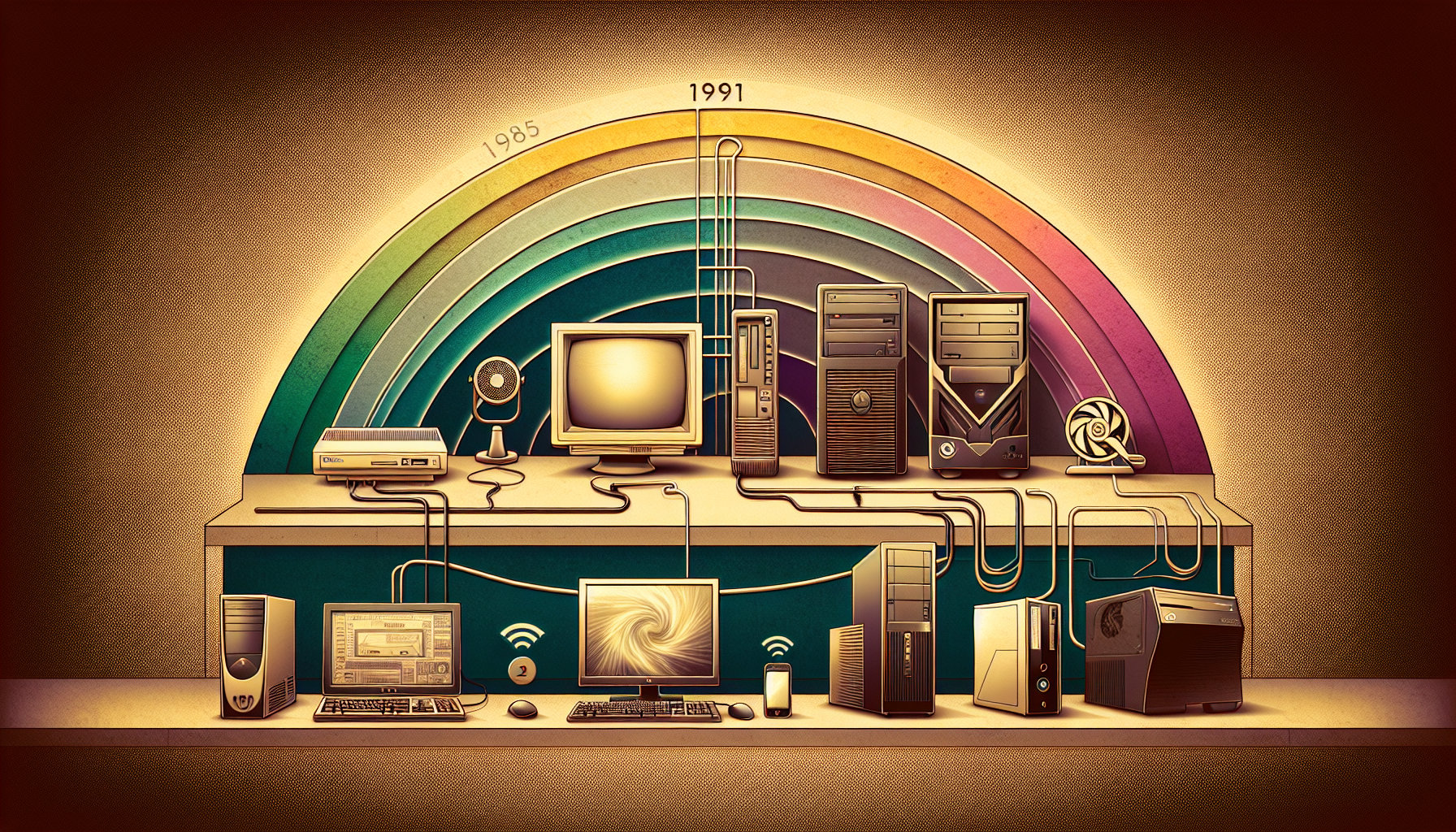
The Evolution of PC Gaming: From Dial-Up to High-Speed
1. The Early Days: Text-Based Gaming
The seeds of PC gaming were sown in the late 1970s and early 1980s with the advent of personal computers like the Apple II and IBM PC. Early games, such as “Zork” and “Adventure,” utilized text-based interfaces, captivating players with their immersive storytelling and challenges. These interactive fiction titles relied heavily on imagination, as graphics were rudimentary or nonexistent, forcing players to create vivid scenarios in their minds.
2. The Rise of Graphics: 8-bit and 16-bit Era
With advancements in technology, the late 1980s welcomed 8-bit and 16-bit graphics, transforming the gaming landscape. The Commodore 64 and Nintendo Entertainment System (NES) became household names, offering more detailed graphics and sound. PC titles like “King’s Quest” and “Police Quest” showcased early point-and-click adventures, marrying engaging narratives with graphics that pushed the boundaries of what was possible in gaming.
advertisement

3. The Birth of Online Gaming: Dial-Up Connections
The late ’90s marked a watershed moment in gaming history, as dial-up internet connections began to permeate households. Titles such as “Doom” and “Quake” pioneered the first networked multiplayer experiences and presented novel gameplay experiences. Players were no longer confined to single-player modes, as they could connect to servers and play with friends or compete against distant opponents. This era also gave rise to the creation of online gaming communities, amplifying the social aspect of gaming.
4. The Advent of 3D Graphics and More Complex Games
The transition from 2D to 3D gaming in the mid-1990s revolutionized PC gaming. Developers leveraged 3D graphics engines to create more sophisticated environments and gameplay mechanics. Games like “Half-Life” and “The Sims” delivered groundbreaking experiences, blending narrative and strategic elements with immersive 3D graphics. This period also marked the rise of the first-person shooter (FPS) genre, with titles like “Counter-Strike” gaining immense popularity among competitive players.
5. The Influence of Broadband: A New Era of Online Gaming
The early 2000s saw a significant shift with the widespread adoption of broadband internet connections. Unlike dial-up, broadband offered high-speed connectivity, enabling richer online experiences. Massive Multiplayer Online Role-Playing Games (MMORPGs) such as “World of Warcraft” took center stage, allowing thousands of players to interact in a shared world. This era not only expanded the scale of multiplayer games but also entrenched the concept of in-game purchases and subscriptions as viable business models.
6. The Boom of Digital Distribution Platforms
As broadband became more ubiquitous, platforms like Steam and Origin emerged, revolutionizing the way games were distributed. Gamers no longer needed physical copies or to visit brick-and-mortar stores; they could purchase and download games from anywhere. This digital distribution model democratized game development, allowing indie developers to flourish alongside major studios. The rise of games like “Undertale” and “Hades” challenged traditional norms, proving that innovative, small-scale titles could attract significant audiences.
7. Rise of eSports and Competitive Gaming
The 2010s proliferated the eSports phenomenon, where competitive gaming transformed into a spectator sport. Titles such as “League of Legends,” “Dota 2,” and “Counter-Strike: Global Offensive” garnered millions of dedicated fans and viewership through streaming platforms like Twitch. High-stakes tournaments featuring large cash prizes became commonplace, with professional teams and sponsorship deals emerging as lucrative career paths for skilled players. The eSport industry stimulated the growth of gaming culture, creating legions of fans who engage with gaming not just as players but as spectators.
8. Enhanced Gaming Hardware and Graphics Technology
With the persistent advancements in hardware, PC gaming began to achieve stunning realism. Graphics Processing Units (GPUs) from manufacturers like NVIDIA and AMD pushed boundaries, allowing games to feature lifelike graphics, dynamic lighting, and complex physics. Technologies such as Virtual Reality (VR) and Augmented Reality (AR) emerged, with platforms like Oculus and HTC Vive transforming how players engage with digital worlds. High frame rates and 4K resolution became standard expectations rather than luxury, as gamers demanded increasingly immersive experiences.
9. The Influence of Cloud Gaming
As internet speeds improved further, cloud gaming services like Google Stadia, NVIDIA GeForce Now, and Xbox Cloud Gaming began to emerge. This service model allowed players to stream games without needing powerful hardware, leveling the playing field for gamers worldwide. Players could access high-end titles from nearly any device, emphasizing the idea that gaming should be universally accessible. Despite the initial skepticism, cloud gaming has slowly gained ground, promising a future where players no longer need extensive hardware to enjoy cutting-edge games.
10. The Modern Gaming Experience: Social Integration and Mobility
Today’s gaming experience transcends isolated play, emphasizing connectivity and social interaction. Whether through social media integration on platforms like Steam or gaming consoles, developers recognize the importance of community in the gaming experience. Mobile gaming, which has exploded thanks to smartphones, has also changed the landscape for PC gaming. Titles like “Fortnite” and “Call of Duty: Warzone” showcased cross-platform play, allowing PC gamers to seamlessly connect with console and mobile players. This connectivity has fostered a more inclusive gaming environment.
11. Ethical Considerations and Industry Challenges
As the industry continues to evolve, it has also faced challenges related to sustainability, inclusivity, and ethical practices. Issues such as crunch time in game development, workplace culture, and representation in games have become crucial conversations. Gamers are increasingly vocal about the need for ethical practices and representation in gaming narratives. The industry is now challenged to address these concerns while balancing profitability and player satisfaction.
12. The Future of PC Gaming: Virtual Realism and Beyond
Looking forward, the potential for PC gaming seems limitless. With technologies like Artificial Intelligence (AI) set to play a more significant role in game design, we can expect unique and adaptive gaming experiences tailored to individual players. The metaverse concept has also gained traction, highlighting a future where virtual worlds may offer social and commercial spaces alongside traditional gameplay. The intersection of blockchain technology and gaming may redefine ownership, enabling true digital property in virtual universes.
13. Conclusion: The Continuous Journey of Innovation
The journey from dial-up connections to high-speed gaming exemplifies a relentless pursuit of innovation. As technology continues to evolve, so too will the gaming experience. From the simplicity of text-based adventures to the complexity of fully immersive environments, PC gaming reflects societal shifts, technological advancements, and an enduring passion for interactive entertainment. The ongoing evolution remains rooted in creativity, ensuring that the journey of gaming continues to inspire and captivate players across the globe.
advertisement