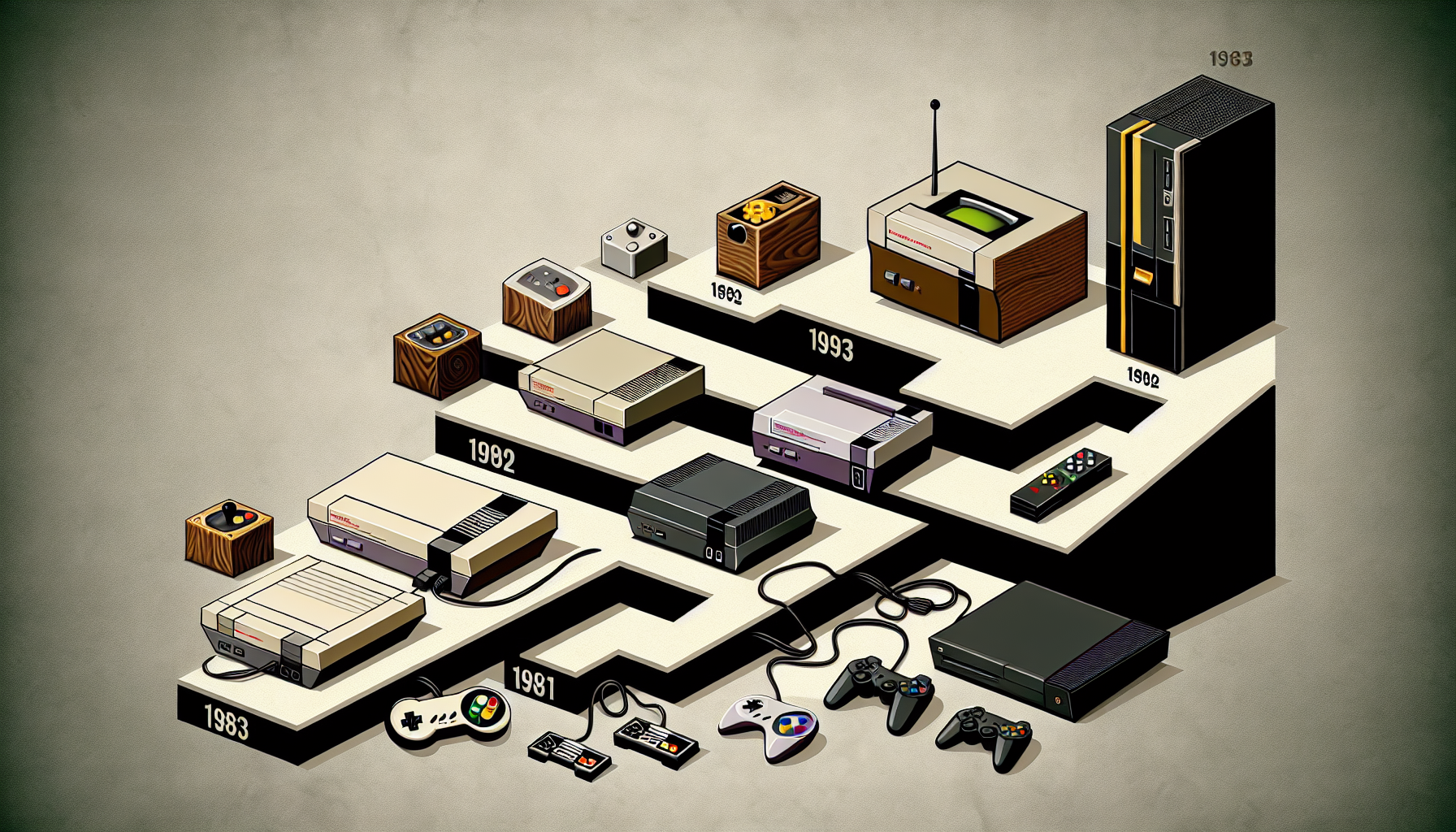
The Evolution of Video Game Consoles: A Journey Through Time
The Birth of Video Games (1960s-1970s)
The inception of video games can be traced back to the 1960s when innovators like Ralph H. Baer began experimenting with electronic devices. Baer’s creation of the Magnavox Odyssey in 1972 marked the first home video game console, allowing players to enjoy simple games like table tennis and chase using physical overlays on the screen. This era introduced the concept of gaming as a home entertainment medium, paving the way for future developments.
The Rise of Arcade Games (1970s-1980s)
As the 1970s progressed, video games transitioned from home consoles to arcade machines. The advent of iconic games like Pong by Atari in 1972 captured the public’s imagination, leading to a surge in arcade popularity. Other notable titles during this period included Space Invaders (1978) and Galaga (1981). The arcade scene significantly influenced the development of home consoles, as companies sought to replicate the experience at home.
The First Console Wars (1980s)
With the arcade boom, the 1980s introduced competition among home console manufacturers. The Atari 2600, launched in 1977, continued to practice the game’s home console evolution. However, it wasn’t until the launch of the Nintendo Entertainment System (NES) in 1985 that the industry truly transformed. The NES featured advanced graphics and sound capabilities, revolutionizing game design. Iconic games like Super Mario Bros. and The Legend of Zelda helped establish Nintendo as a leader in the industry.
During this same period, Sega entered the fray with the Sega Master System in 1985, promoting a rivalry that would become known as the “Console Wars.” This competition spurred innovation and creativity in gaming, setting the stage for the next generation of consoles.
The 16-Bit Era (Late 1980s-1990s)
The late 1980s and early 1990s marked the shift to 16-bit technology. The Super Nintendo Entertainment System (SNES), released in 1990, showcased enhanced graphics, sound, and complex gameplay, solidifying Nintendo’s place in gaming history. Titles like Street Fighter II and Chrono Trigger became staples of the era, pushing the boundaries of storytelling and game mechanics.
advertisement

Concurrently, Sega responded with the Genesis (Mega Drive outside North America), which adopted a more aggressive marketing strategy and a focus on sports and action titles, making it a significant competitor. The rivalry between Sega and Nintendo fueled innovation, leading to the development of iconic franchises like Sonic the Hedgehog.
The 3D Revolution and Beyond (Mid-1990s)
The arrival of 3D graphics in the mid-1990s revolutionized the gaming landscape. Sony entered the console market in 1994 with the PlayStation, introducing CD-based games that allowed for larger file sizes and stunning graphics. Titles like Final Fantasy VII and Metal Gear Solid redefined immersive storytelling and gameplay experiences, capturing the imagination of gamers worldwide.
Meanwhile, Nintendo launched its first foray into 3D gaming with the Nintendo 64 in 1996. This console introduced revolutionary features such as four-player multiplayer and analog controls. Iconic titles like Super Mario 64 and The Legend of Zelda: Ocarina of Time showcased the potential of 3D gameplay, leaving a lasting impact on the gaming industry.
The Emergence of Online Gaming (Late 1990s-2000s)
The late 1990s and early 2000s saw a major shift towards online gaming. The introduction of the Sega Dreamcast (1998) was the first console to feature built-in modem capabilities, allowing players to connect to the internet for online gaming. Titles like Phantasy Star Online popularized MMORPGs, providing a glimpse into the future of gaming.
Following with this online trend, Sony launched the PlayStation 2 (PS2) in 2000, which would become the best-selling console of all time. Its DVD playback capabilities showcased the merging of multimedia and gaming, while its robust library of games, including Grand Theft Auto: Vice City and Final Fantasy X, solidified its position in the industry.
The HD Era and Motion Controls (Mid-2000s)
The mid-2000s brought significant technological advancements with the release of the Xbox 360 (2005) and PlayStation 3 (2006). Both consoles introduced high-definition graphics, allowing games to deliver stunning visuals. Xbox Live and PlayStation Network transformed the gaming experience by promoting online multiplayer gaming and digital storefronts.
Nintendo, however, took a unique approach with the Wii in 2006, embracing motion controls and a broader, more casual gaming audience. With captivating titles like Wii Sports and Mario Kart Wii, the console appealed to families and non-gamers, demonstrating the potential for social and active gaming experiences.
The Rise of Mobile Gaming (2010s)
The 2010s marked the exponential rise of mobile gaming. As smartphones became ubiquitous, companies like Apple and Google launched platforms that revolutionized how games were consumed. Titles like Angry Birds and Candy Crush Saga showcased the accessibility of gaming, attracting vast audiences.
Meanwhile, traditional console manufacturers responded to this trend. Sony released the PlayStation Vita in 2011, and Microsoft’s Xbox One launched in 2013, both of which attempted to bridge the gap between mobile and console gaming.
The Next Generation of Consoles (2020 and Beyond)
The launch of the PlayStation 5 and Xbox Series X/S in late 2020 marked the latest generational shift in gaming technology. These consoles boast advanced specifications, including faster loading times, ray tracing capabilities, and a commitment to 4K resolution. Moreover, both Microsoft and Sony emphasized the importance of backward compatibility, allowing gamers to enjoy titles from previous generations.
The introduction of cloud gaming services like Xbox Cloud Gaming and PlayStation Now signifies a move towards a subscription model, where players can stream games directly instead of relying solely on physical or downloaded titles. This flexibility and convenience cater to the evolving gaming landscape and changing consumer preferences.
The Influence of Technology on Game Design
Throughout the decades, the evolution of video game consoles has been closely linked to technological advancements. From the simple graphics of the Magnavox Odyssey to the stunning realism of today’s consoles, each generation has pushed the boundaries of what is possible in game design. Innovations such as improved graphics engines, advanced artificial intelligence, and virtual reality have shaped how developers approach gameplay and storytelling, enhancing player experiences.
Additionally, technological developments have led to new genres and gameplay mechanics. The integration of online multiplayer, for example, has facilitated the rise of battle royales and cooperative games, fundamentally reshaping social gaming.
The Future of Gaming Consoles
As we look to the future, the gaming industry is poised for continued innovation. Emerging technologies like augmented reality (AR) and virtual reality (VR) promise to revolutionize how players experience games. The potential for immersive storytelling and new interaction methods offers exciting opportunities for developers and players alike.
Moreover, advancements in hardware, such as AI-powered graphics rendering and increased storage capabilities, continue to push the envelope, ensuring that gaming experiences will be richer and more engaging.
The evolution of video game consoles is a testament to the creativity and resilience of the industry. From humble beginnings to the cutting-edge technology of today, consoles have transformed the way we play and interact with games. The journey thus far is only the beginning as the foundations of gaming expand, paving the way for future generations of consoles and immersive gaming experiences.
The Role of Indie Developers
Amid the advancements of major console manufacturers, indie developers have emerged as innovators in the gaming space. With platforms like Steam, Nintendo Switch, and even consoles allowing for the release of downloadable titles, small development teams and solo creators can compete with industry giants.
Indie games often prioritize unique storytelling and creative gameplay over blockbuster budgets, leading to a diverse gaming landscape. Titles like Hollow Knight, Celeste, and Undertale have garnered both critical and commercial success, showcasing the importance of diverse voices and innovative ideas in the gaming ecosystem.
The Social Aspect of Gaming
The evolution of video game consoles has also been significantly influenced by social dynamics. As gaming shifted from solitary experiences to social interactive platforms, consoles have adapted to promote community and connectivity. Features such as online multiplayer modes, social media sharing, and community-driven game development have created a vibrant gaming culture.
Consoles like the Xbox Series X and PlayStation 5 now include integrated streaming support, enhancing the cultural phenomenon of watching gamers play live on platforms like Twitch and YouTube. This social aspect of gaming has not only transformed how games are played but has solidified gaming as a common language across various demographics.
Conclusion
The journey of video game consoles reflects a continuous cycle of innovation, creativity, and cultural integration. Each generation builds upon the previous, embracing new technologies to deliver richer experiences.
While the future remains uncertain, one thing is sure; the world of gaming will keep evolving, driven by advancements in technology and the creative minds behind the screens. Video game consoles, having shaped entertainment for decades, will continue to inspire, engage, and entertain future generations.
advertisement