The Evolution of Digital Art in Modern Society
1. Early Beginnings of Digital Art
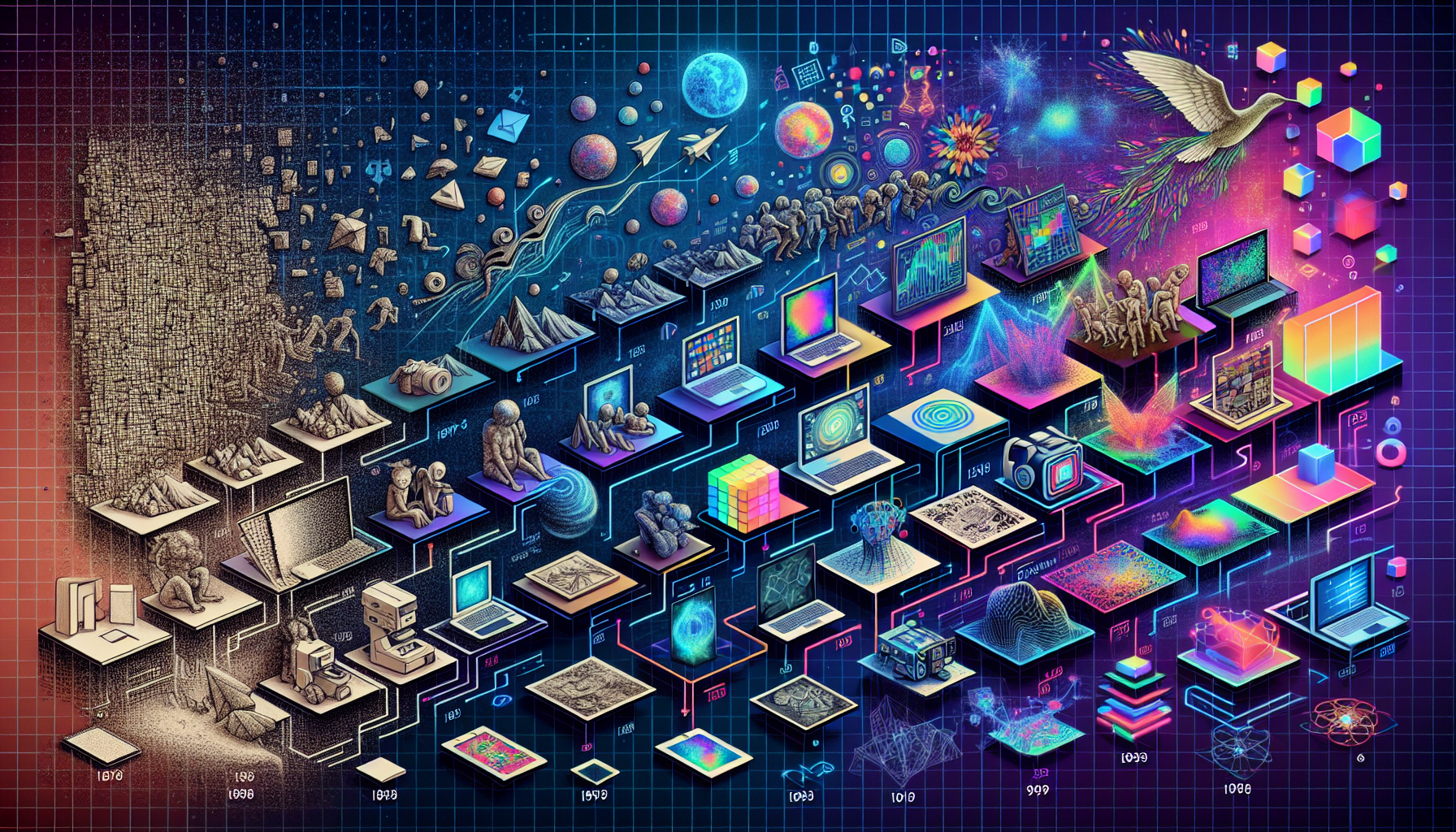
The inception of digital art can be traced back to the 1950s when artists began experimenting with computers as a new medium. The first pioneering works were often simple line drawings that employed early graphical software. Notable figures such as Frieder Nake, Harold Cohen, and Ben Laposky laid the groundwork with their algorithmically generated art, which hinted at the potential of computers as a creative tool.
During the 1970s, the advent of raster graphics allowed for more intricate and color-rich images. Artists started to explore this new realm, leading to the creation of more complex compositions. The emergence of personal computers in the 1980s marked a significant milestone in digital art. Software like Adobe Photoshop and CorelDRAW became available to the masses, democratizing the creation of digital art.
2. The Role of Technology: Software and Hardware Advances
The evolution of digital art owes much to technological advancements. In the 1990s, improvements in computer graphics hardware led to faster rendering times and higher resolutions, which drastically enhanced the quality of digital artworks. The introduction of graphic tablets offered artists a tactile experience similar to traditional media, allowing for intricate detailing and more fluid brush strokes.
The 2000s saw the rise of software tailored specifically for digital painting, such as Corel Painter and ArtRage. These applications mimicked traditional painting techniques more accurately, blurring the line between digital and traditional art further. With the growing accessibility of technology, a new generation of artists began to emerge, exploring hybrid forms of art that combined physical and digital techniques.
3. Web 2.0 and Social Media’s Impact
The emergence of Web 2.0 in the early 2000s facilitated the global sharing of digital art. Platforms like DeviantArt, Behance, and later Instagram transformed how artists connected with audiences. No longer confined to galleries, artists could showcase their work to a global audience, receive immediate feedback, and cultivate a following.
advertisement

Artists began to leverage social media for marketing and networking. Hashtags and challenges fostered community engagement, making art accessible and interactive. This environment nurtured a sense of collaboration; artists frequently inspired each other, leading to creative exchanges across cultures and disciplines.
4. The Rise of Animation & Motion Graphics
Simultaneously, the digital art landscape expanded into animation and motion graphics. Software like Adobe After Effects revolutionized the way artists approached moving images. Animators began incorporating digital art into commercial projects, music videos, and independent films, leading to multimedia installations that combined traditional and digital methods.
This new wave of animation opened avenues for storytelling and expression in ways traditional art forms could not. Artists like Hayao Miyazaki and studios like Pixar showcased the power of digital animation, influencing a generation of creators who sought to explore the profound narrative possibilities in this medium.
5. The Entry of Virtual Reality and Augmented Reality
As technology progressed, virtual reality (VR) and augmented reality (AR) became integral to digital art. VR platforms like Oculus Rift and HTC Vive provided immersive experiences that allowed artists and viewers to embody the art physically. Artists like Julie Freeman and Joris van Battenburg explored VR’s potential to create interactive, multi-sensory environments, pushing the boundaries of how art can be experienced.
AR, on the other hand, offered a bridge between the physical and digital worlds. Applications like Google Arts & Culture allowed users to view art in their real environments, enhancing the interaction with art. Notably, the rise of AR applications for mobile devices opened new dimensions for street art, with artists using digital tools to overlay images onto real-world settings.
6. Blockchain, NFTs, and Ownership in Digital Art
The introduction of blockchain technology and non-fungible tokens (NFTs) marked a revolutionary shift in digital art. NFTs enabled artists to tokenize their work, establishing provenance and ownership in the digital realm. Platforms like OpenSea and Rarible emerged, allowing artists to sell their digital creations directly to collectors, thereby disrupting traditional art markets.
This innovation also raised discussions about copyright, value, and the definition of art. In 2021, Beeple’s digital collage “Everydays: The First 5000 Days” sold at Christie’s for $69 million, spotlighting the potential of digital art within the broader art market. As a result, digital art began to gain recognition as a legitimate art form, with traditional galleries starting to host NFT exhibitions.
7. The Influence of Artificial Intelligence
Artificial intelligence (AI) has begun to play a prominent role in the creation of digital art. Tools like DALL-E and Midjourney leverage machine learning algorithms to generate artworks based on textual inputs, showcasing AI’s potential as a co-creator rather than mere technology. These innovations have sparked debates on originality, creativity, and the role of the artist.
Artists such as Refik Anadol have begun incorporating AI into their works, using large datasets to create immersive environments that reflect and respond to their surroundings. The interplay between human creativity and machine learning is redefining what it means to be an artist, prompting a reevaluation of traditional creative processes.
8. The Future of Digital Art
Looking ahead, the future of digital art is poised for further transformation. With the continuous integration of emerging technologies—such as high-resolution displays, more sophisticated VR and AR experiences, and advanced AI models—artists will have unprecedented tools to express their creativity.
The collaborative nature of digital art ensures that it will continue evolving, influenced by diverse cultures, technologies, and societal changes. As more artists transition to digital mediums, new forms of artistic expression will likely emerge, challenging existing paradigms and expanding the definition of art itself.
In addition, the roles of education and community engagement will be fundamental in shaping the future landscape of digital art. Workshops, exhibitions, and online courses will play vital roles in imparting skills and knowledge about digital tools, fostering a new generation of artists ready to explore the infinite possibilities that digital art presents.
9. Conclusion: The New Digital Renaissance
Digital art is undergoing a renaissance, grounded in technological advancements and cultural shifts. It has transcended traditional boundaries, offering a platform for diverse voices while inviting collaboration across disciplines. As society continues to adapt to the digital age, digital art holds the potential to challenge perceptions, provoke thought, and inspire change.
The story of digital art is still unfolding, with each technological breakthrough opening new avenues for exploration. As artists, technologists, and audiences engage with this ever-evolving medium, the possibilities for creative expression will be continually redefined. The evolution of digital art is not merely a reflection of technological progress; it is a mirror of our society, our culture, and our collective imagination, continually pushing the boundaries of what art can be.
advertisement