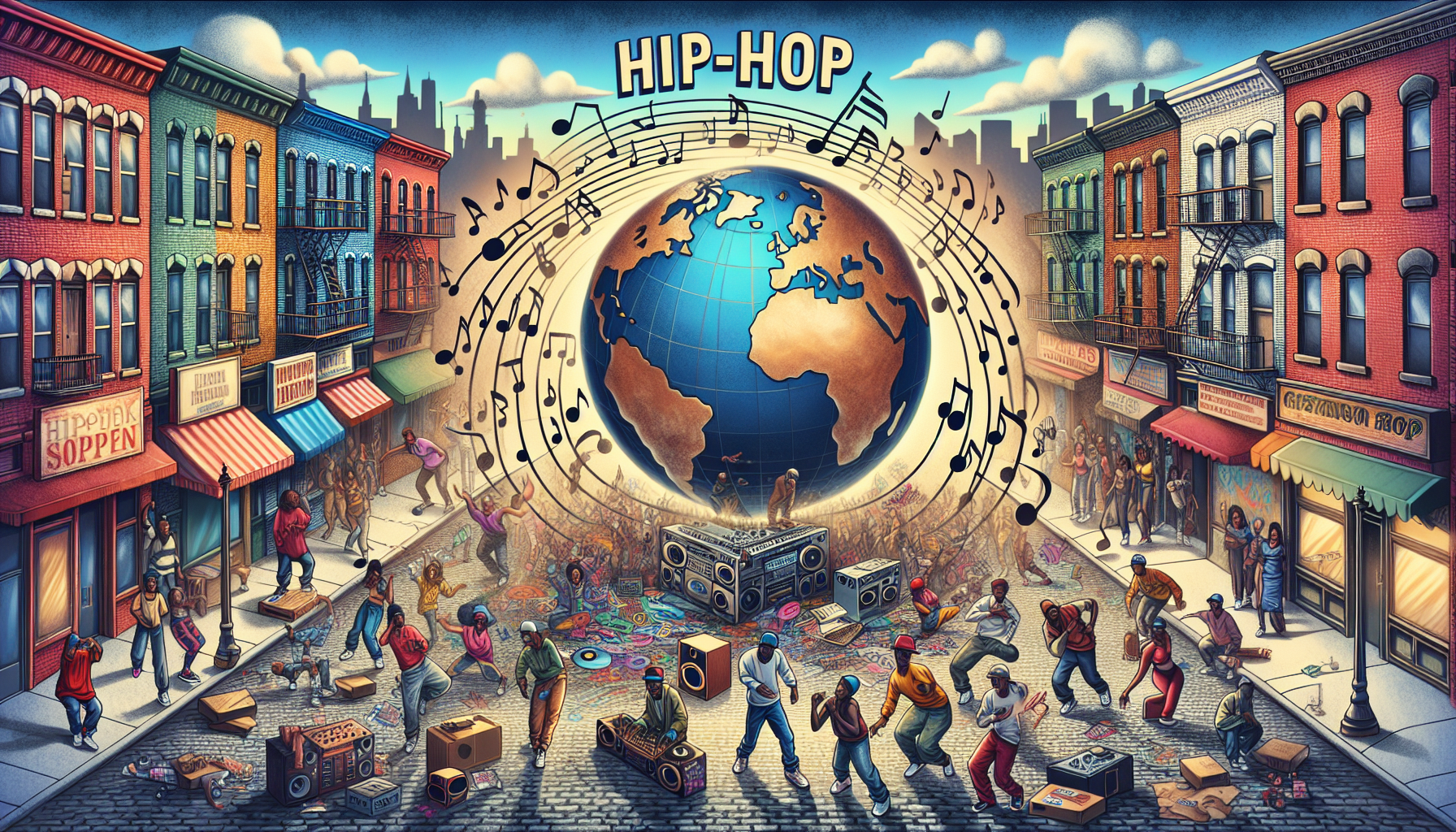
The Evolution of Hip Hop: From Block Parties to Global Phenomenon
The Birth of Hip Hop
Hip hop music and culture originated in the early 1970s in the South Bronx, New York City. It grew from the vibrant neighborhood block parties that took place in the summer months. These parties were characterized by DJs who played records, often looping breaks from funk and soul songs. The innovative DJing techniques used by pioneers like Kool Herc laid the groundwork for what was to come.
DJ Kool Herc and the Breakbeats
DJ Kool Herc, born Clive Campbell, is often credited as one of the founders of hip hop. He introduced the DJ technique known as “breakbeat,” which involved extending the instrumental breaks in records, inviting dancers to freestyle during these segments. His famous use of two turntables allowed him to create seamless transitions between different tracks, setting a standard for the hip hop DJing style that would follow.
The Emergence of MCing
As DJs captured the attention of crowds, MCs (Master of Ceremonies) began to take the stage. Initially, they motivated the audience and introduced the DJs, but soon they started rapping over the beats. Early rap featured simple rhymes and rhythms, but it quickly developed into an art form with complex lyrical structures. Notable early MCs included Grandmaster Flash and the Furious Five, whose song “The Message” would later become a seminal hip hop anthem.
Graffiti and B-Boying: Elements of Hip Hop Culture
Hip hop is not just a musical genre; it encompasses a whole lifestyle that includes four primary elements: rapping (MCing), DJing, breakdancing (B-boying), and graffiti art. Graffiti artists began to use urban spaces as canvases, expressing their identities and social messages through vivid visuals. Similarly, B-boying emerged as a form of dance that accompanied the music, resistant to traditional dance norms and characterized by its acrobatic moves and intricate footwork.
The Golden Age of Hip Hop
The late 1980s and early 1990s saw the rise of what is often referred to as the “Golden Age of Hip Hop.” This era was marked by diversity in styles, groundbreaking records, and the establishment of hip hop as a dominant force in popular music. Artists like Run-D.M.C., Public Enemy, and N.W.A. challenged societal norms, addressing topics like systemic racism, poverty, and violence through their lyrics.
advertisement

Run-D.M.C.: A Crossover Sensation
Run-D.M.C. was pivotal in bridging the gap between hip hop and mainstream audiences. Their fusion of rock and rap, particularly demonstrated in their collaboration with Aerosmith on “Walk This Way,” opened new doors for hip hop artists. They laid the groundwork for future collaborations, showing that rap could coexist with other musical genres.
Public Enemy: Politics and Rhyme
Public Enemy emerged as one of the most politically charged groups in hip hop history. With energetic beats and powerful messages, they focused on social justice, raising awareness about racial inequality through music. Their tracks, like “Fight the Power,” resonated with listeners, leading to a growing political consciousness within hip hop music.
N.W.A.: The Gangsta Rap Revolution
N.W.A., which includes members such as Eazy-E and Ice Cube, introduced “gangsta rap,” a subgenre characterized by its raw lyrics, often depicting life on the streets and the harsh realities of urban life. Their album “Straight Outta Compton” was groundbreaking, providing an unfiltered look at life in Compton, California, and challenging the backlash from mainstream critics.
The East Coast-West Coast Rivalry
The 1990s witnessed fierce competition between East Coast and West Coast hip hop artists, culminating in a rivalry that was partly fueled by media sensationalism. The East Coast, led by figures like The Notorious B.I.G. and Jay-Z, represented artists from New York, while the West Coast was epitomized by Tupac Shakur and Snoop Dogg. This rivalry escalated until it culminated in tragic consequences, with the untimely deaths of Tupac and Biggie.
The Rise of Women in Hip Hop
While hip hop originated in a male-dominated environment, women like Queen Latifah, Salt-N-Pepa, and Missy Elliott began to carve out spaces for themselves in the genre. These artists fused hip hop with feminism, addressing issues such as empowerment and self-identity through their lyrics. Their contributions helped pave the way for future female artists, including Nicki Minaj and Cardi B, who dominate the charts today.
The Digital Revolution and Hip Hop
With the advent of the Internet and digital technology in the late 1990s and early 2000s, hip hop experienced a significant transformation. Music distribution shifted from vinyl and cassettes to digital platforms, forever altering how artists shared their music. Platforms like SoundCloud and YouTube allowed independent artists to reach audiences directly, democratizing the music industry.
The Rise of Independent Artists
As traditional record labels faced challenges in adapting to the digital landscape, independent hip hop artists began taking control of their careers. Artists like Chance the Rapper and Macklemore gained fame without the backing of major labels, proving that success could be achieved outside of mainstream industry channels.
The Globalization of Hip Hop
Beyond the borders of the United States, hip hop has transcended its origins and evolved into a global phenomenon. Artists from various countries have incorporated their native languages, cultures, and musical styles into the genre. Notable examples include British grime artists like Stormzy and the Brazilian hip hop scene, which blends local rhythms with rap.
K-Pop and Hip Hop Integration
The integration of hip hop elements into K-Pop has also gained traction, with groups like BTS and BLACKPINK incorporating rap into their music. This has significantly increased hip hop’s reach and paved the way for collaborations between hip hop artists and K-Pop stars.
The Impact of Streaming Services
The rise of streaming services such as Spotify and Apple Music has revolutionized the way people listen to music. Hip hop artists now release music directly to fans, often embracing a singles strategy over full album releases. The data generated from these platforms allows artists to tailor their content to audience preferences, reshaping the landscape of music consumption.
Social Media and Hip Hop Culture
Platforms like Instagram and TikTok have influenced how hip hop is created and consumed. The viral nature of these platforms means that songs can skyrocket to fame overnight. Challenges and trends, such as TikTok dance videos, have turned songs into worldwide hits, reinforcing hip hop’s role as a driving force in contemporary culture.
Political and Social Commentary
Modern hip hop continues to serve as a voice for marginalized communities, often addressing political and social issues. Recent movements for racial equality, such as Black Lives Matter, have inspired a new generation of hip hop artists to speak out through their music. Artists like Kendrick Lamar and J. Cole have been pivotal in addressing themes of injustice, community struggles, and empowerment in their work.
The Future of Hip Hop
As hip hop evolves, its influence on other genres, fashion, and popular culture becomes even more apparent. With the continuous globalization of music and expanding digital platforms, hip hop is set to maintain its status as a cultural cornerstone. The genre’s ability to adapt and reflect real-world issues ensures that it will continue to resonate with audiences for generations to come.
Through its journey, hip hop has transformed from localized block parties into a global movement that transcends cultural boundaries, making it one of the most significant and dynamic forces in contemporary music and culture. The future of hip hop promises continued innovation, collaboration, and representation, making it a vital art form in the 21st century.
advertisement