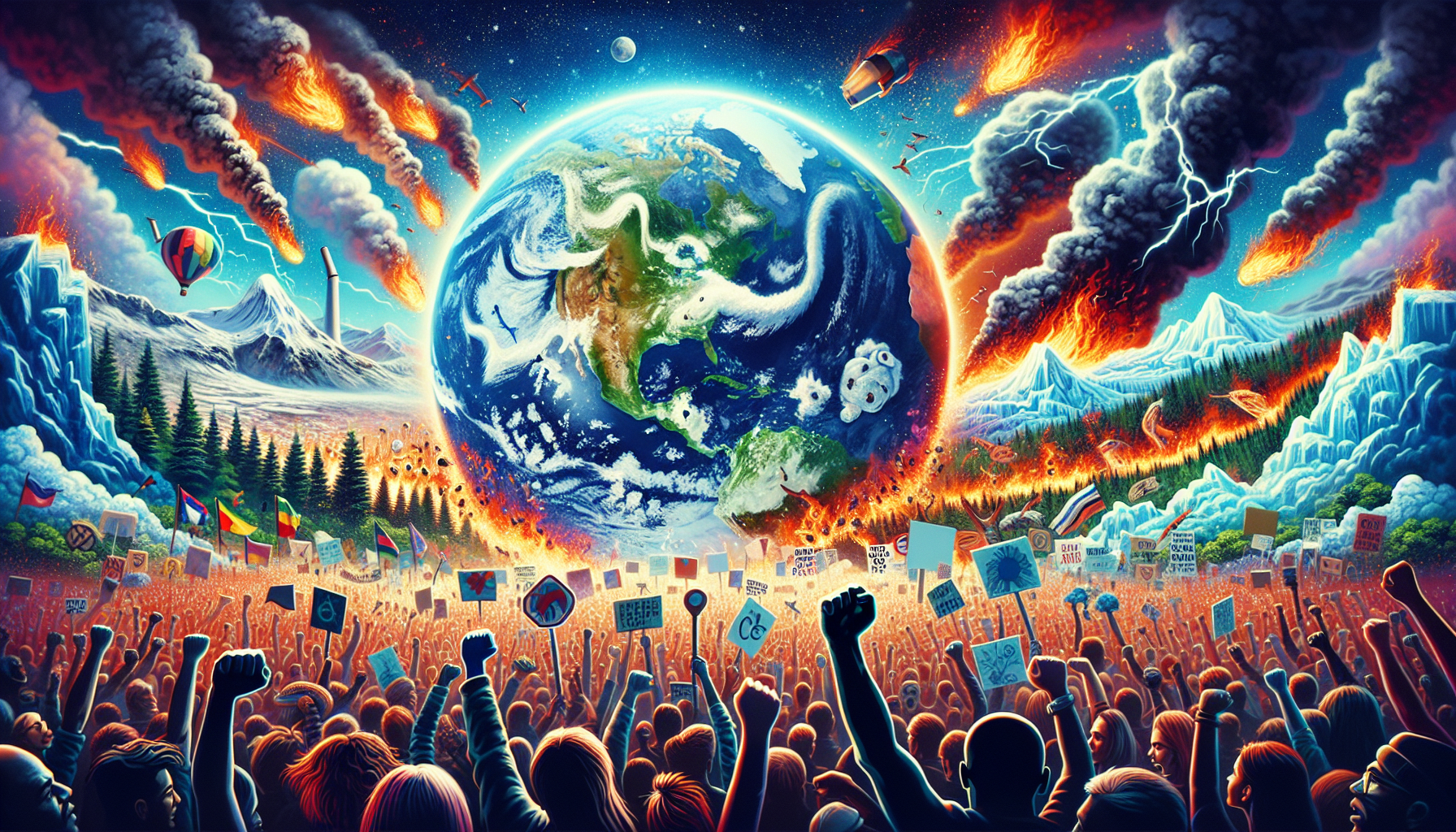
Global Climate Change Protests Erupt Worldwide
The Drivers Behind the Protests
The surge in global climate change protests can be attributed to various factors. Rising global temperatures, increased frequency of extreme weather events, and alarming reports from scientists about the earth’s changing climate have fueled public concern. According to the Intergovernmental Panel on Climate Change (IPCC), human activities are responsible for 1.1 degrees Celsius of global warming since the late 19th century. In recent years, numerous studies have underscored the urgency of addressing climate change, indicating that without immediate action, we face devastating consequences. It is this converging crisis that has galvanized millions across the globe.
Youth Activism: The Face of Climate Protests
Younger generations have taken the forefront in climate activism. Initiatives like Fridays for Future, initiated by Greta Thunberg, have sparked a global movement. The appeal of youth-led protests lies not only in their passionate advocacy but also in their poignant message: they are fighting for their future. Events organized worldwide have witnessed millions marching in solidarity for a healthier planet, demanding an end to fossil fuel dependence and advocating for renewable energy.
Major Protests and Events
Global Climate Strike
One of the most iconic events in recent years is the Global Climate Strike. This movement saw students, workers, and families uniting on specific dates to demand action from their governments. The strikes gained momentum in September 2019, with an estimated 4 million individuals participating across 150 countries. Marches and demonstrations were planned meticulously, featuring speeches from climate scientists, activists, and community leaders who provided personal testimonies about climate-related impacts.
COP26 Protest
In 2021, during the United Nations Climate Change Conference (COP26) in Glasgow, protests erupted outside the conference venues. Thousands of activists demonstrated to demand not just commitments, but concrete actions from world leaders. The slogan “No More Empty Promises” was prevalent, emphasizing the frustrations of many activists with the insufficient progress made in previous climate accords. The protests highlighted a broad spectrum of concerns, from indigenous rights and biodiversity loss to the unfair burdens placed on developing nations.
Climate Camp
Organizers and participants have also embraced alternative forms of protests, such as Climate Camps. These gatherings focus on education, community building, and direct action within a festival-like atmosphere. Participants live temporarily in camps set up near key locations related to fossil fuels, such as coal mines and power plants, to draw public attention to the industry’s impacts on the climate and local communities. These camps foster a sense of unity and purpose, empowering activists to engage in discussions about sustainable living practices.
advertisement

Public Sentiment and Support
The public’s support for climate change protests has been rising steadily. Surveys indicate that climate change is a growing concern among communities globally. Data from the Pew Research Center revealed that 67% of people consider climate change a significant threat, leading to increased solidarity with protests.
High-profile endorsements from celebrities and influencers bolster the visibility of these events. Figures like Jane Fonda, Leonardo DiCaprio, and Emma Thompson have publicly joined protests, drawing attention to the movement and reinforcing its importance across diverse demographic groups.
Government Responses
The growing intensity and frequency of protests have led to varied responses from governments worldwide. In some cases, politicians have embraced the protests, acknowledging the urgency of climate action by outlining ambitious climate goals. Leading economies are claiming net-zero emissions targets, while local governments are investing in renewable energy sources. However, the reaction has not been uniform. In several countries, authorities have responded with heavy police presence, restrictive laws, or even violent crackdowns on peaceful demonstrators.
Case Study: France
In France, the response to climate protests was particularly noteworthy. The ‘Yellow Vest’ movement, which began as protests against fuel tax increases, coincided with calls for stronger climate actions. It led to the government’s creation of the Citizens’ Convention on Climate. However, many activists felt that the resultant proposals lacked teeth, demonstrating the complex relationship between public demands and governmental action.
The Role of Social Media
Social media platforms have significantly influenced climate protests, serving as an effective tool for organizing events and disseminating information. Hashtags like #FridaysForFuture and #ClimateStrike have helped create a global network of activists, enabling them to share experiences, strategies, and mobilize participants rapidly. This digital activism also allows for real-time coverage of protests, giving more visibility to local movements.
Intersectionality and Inclusion in Climate Protests
Today’s climate protests are increasingly considering issues of intersectionality. Movements are arising that prioritize voices from marginalized communities, recognizing that climate change disproportionately affects those already vulnerable to social and economic injustices. Activists advocate for transformative justice, urging that climate solutions must include all social dimensions. This includes acknowledging indigenous rights, addressing racial inequalities, and advocating for gender equity.
Global Perspectives: Regional Activism
Climate change protests are not limited to affluent nations. In many developing countries, grassroots movements are rising in response to climate impacts. Activists in Bangladesh, for example, confront severe flooding and cyclones, while communities in the Arctic are fighting for their land, which is rapidly melting due to rising temperatures.
In Latin America, ecological movements led by indigenous peoples have gained traction, focusing on protecting rainforests and combatting extractive industries. These diverse protests reveal that climate change is a multifaceted issue, necessitating localized responses tailored to distinct cultural contexts.
Future of Climate Change Protests
Looking ahead, climate protests are expected to evolve as new challenges and crises arise. Issues such as biodiversity loss, ocean acidification, and the existential threat posed by climate-fueled inequities will likely continue to mobilize communities. New generations of activists are poised to take their place, utilizing innovative means of activism, including art, music, and digital storytelling to convey their messages powerfully and creatively.
Policy Change and Direct Action
Protests are also a monumental force behind substantial policy changes. Advocacy from activists tends to place pressure on governments and corporations to transition towards sustainable practices. Through collective action, demands for green jobs, renewable energy investments, and divestment from fossil fuels are gaining unprecedented visibility, influencing policy discussions worldwide.
Direct action methods, such as blockades or sit-ins, are increasingly prevalent as activists push for immediate accountability. These nonviolent methods draw attention to urgent demands for climate justice, even in the face of governmental negligence.
Conclusion
As climate change protests continue to erupt worldwide, their impact is reshaping the narrative around climate action. With every rally, march, and online campaign, activists are forging a movement driven by urgency, resilience, and a commitment to a sustainable future. The global momentum for change is undeniable, carrying with it the potential to redefine how societies respond to one of the greatest challenges of our time.
advertisement