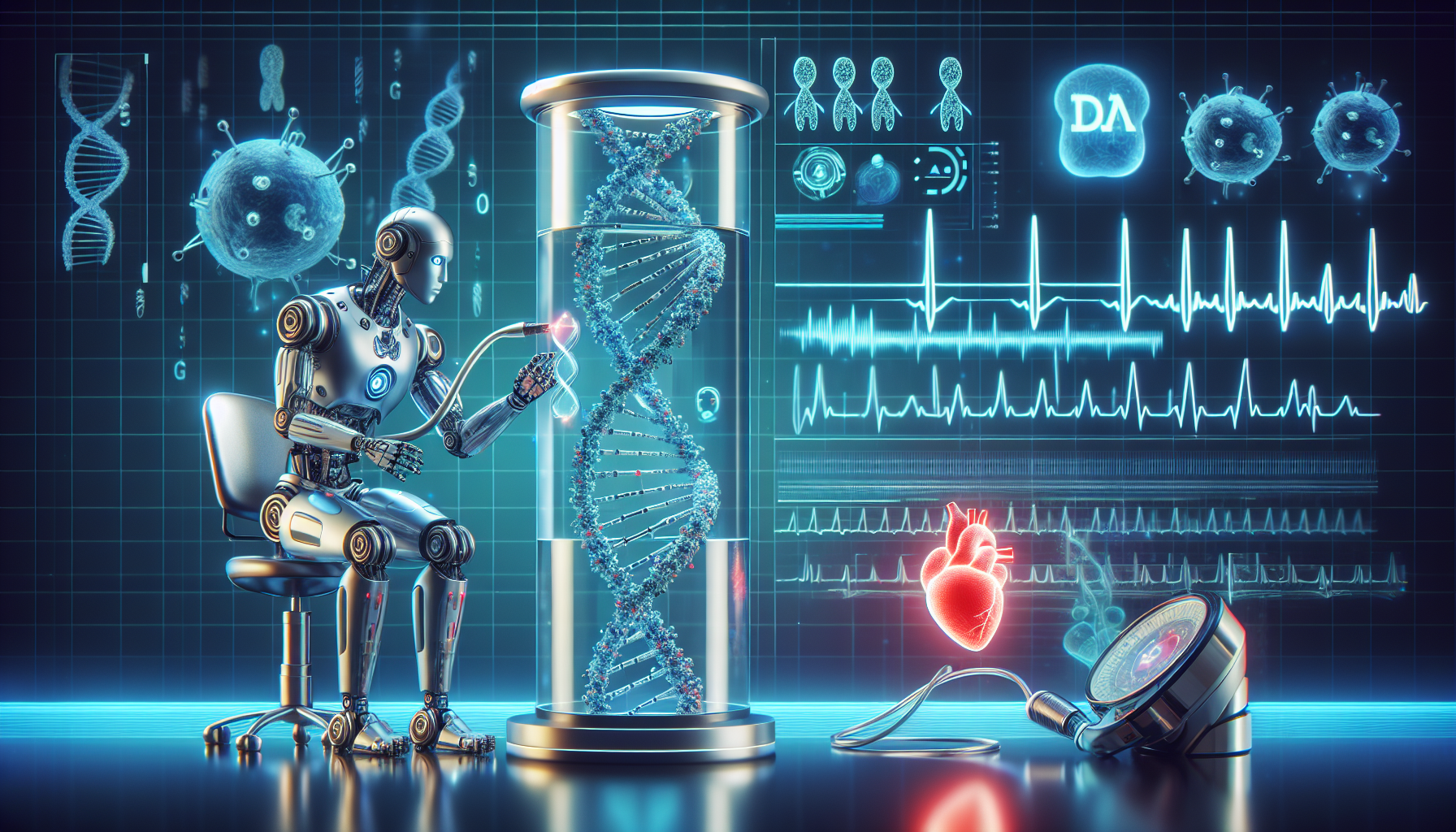
The Future of AI in Revolutionizing Personalized Medicine
Understanding Personalized Medicine
Personalized medicine, often referred to as precision medicine, is a medical model that tailors treatment to individual characteristics of each patient. This approach considers genetic, environmental, and lifestyle factors to enhance treatment efficacy, minimize adverse effects, and optimize health outcomes. Traditional medicine often follows a “one-size-fits-all” philosophy, which can lead to inefficiencies and suboptimal results. In contrast, personalized medicine aims to develop targeted therapies for diseases based on individual profiles.
The Role of AI in Personalized Medicine
Artificial Intelligence (AI) has emerged as a transformative force in the field of personalized medicine. By analyzing vast datasets, including genomic, clinical, and lifestyle information, AI can identify patterns that may be invisible to traditional analytic methods. This capability is vital for developing tailored therapies, predicting disease risk, and personalizing treatment plans. Several AI applications are shaping the future of personalized medicine:
1. Genomic Data Analysis
Genomics plays a crucial role in personalized medicine, and AI can streamline the analysis of genomic data. Machine learning algorithms can analyze complex genetic information to identify mutations and variants associated with specific diseases. For example, AI tools such as DeepVariant utilize deep learning techniques to detect variants at a much higher accuracy rate than traditional methods. These insights lead to more effective personalized interventions, particularly in oncology, where tumor genomics can guide targeted therapy selection.
2. Predictive Analytics
AI’s predictive analytics capabilities can assess patient data to forecast health outcomes. By examining historical data, AI can identify risk factors for diseases such as diabetes, heart disease, and various cancers. For instance, algorithms can analyze electronic health records (EHRs) to predict which patients are at higher risk for conditions based on their medical history and lifestyle patterns. These insights enable healthcare providers to implement preventative measures sooner, enhancing patient care and potentially reducing healthcare costs.
3. Drug Discovery and Development
AI is revolutionizing drug discovery by expediting the process of identifying new therapeutic compounds and developing personalized treatments. Traditional drug development can take over a decade, but AI can significantly shorten this timeline. By analyzing databases of chemical properties and biological responses, AI systems can predict which compounds are most likely to succeed in clinical trials. Companies like Atomwise are leveraging AI to screen millions of compounds quickly, while Insilico Medicine uses deep learning to develop drugs tailored to specific genetic profiles.
advertisement

4. Clinical Decision Support
Implementing AI-driven clinical decision support systems (CDSS) in healthcare settings enhances the decision-making process for medical professionals. These systems analyze patient data and medical literature to provide evidence-based recommendations on treatment options tailored to individual patients. For example, IBM Watson for Oncology utilizes AI to evaluate patient cases against vast oncology datasets, providing oncologists with personalized treatment recommendations that align with existing guidelines and patient preferences.
5. Patient Monitoring and Adherence
AI-enabled wearable devices and mobile health applications offer continuous monitoring of patients’ vital signs and health metrics. This data can inform clinicians about treatment effectiveness and prompt interventions when deviations occur. For instance, diabetic patients can use continuous glucose monitors paired with AI algorithms that analyze trends and predict glycemic changes, allowing for timely adjustments in insulin dosages. Moreover, these tools can remind patients to take medications, improving adherence to treatment regimens.
Ethical Considerations
As the integration of AI into personalized medicine accelerates, ethical considerations must be addressed. Data privacy concerns are paramount, as AI systems require access to extensive personal health information. Ensuring patients’ data is handled confidentially and ethically is critical for building trust in AI solutions.
Additionally, the potential for algorithmic bias must be carefully monitored. If training data lacks diversity, AI systems may produce recommendations that are less effective for underrepresented populations. Ongoing research and validation processes are necessary to ensure that AI models are equitable and benefit all patient demographics.
Regulatory Challenges
The regulatory landscape surrounding AI in healthcare is evolving but still lags behind the rapid technological advancements occurring in personalized medicine. As AI systems become more complex, regulatory bodies like the FDA must establish clear guidelines for evaluating AI algorithms and their clinical applications. Ensuring that these tools are safe, effective, and validated is essential before widespread adoption in clinical practice.
Collaborative Data Ecosystems
Establishing collaborative data ecosystems is vital for advancing AI in personalized medicine. Academic institutions, healthcare providers, pharmaceutical companies, and technology firms must work together to share data, research findings, and best practices. Open-access databases and collaborative platforms will enhance the development of robust AI models capable of delivering comprehensive insights into personalized treatments across diverse populations.
The Importance of Interdisciplinary Collaboration
The future of AI in personalized medicine hinges on collaboration between various disciplines. Geneticists, bioinformaticians, data scientists, clinicians, and ethicists must work together to address the complex challenges in this field. Integrating expertise from these areas will ensure that AI-driven solutions are grounded in solid scientific principles and ethical standards.
Training Healthcare Professionals
To maximize the potential of AI applications in personalized medicine, healthcare providers must be adequately trained to utilize these technologies effectively. Clinicians should understand AI capabilities and limitations to integrate these tools into their practice appropriately. Teaching health professionals about data analysis and algorithmic decision-making will empower them to make informed choices that enhance patient care.
Case Studies of AI in Personalized Medicine
Several successful case studies exemplify the impact of AI on personalized medicine:
-
Oncological Applications: Companies like Foundation Medicine use AI to analyze tumor sequencing data, allowing oncologists to identify precision therapies that match a patient’s specific tumor profile. This approach has been instrumental in improving outcomes for cancer patients by recommending targeted treatments based on their unique genetic variations.
-
Cardiovascular Health: The use of AI in cardiovascular medicine, such as the app developed by Cardiogram, has shown promise in identifying atrial fibrillation through wearable devices. By analyzing heart rate data from thousands of patients, the AI model can detect irregularities more accurately than traditional methods.
-
Diabetes Management: The predictive capabilities of AI are exemplified in diabetes care through machine learning algorithms that help anticipate hyperglycemic events. Companies like Glooko provide platforms that integrate patient data from continuous glucose monitors to enhance personalized care strategies for individuals with diabetes.
The Road Ahead
AI’s role in transforming personalized medicine is only just beginning. As technological advancements continue to emerge, AI will facilitate the development of more comprehensive and effective healthcare solutions tailored to individual patients. Embracing AI within personalized medicine is not merely a trend—it represents a paradigm shift in how patients receive care.
The integration of AI in healthcare promises to enhance the precision and efficiency of treatments, ultimately leading to improved patient outcomes. As stakeholders navigate the complexities of this transformation, the potential for innovative, patient-centric approaches in healthcare will likely become a reality.
Future Innovations on the Horizon
The forthcoming years will likely see even more groundbreaking innovations that leverage AI in personalized medicine. Anticipated developments include the following:
-
Integration of Multi-Omics: Future AI applications will incorporate multi-omics data (genomics, proteomics, metabolomics, etc.) for more holistic patient profiling, leading to advanced therapeutic strategies tailored to the complete biological landscape of a patient.
-
Natural Language Processing (NLP): Improvements in NLP can revolutionize how clinical data is processed and interpreted. By extracting valuable insights from unstructured clinical narratives, AI can provide richer contexts that support better decision-making in personalized care.
-
Augmented Reality (AR) and Virtual Reality (VR): These technologies, when combined with AI, can enhance patient education and engagement. For instance, AR can visualize patient-specific data and treatment pathways, making it easier for patients to understand their health conditions and treatment options.
AI’s continual evolution will undoubtedly open new avenues for research and applications, amplifying personalized medicine’s impact on healthcare across the globe. The synergy between AI and personalized medicine exemplifies the potential for technology to drive significant advancements in patient care, ultimately paving the way for a healthier future.
advertisement