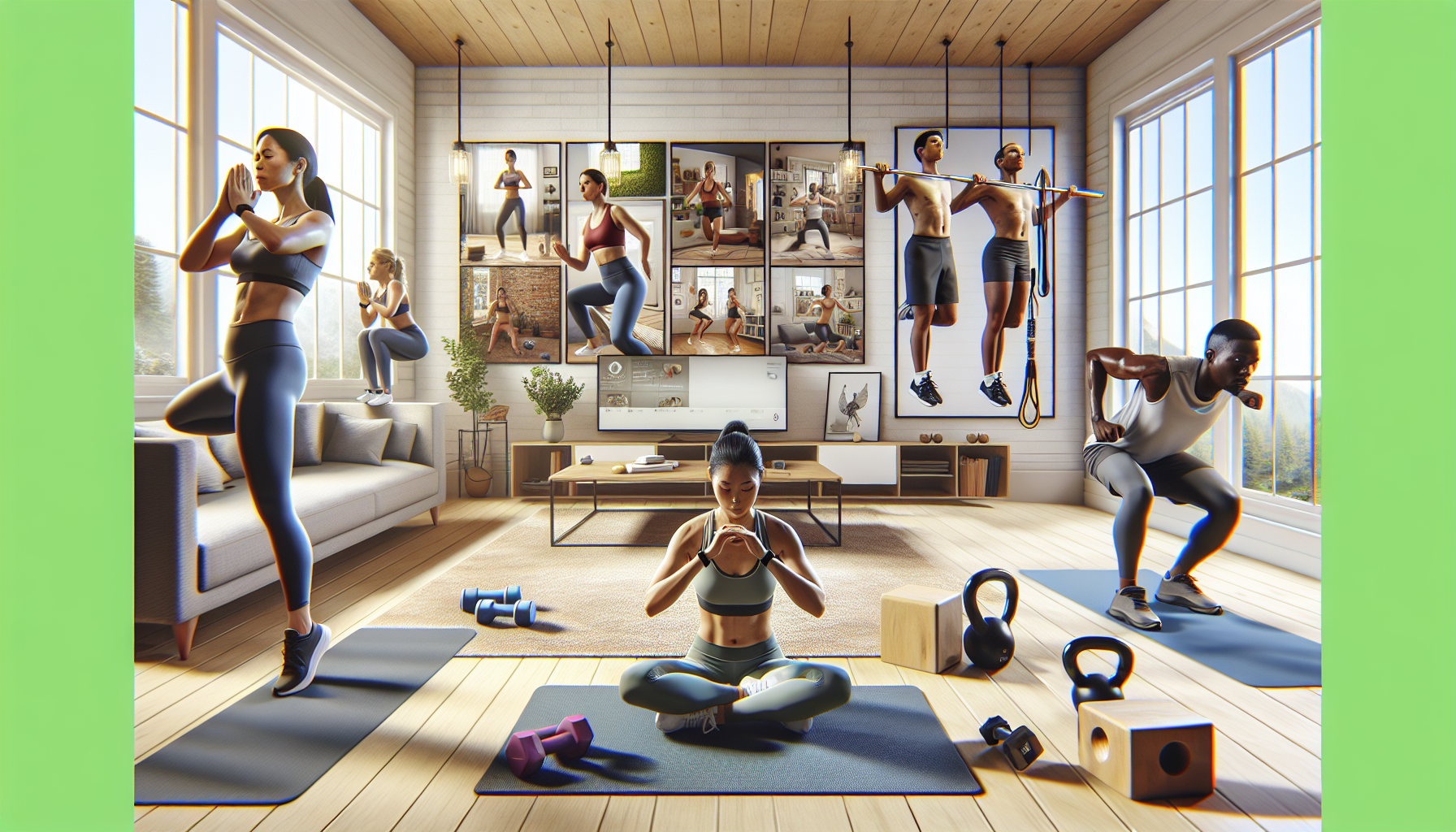
Ultimate Guide to Home Workouts for Every Fitness Level
Table of Contents
-
Understanding Home Workouts
- 1.1 Benefits of Exercising at Home
- 1.2 Home Workout Space Setup
-
Assessing Your Fitness Level
- 2.1 Beginner
- 2.2 Intermediate
- 2.3 Advanced
-
Equipment for Home Workouts
- 3.1 Minimalist Equipment
- 3.2 Suggested Equipment for Different Levels
-
Types of Home Workouts
- 4.1 Bodyweight Workouts
- 4.2 Strength Training
- 4.3 Cardio Workouts
- 4.4 Flexibility and Mobility Training
- 4.5 HIIT (High-Intensity Interval Training)
- 4.6 Yoga and Pilates
-
Sample Workout Routines
- 5.1 Beginner Workout Routine
- 5.2 Intermediate Workout Routine
- 5.3 Advanced Workout Routine
-
Nutrition and Hydration for optimal performance
-
Staying Motivated and Consistent
1. Understanding Home Workouts
1.1 Benefits of Exercising at Home
Exercising at home can offer numerous advantages. It’s time-efficient, allows for flexibility in scheduling, and can reduce gym membership expenses. You’re able to create a personalized environment free from distractions, which can greatly enhance workout focus. Furthermore, home workouts can help foster a sense of independence, as individuals learn to rely on their own initiative and discipline.
1.2 Home Workout Space Setup
Creating your ideal workout space at home is crucial for minimizing distractions and enhancing focus. This space doesn’t need to be large; a corner of your living room or a spare room works perfectly. Make sure the area is well-lit and ventilated, and equip it with any necessary gear like mats or resistance bands.
2. Assessing Your Fitness Level
2.1 Beginner
If you’re just starting your fitness journey, it’s vital to build a solid foundation. Beginners should focus on establishing a routine and improving overall body strength and endurance. Pay attention to your body and practice exercises with proper form to prevent injury.
2.2 Intermediate
At the intermediate level, you likely have some experience with basic exercises. It’s beneficial to increase the complexity of your workouts, incorporating advanced movements and varying your routines to avoid plateaus. You may also begin to integrate more equipment into your workouts.
2.3 Advanced
Advanced fitness enthusiasts usually aim for specific goals, ranging from muscle gain to endurance or explosive performance. At this stage, workout variety is essential, and different training modalities can be employed to keep sessions exciting and challenging.
advertisement

3. Equipment for Home Workouts
3.1 Minimalist Equipment
For those with limited space or budget, there are basic items that can significantly enhance your workout routine:
- Resistance Bands: Versatile and portable, great for stretching and strength training.
- Dumbbells: Adjustable weights allow for various exercises targeting different muscle groups.
- Exercise Mat: Essential for floor workouts, providing comfort during exercises.
- Jump Rope: An excellent tool for cardiovascular exercises and coordination.
3.2 Suggested Equipment for Different Levels
-
Beginner:
- Resistance bands
- Light dumbbells (2-8 lbs)
- Exercise mat
-
Intermediate:
- Adjustable dumbbells
- Kettlebell
- Stability ball
-
Advanced:
- Barbell set
- Pull-up bar
- Gymnastic rings
- Plyometric box
4. Types of Home Workouts
4.1 Bodyweight Workouts
Bodyweight exercises utilize your own weight as resistance, making them highly accessible. Examples include push-ups, squats, lunges, and planks. These can be modified for various fitness levels.
4.2 Strength Training
Incorporating strength training into your routine is crucial for muscle development and overall strength. This can be achieved with free weights, resistance bands, or even household items. Target the major muscle groups at least twice a week.
4.3 Cardio Workouts
Cardiovascular fitness is essential for heart health and fat loss. Cardio workouts can include running, cycling, jumping rope, or high-knees. Aim for at least 150 minutes of moderate aerobic activity or 75 minutes of vigorous activity weekly.
4.4 Flexibility and Mobility Training
Incorporating flexibility and mobility routines helps in injury prevention and improving overall athletic performance. Activities like stretching, yoga, or Pilates enhance flexibility and strengthen the core muscles.
4.5 HIIT (High-Intensity Interval Training)
HIIT is an excellent method for burning fat and building endurance. These workouts consist of short bursts of intense activity followed by rest periods. HIIT can be adapted for various fitness levels and can be performed with minimal equipment.
4.6 Yoga and Pilates
Both yoga and Pilates focus on strength, flexibility, and mind-body connection. They can be practiced at home and are effective for stress relief and enhancing core strength. Online classes and tutorials are widely available.
5. Sample Workout Routines
5.1 Beginner Workout Routine
Monday: Full Body
- 10-minute warm-up (jog in place)
- 3 sets of 10 bodyweight squats
- 3 sets of 10 wall push-ups
- 30 seconds of planks
- 10-minute cool-down (stretching)
Wednesday: Cardio
- Jump rope for 1-minute intervals (3 rounds)
- High knees for 30 seconds (3 rounds)
Friday: Lower Body Focus
- 3 sets of 10 lunges (5 each leg)
- 3 sets of 10 glute bridges
- 10 minutes of stretching
5.2 Intermediate Workout Routine
Tuesday: Upper Body
- 3 sets of 8-10 dumbbell squats
- 3 sets of 8-10 push-ups
- 3 sets of 12 dumbbell rows
- 3 sets of 15 tricep dips
- Cool down with stretching
Thursday: HIIT
- 20 seconds of burpees, 10 seconds rest (4 rounds)
- 30 seconds of jump squats, 30 seconds rest (4 rounds)
Saturday: Core and Flexibility
- 3 rounds of planks (30-45 seconds)
- 3 rounds of Russian twists with a lightweight (15 reps)
- 30 minutes yoga session for flexibility
5.3 Advanced Workout Routine
Monday: Upper Body Strength
- 4 sets of 6-8 weighted bench presses
- 4 sets of 6-8 military presses
- 4 sets of pull-ups (assisted if needed)
Wednesday: Lower Body
- 4 sets of 6-8 deadlifts
- 4 sets of 6-8 squats (heavy)
- 3 sets of 10 Bulgarian split squats
Friday: HIIT and Core
- Create a HIIT circuit of burpees, mountain climbers, and kettlebell swings (30 seconds each with 15 seconds rest)
- Finish with core exercises: 3 sets of hanging leg raises and planks.
6. Nutrition and Hydration for Optimal Performance
To maximize the benefits of your workouts, proper nutrition and hydration are crucial. Ensure you consume a balanced diet rich in proteins, healthy fats, and complex carbohydrates. Hydration before, during, and after workouts enhances performance and aids recovery.
Nutritional Guidelines
- Pre-workout: Light meal with carbohydrates and protein (e.g., banana and yogurt)
- Post-workout: Incorporate proteins and carbohydrates (e.g., protein shake with fruit)
- Hydration: Drink plenty of water throughout the day and consider electrolyte beverages for long or intense workouts.
7. Staying Motivated and Consistent
Creating a structured workout plan while setting realistic goals significantly impacts motivation. Utilizing fitness apps, joining online communities, or scheduling workout partners can also help maintain accountability. Lastly, tracking progress through journaling or apps can reinforce your dedication and help you visualize your achievements on the path to fitness.
By tailoring your home workouts to your individual fitness level and preferences, staying committed to a structured plan, and ensuring proper nutrition, you can achieve remarkable fitness results from the comfort of your own home.
advertisement