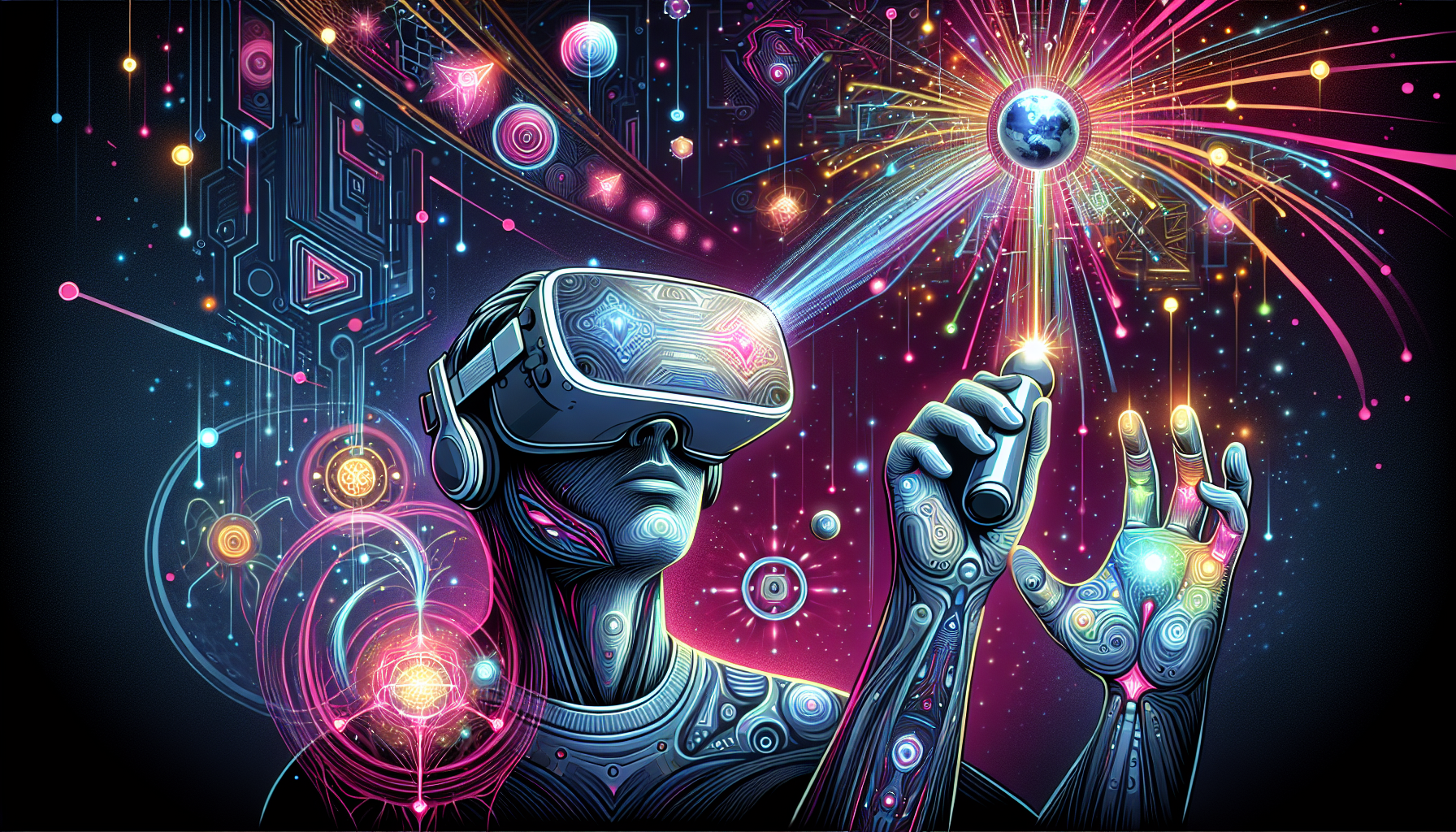
Exploring the Future: How Virtual Reality is Transforming Gaming
1. The Evolution of Gaming Technology
Over the last few decades, gaming technology has seen monumental changes. From simple pixelated graphics of the early 80s to the hyper-realistic visual experiences of today, game development has progressed at an unprecedented rate. The introduction of 3D graphics, responsive controls, and interconnected online experiences has fundamentally altered the way players engage with games. However, none of these advancements quite compares to the advent of Virtual Reality (VR), which has created immersive and interactive experiences that captivate players like never before.
2. Understanding Virtual Reality in Gaming
Virtual Reality is a technology that creates a simulated environment, allowing players to experience games in a three-dimensional space. By using a VR headset and sometimes hand controllers, players are transported into a virtual world. Unlike traditional gaming, where players view a screen and interact with a controller, VR gaming envelops the player, making them an active participant rather than a passive observer. This immersive approach leads to increased engagement and emotional involvement, fundamentally changing the gaming landscape.
advertisement

3. Key Components of VR Systems
To appreciate the transformative power of VR in gaming, it’s vital to understand the technology’s core components. The VR headset, such as the Oculus Rift, HTC Vive, or PlayStation VR, is designed to display high-quality graphics that create a 360-degree view. Inside the headset, motion sensors track the user’s head movements, allowing the game environment to shift accordingly. Controllers with motion tracking further enhance interaction, enabling players to touch, manipulate, and explore their virtual surroundings with unprecedented accuracy.
Another critical aspect is haptic feedback technology, which adds tactile sensations to the user experience. This technology simulates touch, allowing players to feel the impact of in-game actions, amplifying the immersive nature of VR gaming. Collectively, these components work in tandem to create a dynamic experience that can elicit genuine emotional reactions from players, ranging from excitement to fear.
4. Advances in VR Gaming Experiences
Game developers are constantly experimenting with the potential of VR, producing innovative experiences that were once considered the stuff of science fiction. The rise of VR arcades, where players can engage in multiplayer experiences in expansive physical spaces, illustrates the growing interest in this medium. Through advanced motion tracking systems and high-quality hardware, players can enjoy cooperative gameplay that merges the physical and virtual worlds.
One significant area of growth is in storytelling within VR games. Traditional narrative structures are being reimagined to suit the immersive format, allowing players to impact the story through their decisions and actions. Games like “Half-Life: Alyx,” “Boneworks,” and “The Walking Dead: Saints & Sinners” have set new benchmarks for narrative-driven VR experiences, where choices drastically alter the player’s journey. The emotional stakes are heightened, as players are fully immersed in the world, making them more invested in the outcomes.
5. The Importance of Game Design
Creating VR games requires an understanding of unique design principles. Unlike conventional gaming, where players fixate on a screen, VR necessitates the consideration of spatial awareness and player movement. Developers must optimize experiences to minimize motion sickness and ensure players can navigate virtual environments smoothly.
Additionally, interactivity is critical in VR design. Environments are often built with various points of interaction where players can engage with objects, solve puzzles, or combat enemies. This kind of engagement encourages exploration and rewards curiosity, adding layers of depth to the gameplay experience.
Games like “Beat Saber” showcase how designers can create compelling mechanics that utilize the strengths of VR. The game’s rhythm-based gameplay requires players to slash blocks corresponding to musical beats while physically moving through their environment. This merges gaming with physical activity, paving the way for fitness-oriented VR experiences that resonate with a health-conscious audience.
6. Social Interaction in VR Gaming
The capacity for social interaction in VR gaming is another area where the technology thrives. Multiplayer VR games create shared experiences where players can collaborate, compete, or simply socialize. Titles like “VRChat” or “Rec Room” allow users to create avatars and interact with others in imaginative virtual spaces, fostering community and engagement.
These interactions can transcend geographical boundaries, allowing players from different continents to come together in a virtual setting. This fundamentally alters social dynamics in gaming, promoting inclusivity and exposure to diverse cultures. Communities can thrive within these virtual worlds, fostering friendships and partnerships that endure beyond gameplay.
7. The Role of Artificial Intelligence in VR Games
As developers push the boundaries of VR, Artificial Intelligence (AI) is becoming an integral component in enhancing the gaming experience. AI algorithms can tailor gameplay experiences to individual players, adapting to their skill levels and preferences. This dynamic adjustment can create a more personalized experience, keeping players engaged for longer durations.
Additionally, AI can significantly improve non-player character (NPC) interactions. Through sophisticated pathfinding and behavioral systems, NPCs can respond more realistically to player actions, enriching the narrative and immersion. Games like “Star Wars: Squadrons” utilize AI to design adversaries that can analyze player strategies, creating more challenging and rewarding gameplay.
8. Challenges Facing VR Gaming
Despite its remarkable potential, the VR gaming sector encounters several challenges. High entry costs associated with hardware remain a significant barrier for many potential players. While prices have gradually decreased, premium headsets and compatible computers can still represent a substantial investment. This challenge creates a divide in accessibility, limiting the audience that can experience VR gaming.
Another obstacle involves motion sickness, which affects a segment of the player population. Some players struggle with disorientation or nausea when using VR headsets, restricting their gaming sessions. Developers are actively exploring techniques to mitigate this issue, such as introducing smoother transitions and varying gameplay mechanics catering to different comfort levels.
9. The Future of VR in Gaming
The trajectory of VR gaming appears promising, with ongoing advancements in hardware and software likely to usher in new and innovative experiences. Companies are investing heavily in research and development to create lighter, higher-resolution headsets with enhanced field-of-view capabilities and superior tracking accuracy.
Future VR experiences might incorporate augmented reality (AR) elements, merging digital game environments with the real world. This intersection could lead to imaginative gameplay concepts that blur the lines between reality and virtuality, creating a novel form of entertainment. The potential integration of brain-machine interfaces suggests another frontier, where players may interact with games through neural signals, further enhancing immersion.
Moreover, as cloud gaming services evolve, the possibility of streaming VR experiences could reach broader audiences without the need for high-end hardware. This democratization of access is vital for the growth of VR gaming among general audiences, fostering wider acceptance and application.
10. The Impact of VR on the Gaming Community
As VR technology advances, its impact on the gaming community becomes increasingly profound. Developers have the opportunity to explore themes and genres that were previously unexplored in traditional gaming. Horror games, for instance, achieve unprecedented emotional resonance when players experience fear in a fully enveloping environment.
The inclusive nature of VR gaming also fosters diverse voices within the community, empowering creators from various backgrounds to develop innovative experiences. The platform encourages collaboration and sharing ideas, leading to rich, multifaceted engagement within the gaming space.
With VR bridging the gap between technology and storytelling, players and creators alike are encouraged to think beyond existing narratives and explore the emotionally charged potential of immersive experiences. As this evolution continues, the gaming community is poised for a transformation that merges technology, creativity, and human connection like never before.
11. Conclusion: Embracing the Future of Gaming
While this piece has chronicled the remarkable transformation of gaming through VR, it is merely a glimpse into an expansive future rife with possibilities. As technology continues to evolve, so too must our understanding of gaming’s potential. The continuing exploration and refinement of VR technology, coupled with innovative design philosophies, will undoubtedly shape the gaming landscape for years to come.
In conclusion, as industry professionals and players alike embrace this next frontier, one can only wonder what new horizons await in the extraordinary world of virtual reality gaming.
By providing well-researched content, relevant keywords, and a structured approach, this article is designed to enhance its SEO performance and engage readers effectively.
advertisement