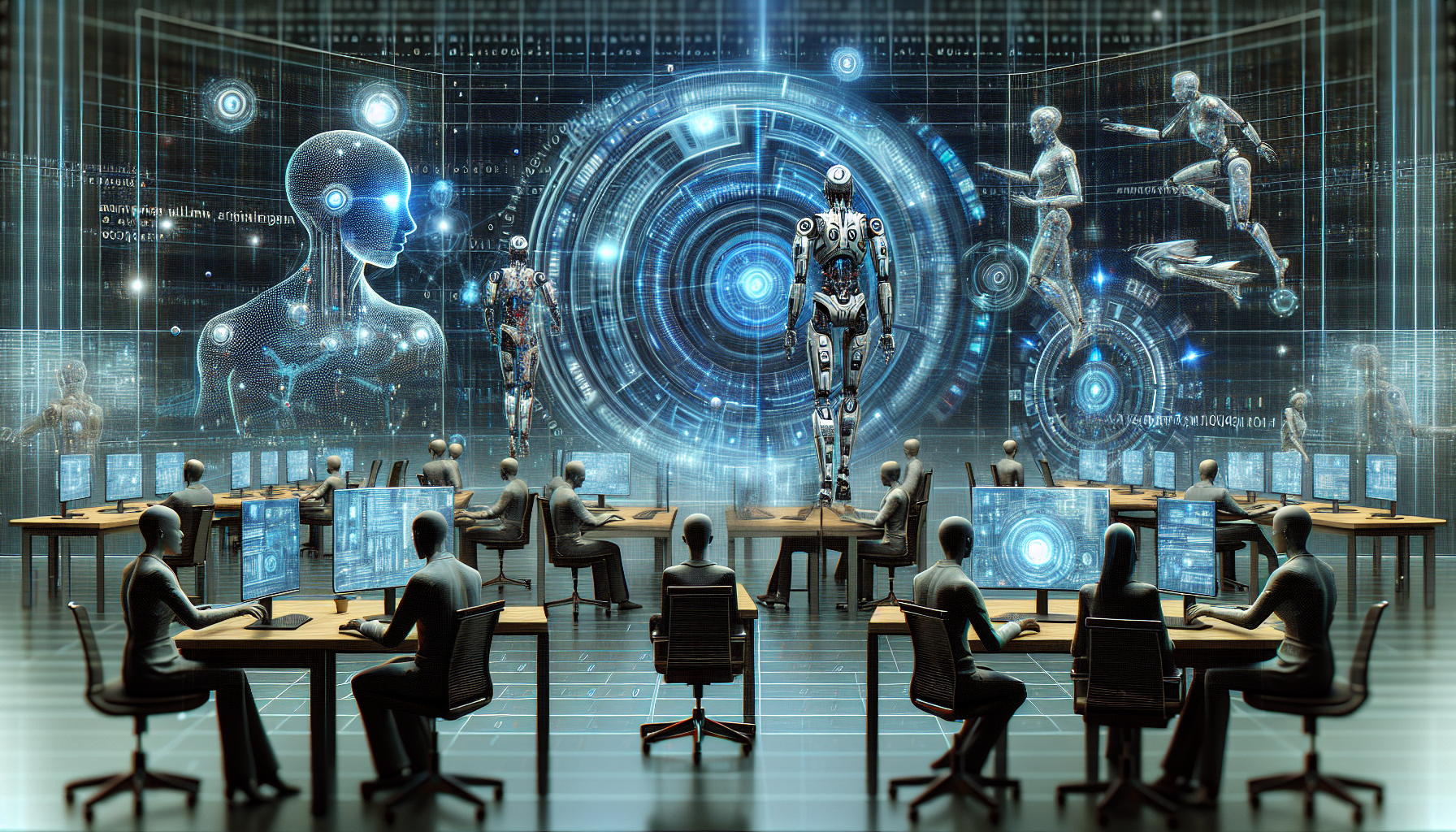
The Future of Work: How Artificial Intelligence is Transforming Industries
Understanding Artificial Intelligence
Artificial Intelligence (AI) refers to the simulation of human intelligence processes by machines, particularly computer systems. These processes include learning (the acquisition of information and rules for using it), reasoning (using rules to reach approximate or definite conclusions), and self-correction. The significance of AI is evident as it rapidly transforms industries by enhancing productivity, improving decision-making, and enabling automation of mundane tasks.
AI in Manufacturing
The manufacturing sector is witnessing a substantial transformation driven by AI. Smart factories, equipped with AI technologies, are becoming the norm. These facilities utilize data analytics, machine learning, and automation to achieve efficiency.
-
Predictive Maintenance: With sensors monitoring equipment, AI algorithms can predict failures before they occur. This reduces downtime, lowers maintenance costs, and increases overall productivity. For instance, GE has implemented predictive maintenance in its jet engines, significantly extending their life cycle and operational efficiency.
-
Supply Chain Optimization: AI algorithms can analyze vast datasets to forecast demand, optimize inventory levels, and improve logistics. Companies like Amazon leverage machine learning to manage their supply chains effectively, reducing delivery times and costs.
-
Quality Control: AI-powered vision systems can detect defects on production lines with a speed and accuracy far superior to humans. By using computer vision and deep learning algorithms, manufacturers can maintain high-quality standards and reduce waste.
AI in Healthcare
The healthcare industry is undergoing a revolution thanks to AI. From diagnosis to treatment, AI is enhancing patient care and operational efficiency.
-
Diagnostics: AI applications help in accurately diagnosing diseases. For instance, IBM Watson can analyze vast amounts of medical data to assist doctors in making informed decisions. AI-driven tools can detect anomalies in medical images, leading to early diagnosis and better patient outcomes.
-
Personalized Medicine: AI helps tailor treatments to individual patients by analyzing genetic information and patient history. This approach improves efficacy and reduces side effects, leading to improved patient experiences. Companies like Tempus use AI to personalize cancer treatment plans based on a patient’s genetic makeup.
-
Operational Efficiency: AI can automate administrative tasks, such as scheduling and billing, which allows healthcare professionals to focus more on patient care. Hospitals that implement AI solutions see significant time savings, enabling staff to provide better service.
AI in Retail
The retail sector is harnessing AI to enhance the customer shopping experience and optimize operations.
-
Personalized Shopping Experiences: Retailers use AI to offer personalized recommendations to customers. By analyzing consumer behavior and preferences, AI-driven systems can suggest products that are likely to appeal to individual shoppers. Companies like Netflix and Spotify utilize similar algorithms to enhance user engagement.
-
Inventory Management: AI systems are improving inventory management by predicting turning points in product demand. This allows retailers to optimize stock levels, reducing costs while ensuring product availability. Walmart, for example, leverages AI in its supply chain operations to streamline inventory processes.
-
Chatbots and Customer Service: AI-powered chatbots are enhancing customer service by providing instant responses to common inquiries. They operate 24/7, improving accessibility and efficiency. Brands like Sephora have successfully integrated chatbots to guide customers through their purchasing journey.
AI in Financial Services
The financial sector is leveraging AI to enhance security, improve customer service, and streamline operations.
advertisement

-
Fraud Detection: Machine learning algorithms can analyze transactions in real-time to detect unusual patterns indicative of fraudulent activity. Financial institutions like PayPal and Mastercard utilize AI to enhance their fraud detection capabilities, ensuring customer trust and safety.
-
Risk Assessment: AI improves risk assessment by analyzing large datasets more effectively than human analysts. This capability allows lenders to offer loans more responsibly and enables insurers to assess policies accurately. Companies like ZestFinance use AI to determine creditworthiness based on non-traditional factors.
-
Customer Relationship Management: AI tools enable banks to personalize interactions with clients. By analyzing previous customer interactions, AI can propose tailored product offerings, increasing customer satisfaction and retention. Major banks like JPMorgan Chase have seen significant improvements in customer engagement through AI applications.
AI in Transportation
AI is revolutionizing transportation through automation and enhanced logistics.
-
Autonomous Vehicles: The development of self-driving cars promises to transform how we travel. Companies like Waymo and Tesla are leading the charge, employing AI to navigate complex environments safely without human intervention.
-
Traffic Management: AI-driven algorithms can analyze traffic data to optimize traffic flow and predict congestion. Cities utilizing smart traffic systems have reported decreased travel times and improved air quality. For instance, the city of Barcelona has implemented AI to monitor and manage traffic efficiently.
-
Logistics and Delivery: AI solutions in logistics are streamlining the delivery process by optimizing routes and reducing costs. Delivery companies like UPS employ AI for route optimization, significantly improving their overall efficiency.
AI in Human Resources
Artificial intelligence is also transforming the HR function, making recruitment and employee management more effective.
-
Talent Acquisition: AI-powered recruitment tools can streamline the hiring process by screening resumes and identifying suitable candidates based on predefined criteria. This reduces the time spent on manual screening and improves the quality of hires.
-
Employee Engagement and Retention: AI tools can analyze employee feedback and performance data to identify issues affecting retention and engagement. Employers like IBM have utilized AI-driven analytics to create targeted employee retention strategies.
-
Training and Development: AI-enabled learning platforms can personalize employee training programs, adapting content to individual learning styles. Companies like Coursera have integrated AI into their learning platforms, providing tailored learning experiences for employees.
Ethical Considerations of AI
As AI becomes more integrated into various industries, ethical considerations must not be overlooked.
-
Bias and Fairness: AI systems can perpetuate existing biases if not carefully monitored. Therefore, ensuring fairness in AI algorithms is crucial, particularly in hiring and lending practices to avoid discrimination.
-
Privacy Concerns: Companies must navigate the fine line between utilizing data for better services and maintaining consumer privacy. Implementing robust data protection measures is essential to building and maintaining customer trust.
-
Job Displacement: While AI creates new opportunities, it also poses risks of job displacement. Preparing the workforce through reskilling and upskilling initiatives is essential to mitigate the impacts of automation on employment.
Preparing for an AI-Driven Future
To thrive in an AI-infused workplace, organizations must be proactive in their approach.
-
Continuous Learning: Encouraging a culture of continuous learning within organizations will help employees adapt to technological changes. This might involve offering training sessions on AI tools and platforms.
-
Collaborative Work Environment: Businesses should foster collaboration between humans and AI to enhance productivity. This hybrid model not only increases efficiency but also leverages the strengths of both human intuition and machine precision.
-
Investing in Technology: Companies need to invest in robust AI technologies tailored to their industry needs. This strategic investment will pay off as these tools enhance productivity and competitiveness.
As AI continues to evolve, its impact across various sectors will expand, necessitating adaptive strategies for workers and organizations alike. By embracing this technological wave, industries can prepare for a future where human creativity and AI capabilities work hand in hand.
advertisement