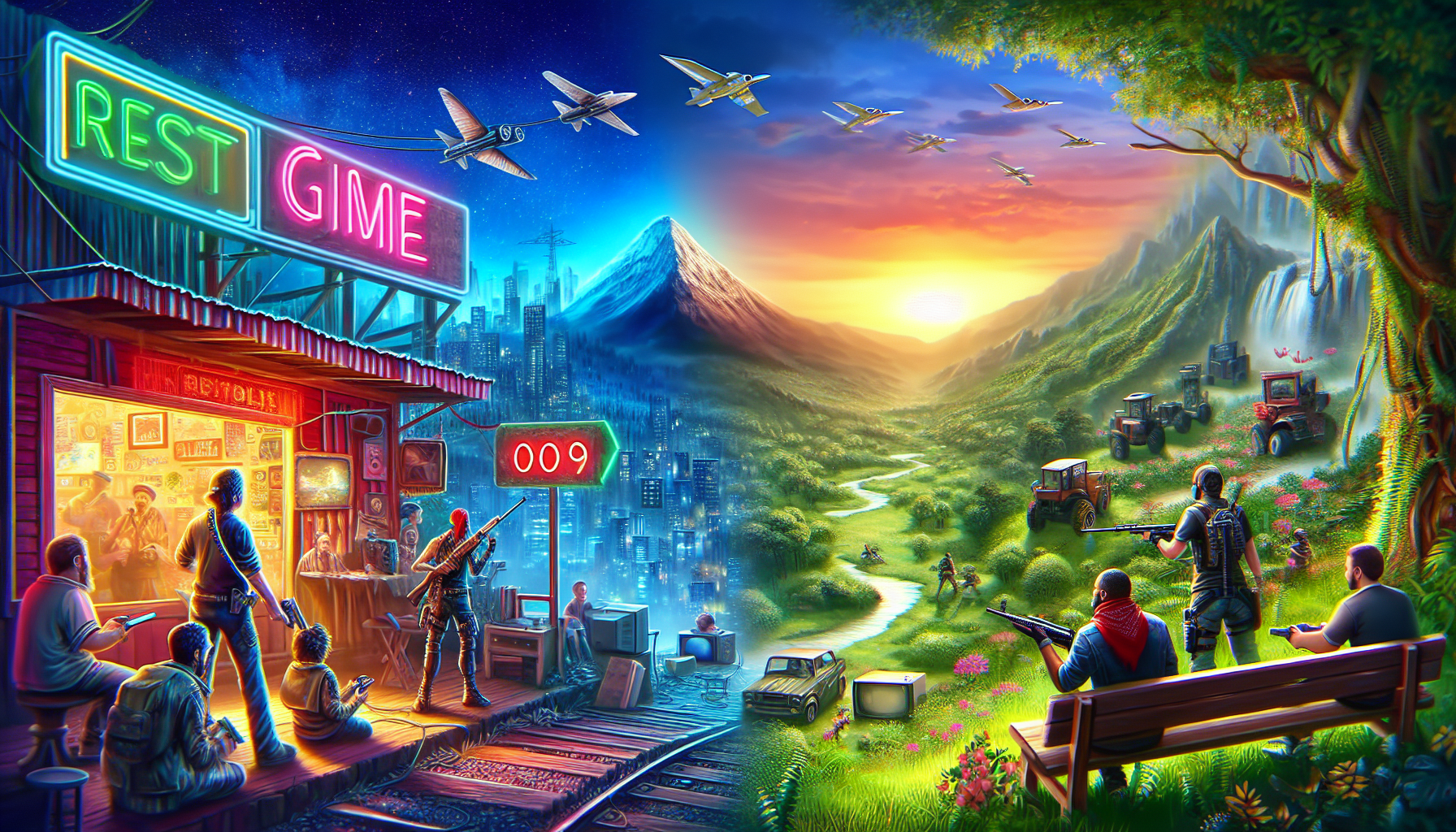
The Evolution of Open World Games in the Last Decade
1. Definition and Characteristics of Open World Games
Open-world games are defined by their expansive, non-linear environments that allow players to explore freely, interact with a variety of in-game elements, and engage with a dynamic narrative. Characteristics include vast landscapes, side quests, a day-night cycle, and a level of environmental interactivity that promotes immersion. The essence of open-world gaming lies in the player’s ability to carve their own path, offering a unique experience as opposed to linear storytelling methods found in traditional games.
2. Evolution in Game Design
2.1. From Static Worlds to Dynamic Environments
A decade ago, many open-world games presented static environments with limited responsiveness. However, recent titles have introduced dynamic ecosystems where player choices significantly affect the world. A notable example is The Witcher 3: Wild Hunt, launched in 2015, where decisions made by players not only impact the storyline but also the game world, making them feel more invested in their choices.
2.2. Enhanced NPC Interactions
In the past, non-playable characters (NPCs) served repetitive roles. Today’s open-world games, such as Red Dead Redemption 2, feature complex AI systems that allow NPCs to live out their own daily routines. They react to the player’s actions and offer richer, more believable interactions. This advancement enhances immersion, making the game world feel alive.
advertisement

3. Technological Advancements
3.1. Graphics and Visual Fidelity
Visual fidelity has skyrocketed thanks to technological progression. Games like Cyberpunk 2077 and Assassin’s Creed Valhalla showcase breathtaking graphics, intricate character models, and sprawling environments that create an immersive experience. The advent of engines such as Unreal Engine 4 allows developers to create breathtaking visual experiences that engage players and set new benchmarks for open-world design.
3.2. Cloud Gaming and Streaming Technologies
The rise of cloud gaming services like Google Stadia and Xbox Cloud Gaming means that players are no longer tethered to high-end hardware. This accessibility allows more gamers to experience open worlds in their full glory. The shift towards streaming technology is democratizing gaming experiences and pushing developers to optimize games for various platforms.
4. Gameplay Mechanics
4.1. Exploration and Freedom
Exploration has always been a key component of open-world games. However, recent titles have revolutionized this mechanic. For instance, in The Legend of Zelda: Breath of the Wild (2017), players can interact with the environment in ways that push creative solutions to puzzles and challenges. The emphasis on freedom encourages players to explore at their pace and discover hidden secrets.
4.2. RPG Elements and Player Agency
The incorporation of RPG elements has significantly evolved. Games like Cyberpunk 2077 and Ghost of Tsushima allow deeper customization and progression systems. Players can tailor their gameplay experience to suit their preferred playstyle, whether that be stealth, combat, or exploration, which fosters a personal connection with the game.
5. Narrative and Storytelling
5.1. Branching Narratives
The storytelling in open-world games has transitioned from linear narratives to intricate branching paths influenced by player choices. Titles like Detroit: Become Human (2018) push boundaries with multiple endings influenced by player decisions. This approach enhances replayability, inviting players to return and explore different outcomes.
5.2. Integration of Themes and Social Commentary
Modern open-world games aren’t just about escapism; they often tackle serious societal issues. For instance, Watch Dogs: Legion explores themes of surveillance and personal freedom in a dystopian setting. This trend indicates a maturation of the genre as it begins exploring complex real-world themes that resonate with players.
6. Multiplayer Integration and Social Features
6.1. From Solitary Adventures to Social Experiences
While early open-world games often focused on solitary play, recent entries are emphasizing multiplayer elements. Games like GTA Online evolved the open-world experience into a shared environment where players collaborate or compete with each other. This shift transforms the open world into a living hub of interactions, encouraging community building.
6.2. Community-Driven Content
The rise of modding communities has enhanced the lifespan of many open-world games. Titles such as Skyrim equipped players with the tools to create their own content and share it, leading to an explosive growth of user-generated scenarios and environments. Current trends suggest that community involvement will only continue to grow, leading to a more collaborative gaming experience.
7. Game Monetization and Economic Models
7.1. Shift towards Live Services
The business model surrounding open-world games has evolved to adapt to changing consumer behaviors. Many developers are embracing live-service models, where players can access ongoing content updates. Games like Fortnite and Destiny 2 incorporate seasonal content that keeps players engaged over time.
7.2. Microtransactions and Ethical Considerations
With the increasing focus on monetization comes ethical concerns surrounding microtransactions. Players express dissatisfaction over pay-to-win mechanics and loot boxes. Developers now face the challenge of balancing profitability with fair treatment of their player base, leading to the emergence of monetization models that emphasize cosmetic purchases over gameplay advantages.
8. Future Trends in Open World Gaming
8.1. The Role of Artificial Intelligence
As AI technology advances, the integration of sophisticated AI companions in open-world environments will likely become more common. Games may begin to employ adaptive learning algorithms to make interactions with NPCs more realistic, further enhancing immersion and player engagement.
8.2. Sustainability and Environmental Awareness
An emerging trend is the incorporation of sustainability themes into gameplay. Developers may increasingly focus on creating environments that reflect real-world ecological concerns. Games like The Last of Us Part II (2020) showcase the consequences of human actions on the environment, prompting players to consider the narrative choices made.
8.3. Enhanced User-generated Content
The future of open-world gaming is poised to harness the creativity of players more effectively. We could see advanced level editing tools that not only allow users to build worlds but also interconnect those worlds with others in unique ways, enabling truly personalized gaming experiences.
9. The Rise of Indie Open World Games
Amidst the proliferation of AAA titles, indie games have carved out a niche by offering innovative open-world experiences. Titles like Hollow Knight and Stardew Valley emphasize charm and creativity over graphical fidelity, allowing indie developers to deliver profound narratives and gameplay experiences within meticulously crafted worlds. This trend demonstrates that the open-world genre is accessible to a wider range of creators.
10. Conclusion
The last decade has seen substantial growth in the open-world genre, influencing various aspects of game design, technology, gameplay mechanics, and narrative frameworks. The critical evolution of these elements showcases not just a transformation in gaming but also an affirmation of the genre’s mainstay status within the industry. With continuous innovation and adaptation, the future of open-world gaming appears rich with possibilities, ensuring its relevance in the gaming landscape for years to come.
advertisement